Bitukura Gorilla Group: Ruhija Sector’s Calmest Family in Bwindi

The Bitukura gorilla group treks in Bwindi’s Ruhija sector under silverback Ndahura, prized for calm, close encounters. See costs and how to book.

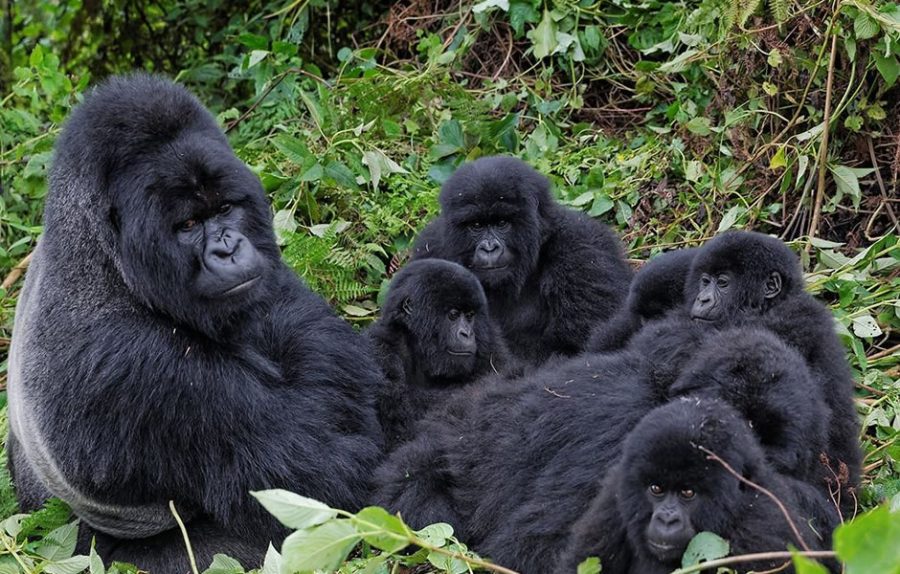
The Bitukura gorilla group is a habituated mountain gorilla family that treks out of the Ruhija sector of Bwindi Impenetrable National Park in southwestern Uganda, one of four gorilla families available in that sector alongside Oruzogo, Mukiza, and Kyaguriro. Named after the Bitukura River near where Uganda Wildlife Authority rangers first encountered the group, the family was habituated between July 2007 and October 2008 and is led today by silverback Ndahura. Bitukura has built a reputation among Ugandan trekking guides for staying calm and visible during visitor hours, continuing to feed, groom, and play rather than retreating into thicker cover, which makes it a consistent favorite with photographers and first-time trekkers alike. This guide covers the family’s history, current known composition, trek difficulty, Ruhija sector logistics, and how Bitukura compares with the other three gorilla families sharing its sector.

Bitukura Gorilla Group: Quick Facts

FactDetail
Gorilla family nameBitukura Gorilla Family
LocationRuhija sector, eastern Bwindi Impenetrable National Park, Uganda
Name originNamed after the Bitukura River, near where the group was first regularly sighted
Habituation periodJuly 2007 – October 2008
Lead silverbackNdahura
Group structureMulti-silverback family, 4 silverbacks under one dominant male
Group size13 members on last record
Known forCalm, relaxed behavior; Gorillas often keep feeding or playing during visits
Standard permit priceUSD 800 pp (foreign non-resident); USD 600 low season
Daily visitor limit8 trekkers per group, per day
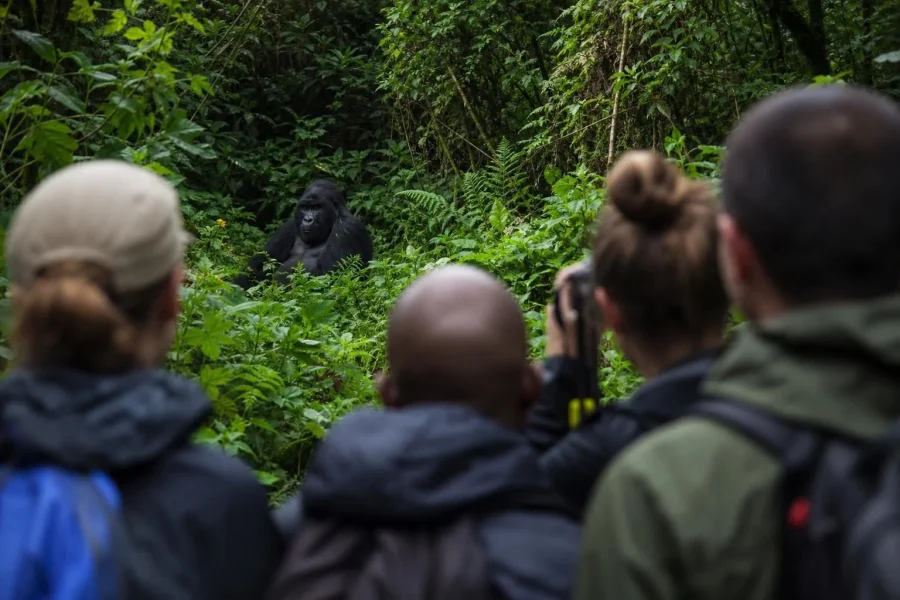
Time with gorillas1 hour, once located
Sector trek difficultyModerate higher altitude, cooler climate, hilly terrain

Where the Bitukura Gorilla Group Treks: Ruhija Sector of Bwindi.

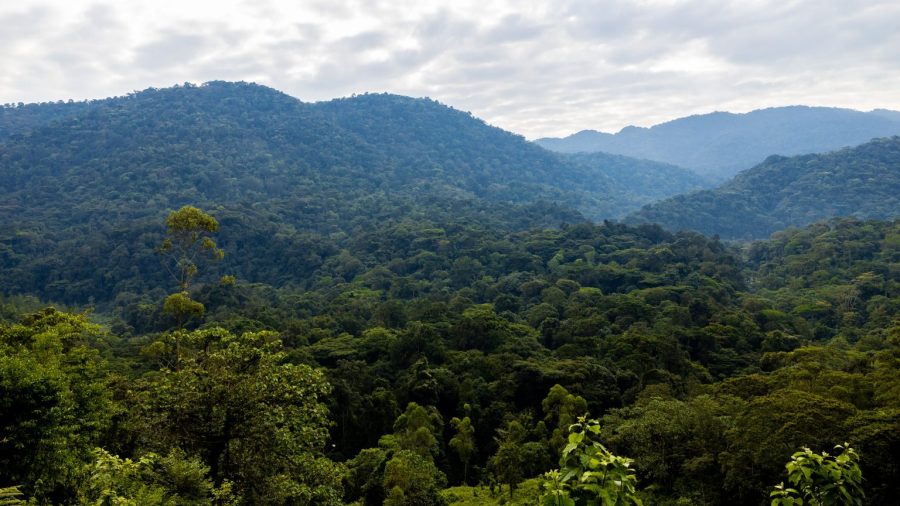
Bitukura is trekked exclusively out of Ruhija, the smallest and highest-altitude of Bwindi Impenetrable National Park’s four gorilla trekking sectors, sitting on the eastern edge of the forest. Ruhija shares the same one-hour, ranger-guided trekking format as Buhoma, Rushaga, and Nkuringo, but its position on a forested ridge, generally between 2,100 and 2,600 meters above sea level, gives it a noticeably cooler climate and a different trekking rhythm than the lower, warmer sectors to the south and north.

Bitukura Gorilla Group: Ruhija Sector Trekking Guide 2027

Of Bwindi’s 331 square kilometers of montane rainforest, Ruhija holds a comparatively small slice of gorilla territory, just four families against Rushaga’s nine or ten, which in practice means fewer trekking groups on the trail on any given morning. In our experience booking Ruhija permits over the years, that lower trekking volume is one of the sector’s most underrated advantages: quieter ranger stations, less congestion at the trailhead, and forest trails that feel genuinely remote even though Ruhija is one of the more accessible sectors by road.

Getting to Ruhija

From Kigali, Rwanda, the drive to Ruhija runs via the Katuna border crossing rather than the Cyanika crossing used for Rushaga and Nkuringo and typically takes in the range of 5 to 6 hours depending on road conditions and border wait times. From Kabale town, the nearest Ugandan town of any size, Ruhija is roughly 1.5 to 2 hours away via a mostly unpaved forest road. Travellers arriving from Entebbe or Kampala face a longer overland transfer of around 8 to 9 hours, similar to the drive time for Buhoma; the alternative is a scheduled flight to the Kihihi airstrip, which serves both Buhoma and Ruhija, followed by a road transfer of roughly 1.5 to 2 hours.

We generally recommend combining a Ruhija gorilla permit with at least one night in the sector rather than a stop for a few hours, since the road quality and altitude gain reward an unhurried schedule. For the full breakdown of how each Bwindi sector compares on distance, difficulty, and lodging, see our guide to Bwindi’s four gorilla trekking sectors, and for the wider park context, our Bwindi Impenetrable National Park overview.

The History and Habituation of the Bitukura Gorilla Family

The Bitukura gorilla group takes its name from the Bitukura River, the stream near which UWA rangers and researchers first regularly encountered the family while working in the surrounding forest. Habituation, the process of acclimating a wild gorilla family to a fixed daily human presence until the animals no longer show fear or aggression, began in July 2007 and was completed by October 2008, a comparatively fast process by Bwindi standards, where full habituation more typically takes two to four years.

Researchers usually attribute Bitukura’s shorter timeline to its proximity to the Kyaguriro research group. Because UWA trackers and Makerere University researchers were already spending extended periods in the same stretch of forest monitoring, Kyaguriro, one of Bwindi’s dedicated long-term research families, the Bitukura gorillas, had indirect, repeated exposure to a calm human presence well before formal habituation began. That head start meant the family required roughly a year of dedicated habituation work rather than the two-plus years typical elsewhere in the park.

One detail that rarely makes it into shorter write-ups: Bitukura and Kyaguriro are understood by local rangers to maintain an unusually close social relationship for two separate gorilla families, occasionally coming into contact in the forest in what local guides sometimes describe as a “meet-up” between the two groups. When this happens on a trek day, it can mean an unusually large gathering of gorillas in one place, though it can also mean your ranger team spends longer repositioning the group away from the research family, since Kyaguriro’s tourism access is limited and closely managed.

Meet the Bitukura Gorilla Family: Members and Group Structure.

Bitukura is a multi-male family, meaning it is led by a dominant silverback but includes several additional adult males rather than the single-silverback structure common to many Bwindi groups. The family’s recorded line-up has historically included the following individuals:

NameRole
NdahuraDominant / lead silverback
KaramuziSecond silverback
RukumuThird silverback
RukaraFourth silverback
KamugaAdult female
RuharaAdult female
BetinaAdult female
Adult femaleBlackback
ObiaBlackback
KabandizeJuvenile (transferred from Kyaguriro group)
TwakireJuvenile
MubwindiInfant
KadogoInfant

A family carrying four silverbacks under one dominant male is structurally unusual and worth understanding before you book. In Bwindi’s recent history, multi-silverback groups have repeatedly split once a subordinate male reaches maturity and chooses to break away with a share of the females. The Nshongi family in Rushaga, once Bwindi’s largest group at 35 members, has divided into Mishaya, Bweza, and other now-independent families through exactly this process. Bitukura has, to date, remained intact, but the same underlying dynamic exists within the group, and a split is a realistic long-term possibility. If the family does eventually divide, expect one of Karamuzi, Rukumu, or Rukara to emerge as the founding silverback of a newly named group.

Free Quote · A few Minutes Reply

Ready to See the Gorillas Yourself?

Tell us your dates and we’ll check live permit availability today: budget to luxury, Uganda, Rwanda & Congo.

Plan My Trek →

Why Bitukura Is a Favorite for Photographers and First-Time Trekkers.

Ask Ugandan guides which Ruhija family they’d recommend for a nervous first-time trekker, or for a visitor who wants usable photographs rather than a blurred back disappearing into the undergrowth, and Bitukura comes up more often than any other family in the sector. The gorillas have a reputation for staying visible and continuing normal behavior, feeding, grooming, resting, and letting juveniles play while a trekking group is present, rather than moving off deeper into the forest.

Gorilla Trekking in Uganda

This matters more than it might sound. A gorilla family’s one habituated hour is fixed regardless of what the animals do during it; a family that keeps feeding in a clearing gives visitors sustained, close, well-lit viewing, while a family that moves continuously through dense cover can turn the hour into a series of brief, half-obscured sightings through foliage. In our experience booking gorilla permits across all four Bwindi sectors, most first-time trekkers underestimate how much a family’s typical temperament shapes the actual quality of the encounter, focusing instead purely on cost or sector name recognition.

Bitukura’s reputation for calm is comparable to Rushegura in Buhoma, another family known for settled, predictable behavior, though the two differ meaningfully in setting: Rushegura often stays close to lodge grounds on relatively flat terrain, while Bitukura’s calm temperament plays out against Ruhija’s cooler, hillier forest. Neither family’s exemplary behavior is contractually guaranteed, gorillas are wild animals, and a family’s mood can shift with weather, recent contact with another group, or simply an individual having an off day, but Bitukura’s track record is genuinely one of the more consistent in the park.

Trekking Difficulty and What to Expect on the Trail

Ruhija sits at Bwindi’s highest average altitude, and the sector’s trekking difficulty is generally rated moderate, steeper and cooler than Buhoma’s more established, gently graded trails, but without the sustained ridge climbs that make Nkuringo the park’s most physically demanding sector. Because the Bitukura family ranges across hilly, forested terrain rather than the flatter valley floor some Buhoma families favor, hike times to reach them vary widely: some mornings trackers locate the group within 45 minutes to an hour of leaving the ranger post; other days, particularly if the family has moved toward higher ground, the hike can extend to four or five hours each way.

Fitness level needed

A reasonable, sustained level of fitness is enough for most healthy adults to complete a Bitukura trek comfortably. You should be able to walk uphill on uneven, often muddy or root-covered ground for at least two to three continuous hours without needing to stop frequently. Ruhija’s cooler air can actually make sustained hiking more comfortable than in the lower, hotter sectors, though the altitude means the climbs themselves feel steeper underfoot.

We recommend the following for any Ruhija trek, including Bitukura:

  • Sturdy, broken-in waterproof hiking boots with ankle support
  • A walking stick (provided free at most ranger stations)
  • Gardening or gripping gloves for handling vegetation on steep sections
  • A local porter (USD 15–20 per day), who will carry your pack and assist on the steepest stretches
  • Warm layers for the pre-dawn ranger briefing, even in the dry season, given Ruhija’s altitude

For the full rundown of trekking rules, permitted distances, and ranger protocol that apply across every Bwindi sector, see our gorilla trekking rules and regulations guide and our gorilla trekking packing list.

Ruhija Sector’s Four Gorilla Families Compared

Bitukura is one of four habituated families available in Ruhija. When a choice is possible, since UWA generally assigns families rather than guaranteeing a specific one, though sector-level and family-level requests can sometimes be accommodated, the decision comes down to what you value most: temperament, group size, or the kind of encounter you’re after.

FamilyApprox. SizeKnown ForBest For
Bitukura13 members (historical) Calm, visible behavior; unusual 4-silverback structure led by NdahuraPhotographers, first-time trekkers, nervous hikers
Oruzogo17–23 members One of Bwindi's larger families; playful, active juvenilesVisitors wanting an energetic, populous group
Mukiza~22 members Formed after the death of original Kyaguriro silverback RukinaRepeat visitors interested in gorilla social history
KyaguriroSize varies; research groupLong-term Makerere University research family; limited tourism slotsVisitors wanting a scientific, research-oriented encounter

If you have to pick one family without a strong preference, Bitukura remains our default recommendation for Ruhija first-timers, specifically because temperament is more predictable there than in any other family in the sector.

It’s worth being upfront about how assignment actually works: UWA, not the trekking operator, ultimately decides which family a given permit is booked against, typically the evening before or the morning of the trek, based on ranger station logistics and group balancing across the sector. When you book with us, we note your preference for Bitukura for a calmer encounter or Oruzogo for a livelier one and request it directly with the Ruhija ranger post, but a same-sector alternative should always be treated as a real possibility, not a booking guarantee

Free Quote · A few Minutes Reply

Ready to See the Gorillas Yourself?

Tell us your dates and we’ll check live permit availability today: budget to luxury, Uganda, Rwanda & Congo.

Plan My Trek →

Combining a Bitukura Trek With Birding and Other Ruhija Activities

Ruhija is widely regarded as the best birding sector in Bwindi, and pairing a Bitukura gorilla trek with a morning or afternoon birding walk is one of the more efficient ways to add real value to a Ruhija itinerary without adding an extra travel day. Bwindi has more than 350 recorded bird species, and many of the Albertine Rift’s endemic species are most reliably seen along Ruhija’s ridge-line trails, including the Grauer’s rush warbler, the Rwenzori turaco, and the Dusky Crimsonwing, as well as more frequently seen residents like the starred robin, grey cuckooshrike, and yellow-eyed black flycatcher.

Bwindi-Sarambwe forest

Beyond birding, Ruhija offers two other activities worth building into a trek itinerary. Batwa cultural visits connect travelers with the indigenous forest-dwelling community displaced when Bwindi became a national park in 1991. Guided sessions with Batwa elders cover traditional forest skills like honey harvesting and herbal medicine, and they also provide direct, meaningful support for Batwa livelihoods. Community-run projects around Ruhija, mostly handicrafts and small-scale bee farming, offer a lower-key alternative for travellers with a spare afternoon. Neither activity requires a separate permit, and both can typically be added to a Ruhija itinerary with a half-day’s notice.

For travellers whose primary interest is birding rather than gorillas, our Uganda birding tours can be built around a Ruhija base specifically to maximize Albertine Rift endemic sightings alongside a Bitukura trek.

Bitukura in Context: Why Mountain Gorilla Trekking Funds Conservation

In 2018, Mountain gorillas (Gorilla beringei beringei) were reclassified from Critically Endangered to Endangered on the IUCN Red List, the first improvement in the subspecies’ conservation status since assessments began, after sustained population growth documented over two decades of Virunga and Bwindi-Sarambwe censuses coordinated by the Greater Virunga Transboundary Collaboration. The most recent full count, the 2018 Bwindi-Sarambwe survey, recorded 459 individuals across Bwindi and the adjoining Sarambwe reserve. A new census covering the same landscape launched in May 2025, with fieldwork continuing into 2026. Bitukura’s own existence as a trekking family is a direct product of this conservation-funding model. Every USD 800 Bwindi permit is collected by the Uganda Wildlife Authority and shared between community revenue-sharing for parishes bordering the park, trail and ranger-post infrastructure, ranger salaries and anti-poaching patrols, and veterinary and research funding, which supports programs like Gorilla Doctors that provide field veterinary intervention for sick or injured gorillas across Uganda, Rwanda, and DR Congo. A family with a documented multi-decade history, like Bitukura, only exists to be trekked at all because that funding model has held for more than three decades without a habituated Bwindi family being lost to poaching.

Practical Logistics: Permits, Costs, and Booking a Bitukura Trek

A Bitukura gorilla permit costs the same as any standard permit for gorilla trekking in Uganda: USD 800 per person for foreign non-residents, set and collected directly by the Uganda Wildlife Authority regardless of which operator books it on your behalf. UWA has also introduced a discounted low-season rate of USD 600 per person in recent tariff updates. Foreign residents and East African Community citizens pay reduced rates. Ask us for the current breakdown when you inquire.

Cost itemTypical rangeNotes
Bitukura / Ruhija gorilla permit$800 pp (peak) / $600 pp (low season)Fixed by UWA
Ruhija accommodation (per night)$60–$400+ ppFewer lodges than Buhoma or Rushaga; book early
Road transfer, Kigali to Ruhija$150–$250 ppVia Katuna border crossing
Local porter$15–$20 per dayTip separately; strongly recommended given Ruhija terrain
Meals$25–$70 pp/dayDepending on lodge tier
Uganda e-visa$50East Africa Tourist Visa covers Uganda and Rwanda for $100 total

Book the permit itself as early as possible, ideally 3 to 6 months ahead for June-to-September and December-to-February travel, but treat Ruhija accommodation booking with equal urgency. The sector has meaningfully fewer beds than Buhoma or Rushaga, with lodges including Gorilla Safari Lodge, Bakiga Lodge, Gorilla Mist Camp, Ruhija Gorilla Friends Resort Campsite, Broadbill Forest Camp, Trekkers Tavern, and Agandi Lodge, spanning budget to mid-range comfort; the better mid-range and lodge-level rooms sell out for peak dates before the permits themselves do.

As of the most recent Uganda Wildlife Authority policy update, foreign non-resident visitors are required to book gorilla permits through a licensed Uganda Tourism Board-registered operator rather than directly online. As an AUTO-registered operator, we handle the full booking chain directly with UWA’s Ruhija allocation desk, so your permit, transfer, and lodge booking are confirmed as one package rather than three separate reservations.

For families or small groups wanting two consecutive days of gorilla trekking without changing sectors, Ruhija’s four-family line-up makes it possible to trek Bitukura one day and Oruzogo, Mukiza, or a Kyaguriro research slot the next. See our double gorilla trekking itineraries for how that’s typically structured, or our gorilla permit booking page for the general booking process.

What Ruhija Guides Won’t Always Tell You

  • A family’s recorded roster is a snapshot, not a guarantee. Gorilla groups gain infants, lose aging silverbacks, and occasionally split entirely; the Bitukura line-up listed in this guide reflects our last verification, and we’d rather say that plainly than pretend a several-year-old member list is current.
  • Ruhija’s altitude means cold, not just rain. Trekkers packing for “tropical Uganda” are regularly caught off guard by how cold the pre-dawn ranger briefing and early trail hours can feel; a proper fleece or light down layer matters as much as a rain jacket here.
  • “Calm” does not mean “short.” Bitukura’s relaxed reputation is about behavior once you find them, not about how long it takes to find them. A calm family can still be resting three or four hours’ hike from the ranger post on a given morning.
  • Ruhija sells out its beds before its permits. With only a handful of properties in the sector, accommodation, not the UWA permit, is usually the first thing to become unavailable for peak-season dates.
  • The Bitukura–Kyaguriro relationship can work against you as often as it works in your favor. A research-group encounter sounds appealing, but Kyaguriro’s tourism access is intentionally limited, and a Bitukura trek that runs into the research group can mean more time spent repositioning than actual viewing time.
Free Quote · A few Minutes Reply

Ready to See the Gorillas Yourself?

Tell us your dates and we’ll check live permit availability today: budget to luxury, Uganda, Rwanda & Congo.

Plan My Trek →

Frequently Asked Questions About the Bitukura Gorilla Group

Where is the Bitukura gorilla group located?

The Bitukura gorilla group treks out of the Ruhija sector, on the eastern side of Bwindi Impenetrable National Park in southwestern Uganda. Ruhija is one of Bwindi’s four gorilla trekking sectors, alongside Buhoma, Rushaga, and Nkuringo, and it sits at the highest average altitude of the four, roughly 1.5 to 2 hours from Kabale town by road. Bitukura shares the sector with three other habituated families: Oruzogo, Mukiza, and Kyaguriro.

How many gorillas are in the Bitukura family?

Bitukura’s last recorded composition included 13 members: four silverbacks (Ndahura, Karamuzi, Rukumu, and Rukara), three adult females, two blackbacks, two juveniles, and two infants. Group size across Bwindi’s 20 habituated families generally ranges from around 8 to over 20 members.

Who is the lead silverback of the Bitukura group?

Ndahura is Bitukura’s dominant silverback. Unlike many Bwindi families, which are led by a single mature male, Bitukura is a multi-silverback group, meaning Ndahura leads alongside three subordinate silverbacks, Karamuzi, Rukumu, and Rukara, rather than being the family’s only adult male.

How much does it cost to trek the Bitukura gorilla family?

A Bitukura trek costs the same as any standard Uganda gorilla permit: USD 800 per person for foreign non-residents, set directly by the Uganda Wildlife Authority. A discounted rate of USD 600 has applied during low-season months in recent tariff cycles. This fee covers park entry, the ranger-guided trek, and one hour with the gorillas once located; it does not include transport, accommodation, or a porter.

How difficult is the Bitukura gorilla trek?

The Bitukura trek is rated moderate difficulty, in line with the Ruhija sector generally. Hike times to reach the family vary from under an hour to four or five hours depending on where trackers locate the group that morning, over hilly, sometimes muddy forest terrain at altitude. Most healthy adults need a reasonable level of sustained fitness, roughly the ability to hike uphill for two to three hours.

When was the Bitukura gorilla family habituated?

Bitukura’s habituation ran from July 2007 to October 2008, roughly a year, faster than the two-to-four-year process typical elsewhere in Bwindi. The shorter timeline is generally attributed to the family’s proximity to Kyaguriro, a long-term research group, which gave Bitukura’s gorillas earlier indirect exposure to a calm human presence.

What is the Bitukura gorilla group known for?

Bitukura is known among Ugandan guides for its calm, visible behavior during trekking hours; the gorillas frequently continue feeding, resting, and playing in view of visitors rather than moving off into dense cover, which makes the family a consistent favorite with photographers and first-time trekkers. It is also structurally unusual for carrying four silverbacks under one dominant male, Ndahura, rather than the single-silverback structure common elsewhere in Bwindi.

How do I book a permit for the Bitukura family?

Bitukura permits are booked the same way as any Bwindi gorilla permit: through a Uganda Tourism Board-registered operator, who reserves and pays for the permit directly with the Uganda Wildlife Authority on your behalf. As an AUTO-registered operator, we can request Bitukura specifically when submitting your Ruhija booking, alongside your accommodation and transfer arrangements.

Can I request the Bitukura family specifically when booking?

You can request Bitukura, and we do submit that preference to the Ruhija ranger post on your behalf, but UWA makes the final family assignment, typically the evening before or morning of your trek, based on group balancing across the sector’s four families. Treat a specific family request as a strong preference we advocate for, not a guaranteed outcome.

What is the difference between Bitukura and Oruzogo gorilla families?

Both families trek out of Ruhija, but they differ in size and temperament. Oruzogo is one of Bwindi’s larger families, known for playful juveniles and more active group dynamics, while Bitukura is smaller and known specifically for calm, settled behavior. Guides generally recommend Bitukura for trekkers prioritizing a relaxed, photography-friendly encounter and Oruzogo for those wanting a livelier, more populous group.

How do I get to the Ruhija sector to trek Bitukura?

From Kigali, Rwanda, you can reach Ruhija via the Katuna border crossing, which typically takes 5 to 6 hours by road. From Entebbe or Kampala, the overland drive runs 8 to 9 hours, or you can fly to the Kihihi airstrip and transfer roughly 1.5 to 2 hours by road. From Kabale town, the nearest Ugandan town of any size, Ruhija is about 1.5 to 2 hours away.

Where can I stay near the Ruhija sector for a Bitukura trek?

Ruhija has fewer lodges than Buhoma or Rushaga, with options including Gorilla Safari Lodge, Bakiga Lodge, Gorilla Mist Camp, Ruhija Gorilla Friends Resort Campsite, Broadbill Forest Camp, Trekkers Tavern, and Agandi Lodge, spanning budget to mid-range comfort. Because bed capacity is limited, we recommend booking Ruhija accommodation as early as the permit itself, particularly for June-to-September and December-to-February travel.

Is Ruhija a good sector for beginners?

Yes, with a caveat on fitness rather than experience. Ruhija’s trekking difficulty is moderate, its permit process and ranger protocol are identical to every other Bwindi sector, and Bitukura specifically has a reputation for calm behavior that suits nervous first-timers well. The main adjustment for beginners is Ruhija’s altitude and cooler climate, which some trekkers don’t anticipate when packing for what they assume will be uniformly hot, humid rainforest conditions.

Free Quote · A few Minutes Reply

Ready to See the Gorillas Yourself?

Tell us your dates and we’ll check live permit availability today: budget to luxury, Uganda, Rwanda & Congo.

Plan My Trek →