Buhoma Sector: Bwindi’s Original Gorilla Trekking Region.

The Buhoma sector is the northernmost of Bwindi Impenetrable National Park’s four gorilla trekking regions and the place where Uganda’s gorilla tourism industry began in 1993 with the opening of the Mubare gorilla family. Set at the lowest altitude of Bwindi’s four sectors, Buhoma today holds five habituated gorilla families: Mubare, Habinyanja, Rushegura, Muyambi, and Katwe, and the widest range of lodges anywhere in the park, from community-run bandas to the luxury Mahogany Springs.

Buhoma Sector: Bwindi's Original Gorilla Trekking Region

It sits roughly 8 to 9 hours by road from Entebbe or Kampala, or about 1 to 1.5 hours by scheduled flight to the nearby Kihihi airstrip, and is the sector that most operators recommend for first-time trekkers, families flying in, and anyone combining a gorilla trek with Queen Elizabeth National Park. This trekking guide covers Buhoma’s gorilla families, how to get there, what a trek actually involves, and how it compares with Bwindi’s three other sectors.

Quick Facts: Buhoma Sector

Fact Detail
Location Northern boundary of Bwindi Impenetrable National Park, Kanungu district
Country Uganda
First opened 1993 Mubare gorilla family, Bwindi’s first habituated group
Habituated gorilla families 5 Mubare, Habinyanja, Rushegura, Muyambi, Katwe
Daily permits available Up to 40 (5 families × 8 visitors)
Standard permit price USD 800 per person (Uganda Wildlife Authority)
Altitude Lowest of Bwindi’s four sectors, roughly 1,160–1,500 m
Trek difficulty Easy to moderate the gentlest terrain in Bwindi
Drive from Entebbe/Kampala. ~8–9 hours by road
Nearest airstrip Kihihi (~1 hour drive to trailhead)
Drive from Kabale town ~2 hours via Kanungu
Signature extra activity Batwa Cultural Trail and community walks
Free Quote · A few Minutes Reply

Ready to See the Gorillas Yourself?

Tell us your dates and we’ll check live permit availability today: budget to luxury, Uganda, Rwanda & Congo.

Plan My Trek →

Where Buhoma Sector Is and Why It Became Bwindi’s First Trailhead.

Buhoma sits on the northern edge of Bwindi Impenetrable National Park, in Kanungu district, and was the very first point of entry Uganda Wildlife Authority developed for gorilla tourism. Every other sector, Ruhija, Rushaga, and Nkuringo, opened later, which is why Buhoma still carries the reputation as the ‘classic’ or ‘original’ gorilla trekking experience in Uganda.

Location and altitude

Buhoma sits at the lowest altitude of Bwindi’s four trekking sectors, which is the main reason its trails are generally rated easier than Ruhija’s higher, cooler terrain or Nkuringo’s steep ridgelines. Lower altitude also means warmer, more humid conditions on the trail, so pack accordingly even in the cooler dry-season months.

A brief history: 1993 and the Mubare breakthrough

The Mubare gorilla family became Bwindi’s and Uganda’s first gorilla group opened to tourists in 1993, after a multi-year habituation process. That single event effectively created Uganda’s gorilla tourism industry and established Buhoma as its home base; the village itself grew from a small trading center into the tourism hub it is today largely as a result. For the general habituation process behind every family in Bwindi, including Buhoma’s, see our guide to gorilla habituation.

The Gorilla Families of Buhoma Sector

Buhoma currently holds five habituated families, more than any Bwindi sector had a decade ago, reflecting steady growth in the park’s total habituated population. Each has a distinct character worth knowing before you request a sector.

Mubare, the original family

Mubare is Bwindi’s oldest habituated group, first opened to tourists in 1993 and named after the Mubare hills where it was discovered. The family has shrunk considerably from its original size through natural attrition and internal splits, most notably giving rise to the Muyambi group in 2019 and today’s numbers among Bwindi’s smaller families.

Habinyanja, the H-Group

Habinyanja, also known as the H-Group, was habituated between 1997 and 1999 and takes its name from a local word for a swamp, referencing the wetland where the group was first sighted. It is known for complex social dynamics and, historically, for internal power struggles between rival males, the same dynamic that produced the Rushegura split described below.

Rushegura Buhoma’s friendliest family

In the early 2000s, Rushegura broke away from Habinyanja and opened to tourism. It has a reputation as Bwindi’s calmest, most predictable family, frequently ranging close to Buhoma’s lodges and the park headquarters, making it the group most operators recommend for first-time trekkers, older travellers, or anyone wanting a shorter, gentler hike.

Muyambi: the newest addition

Muyambi was formed in 2019 when a silverback of the same name broke away from Mubare with several females and was opened to trekking the same year. As Buhoma’s youngest family, it is smaller than the others and still establishing its territory, which tends to make encounters feel especially intimate.

Katwe: completing the roster

Katwe is Buhoma’s most recently habituated family, opened to tourism after a multi-year habituation process. Behavior can be somewhat less predictable than in the longer-established families, which some photographers and repeat visitors specifically seek for a rawer, more unscripted encounter.

Family Notable For Best For
Mubare Bwindi’s oldest habituated group (1993) History-minded trekkers
Habinyanja Large, complex social dynamics Travellers wanting a classic, substantial trek
Rushegura Calm, often near the lodges First-timers, older or less mobile trekkers
Muyambi Newest family (2019), small and intimate Those wanting a fresher, more personal encounter
Katwe Most recently habituated, less predictable Repeat visitors and photographers wanting rawer behavior

For the complete roster of all of Uganda’s gorilla families across every sector, see our habituated gorilla families guide.

Getting to Buhoma: Road, Air, and Route Choices

Unlike Rushaga and Nkuringo, which are within easy reach of the Cyanika border and Kigali, Buhoma is genuinely a Uganda-side sector; it is not a practical option for a Kigali-routed trip, and most operators, including us, will steer Kigali-based travellers toward Rushaga, Nkuringo, or Ruhija instead.

By road from Entebbe or Kampala

  1. Depart Entebbe or Kampala early morning, heading southwest through Mpigi and Masaka.
  2. Continue via Mbarara, a natural lunch stop roughly halfway.
  3. Proceed through Ntungamo and Rukungiri toward Kanungu district.
  4. Arrive at Buhoma in the late afternoon or early evening; budget the full day for this leg, roughly 8 to 9 hours of driving with stops.

By air via Kihihi

Scheduled flights connect Entebbe International Airport to Kihihi airstrip in around 1 to 1.5 hours, with a short onward road transfer to the Buhoma trailhead. This is the fastest way into the sector and the option that most luxury and time-constrained itineraries use. See our fly-in gorilla safari guide for scheduling and charter options.

Combining with Queen Elizabeth National Park

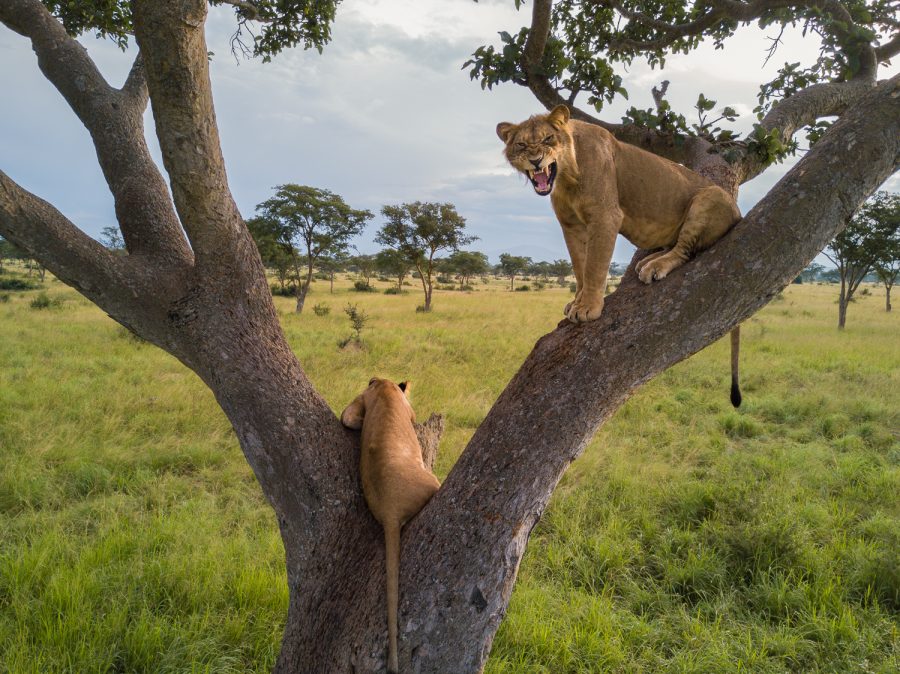
Tree-climbing Lions of Ishasha Queen Elizabeth

Buhoma is the closest Bwindi sector to Queen Elizabeth National Park, roughly 4 hours away via the Ishasha sector, home to Uganda’s famous tree-climbing lions. This makes Buhoma the natural choice for anyone building a combined gorilla-and-wildlife itinerary rather than routing purely through Rushaga or Nkuringo in the south. Our 5-Day Gorilla & Chimpanzee Safari and 4-Day Gorillas and Wildlife Safari both route through Buhoma for exactly this reason.

Free Quote · A few Minutes Reply

Ready to See the Gorillas Yourself?

Tell us your dates and we’ll check live permit availability today: budget to luxury, Uganda, Rwanda & Congo.

Plan My Trek →

What to Expect on a Buhoma Gorilla Trek.

Terrain and difficulty

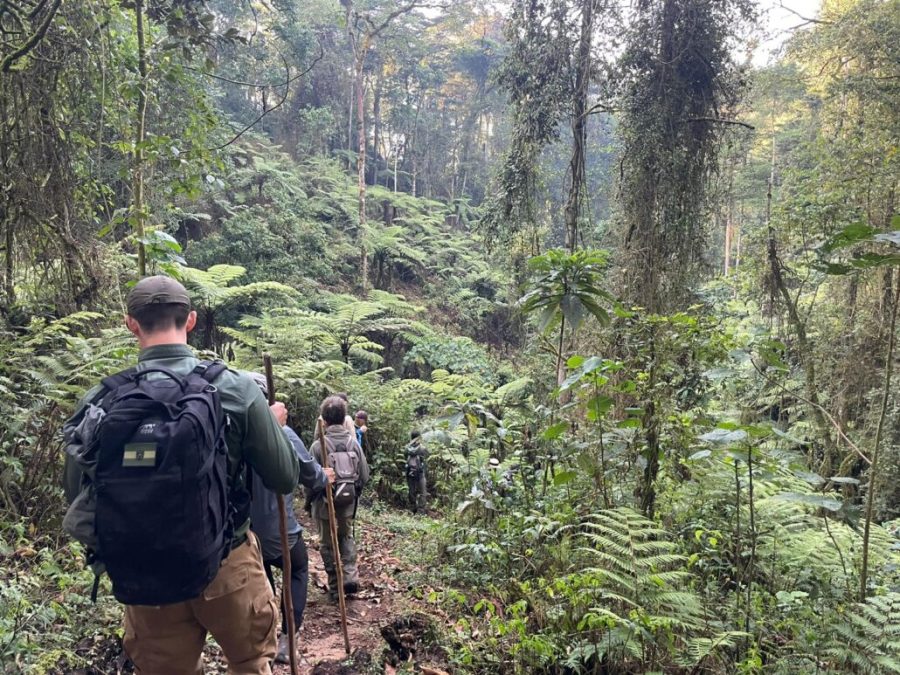
Buhoma’s lower altitude and comparatively gentle topography give it a reputation as the easiest sector in Bwindi to trek, particularly with the Rushegura family, which often ranges close to the lodges. That said, ‘easier’ is relative; Bwindi’s name translates roughly to ‘impenetrable,’ and even Buhoma’s gentlest trails involve dense vegetation, mud, and real elevation change. Terrain still varies significantly by family and by day, since gorillas move and trackers must follow.

Typical hike time

Hike times to first contact in Buhoma range from under an hour, when a family is feeding close to the trailhead, to 5 or more hours on longer days, most commonly with Mubare or Habinyanja, whose ranges extend deeper into the forest. As with every Bwindi sector, there are no refunds for a long trek, so pack water, snacks, and rain gear regardless of the morning’s forecast.

For fitness preparation and boot recommendations specific to Bwindi’s terrain, see our hiking boots guide.

Buhoma vs Bwindi’s Other Three Sectors

Every sector in Bwindi offers the same one-hour encounter once you reach a family; what genuinely differs is the journey, the terrain, the lodge options, and the crowd level.

Factor Buhoma Ruhija Rushaga Nkuringo
Gorilla families 5 4 9–10 4
Trek difficulty Easy–Moderate Moderate Moderate–Strenuous Strenuous
From Kigali Not practical (Uganda-side) ~5–6 hrs ~4–5 hrs via Cyanika ~4–5 hrs via Cyanika
From Entebbe ~8–9 hrs by road ~8–9 hrs by road ~8–9 hrs by road ~8–9 hrs by road
Nearest airstrip Kihihi (~1 hr) Kihihi/Kisoro Kisoro (~1–1.5 hrs) Kisoro (~1–1.5 hrs)
Lodge selection Best in Bwindi Smaller, fewer options Good, growing Fewer, more remote
Habituation Experience No No Yes ($1,500) Yes ($1,500)
Best for First-timers, fly-in visitors, QENP combos Birders, photographers, repeat visitors Kigali-routed trips, best permit availability Adventurous trekkers wanting fewer crowds

Where to Stay in Buhoma: Lodges Across Every Budget

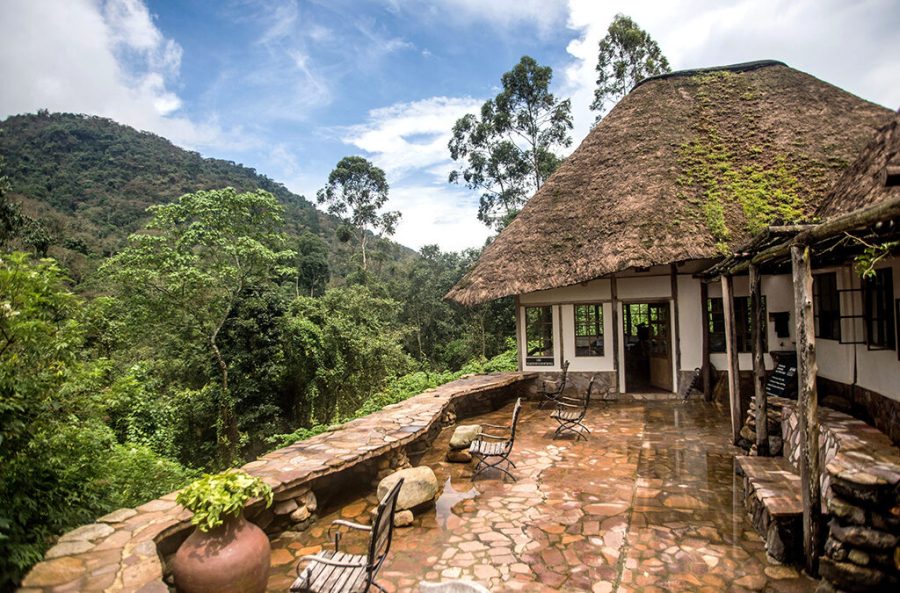
Buhoma has more lodges than any other Bwindi sector, a direct legacy of being the park’s original trekking base. Options span from community-run budget camps to some of Uganda’s most established luxury properties.

Where to Stay in Buhoma

Tier Example Lodges Notes
Budget Buhoma Community Rest Camp, Bwindi View Bandas Community-run; direct economic benefit to Buhoma residents
Mid-range Buhoma Lodge, Gorilla Forest Camp, Bwindi Guesthouse Comfortable, well-located near the trailhead
Luxury Mahogany Springs, Sanctuary Gorilla Forest Camp, Silverback Lodge, Volcanoes Bwindi Lodge Full-service, some with spa and premium dining

Beyond Gorillas: Other Things to Do in Buhoma

Buhoma’s well-developed tourism infrastructure means there is more to do here after your one hour with the gorillas than in any other Bwindi sector.

  • Batwa Cultural Trail: guided visits with the indigenous Batwa community, who were displaced when Bwindi became a national park in 1991; a meaningful human encounter alongside the wildlife experience.
  • Muzabajiro Loop Trail: a roughly 6-kilometer forest walk through varied tree species with views toward the Virunga volcanoes on clear days.
  • River Ivi Trail: Buhoma’s longest nature trail, approximately 14 kilometers long and taking about 8 hours to walk, running to the park’s southern boundary.
  • Birding: Buhoma’s lower altitude and forest edge habitat make it productive for birders, part of Bwindi’s broader 350+ species count.
  • Community walks and village visits among the Bakiga community, including local food preparation and craft demonstrations.

Practical Logistics: Permits, Costs, and What to Pack

Booking the permit

Buhoma’s permits are the most sought-after in Bwindi precisely because of its accessibility and lodge selection, and during peak season (June–September, December–February) they can sell out 3 to 6 months ahead. See our gorilla permit booking page and general Uganda gorilla permit guide for the booking process; we recommend booking Buhoma slots earlier than any other sector for this reason.

Realistic cost breakdown

Cost Item Budget Range Notes
Gorilla permit (Buhoma) $800 pp Fixed by UWA, same as all Bwindi sectors
Accommodation, Buhoma (2 nights) $60–$800 pp/night Widest lodge range of any Bwindi sector
Road transfer (Entebbe/Kampala return) $250–$400 pp Shared or private vehicle, ~8–9 hrs each way
Flight, Entebbe–Kihihi return $300–$500 pp This is an approximate cost; please confirm with current airline schedules.
Local porter $15–$20/day Strongly recommended; tip separately
Meals $30–$80 pp/day Lodge-dependent
Uganda e-Visa $50 The East Africa Tourist Visa ($100) covers UG + RW.
Trekking certificate Included Issued by UWA at trek’s end

What to pack

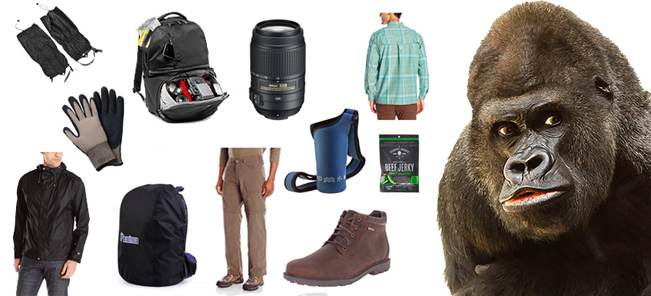
What to Pack for gorilla trekking

  • Long-sleeved shirt and trousers in dark, natural colors
  • Waterproof hiking boots Buhoma’s lower-altitude forest stays humid and muddy year-round
  • Rain jacket regardless of season
  • 2+ liters of water, snacks, and a packed lunch for longer trek days
  • Camera with a fast lens; no flash photography permitted near the gorillas
Free Quote · A few Minutes Reply

Ready to See the Gorillas Yourself?

Tell us your dates and we’ll check live permit availability today: budget to luxury, Uganda, Rwanda & Congo.

Plan My Trek →

Frequently Asked Questions About Buhoma Sector

Where is the Buhoma sector located in Bwindi Impenetrable National Park?

The Buhoma sector sits on the northern boundary of Bwindi Impenetrable National Park, in the Kanungu district in southwestern Uganda. It was the park’s first gorilla trekking trailhead, established in the early 1990s, and remains one of four sectors alongside Ruhija, Rushaga, and Nkuringo.

How many gorilla families are in the Buhoma sector?

The Buhoma sector currently has five habituated gorilla families open for trekking: Mubare, Habinyanja, Rushegura, Muyambi, and Katwe, offering up to 40 permits per day at 8 visitors per family.

Is Buhoma the best sector for gorilla trekking in Uganda?

Buhoma is widely considered the most accessible and best-equipped sector, with the lowest average altitude in Bwindi, the widest lodge selection, and generally the shortest hike times. It is not automatically the best choice for every traveler: Rushaga has more permit availability at short notice, Nkuringo offers more dramatic ridgeline scenery, and Ruhija is stronger for dedicated birders.

How much does gorilla trekking cost in the Buhoma sector?

A standard gorilla trekking permit in Uganda costs USD 800 per person regardless of which of Bwindi’s four sectors you visit, including Buhoma. A realistic total trip budget, including accommodation, transport, porter fees, and meals, typically starts around USD 1,300 per person for a budget 3-day trip, rising to USD 3,000 or more for mid-range and luxury itineraries.

How do I get to the Buhoma sector from Entebbe or Kampala?

The road journey from Entebbe or Kampala to Buhoma takes approximately 8 to 9 hours, routing through Mbarara, Ntungamo, and Rukungiri toward Kanungu district. Most travellers treat this as a full travel day, arriving at their Buhoma lodge in the late afternoon or evening.

Can I fly directly to the Buhoma sector?

There is no airstrip inside Buhoma itself, but the Kihihi airstrip, roughly an hour’s drive from the trailhead, serves the sector directly via scheduled or chartered flights from Entebbe International Airport in around 1 to 1.5 hours. This makes Buhoma the most flight-accessible of Bwindi’s four sectors.

What is the easiest gorilla family to trek in Buhoma?

The Rushegura family has the strongest reputation for calm, predictable behavior and frequently ranges close to Buhoma’s lodges and the park headquarters, making it the family most commonly recommended for first-time trekkers, older travelers, or those with limited fitness. On the morning of your trek, UWA assigns a family, so you cannot guarantee it in advance.

How difficult is gorilla trekking in Buhoma compared to other sectors?

Buhoma is generally rated easy to moderate, the gentlest of Bwindi’s four sectors, thanks to its comparatively low altitude and softer terrain. That said, difficulty still depends heavily on where the assigned family is ranging on a given day; a long, strenuous Buhoma hike is entirely possible even though the sector’s average difficulty is lower than Rushaga or Nkuringo.

Where can I stay in the Buhoma sector?

Buhoma offers the widest lodge selection of any Bwindi sector, from community-run budget camps such as Buhoma Community Rest Camp to mid-range options like Buhoma Lodge and Gorilla Forest Camp, up to luxury properties including Mahogany Springs and Sanctuary Gorilla Forest Camp.

What else can I do in Buhoma besides gorilla trekking?

Buhoma offers the Batwa Cultural Trail with the indigenous Batwa community, the roughly 6-kilometer Muzabajiro Loop Trail, the longer 14-kilometer River Ivi Trail, community walks among the Bakiga people, and productive birdwatching thanks to the sector’s forest-edge habitat and lower altitude.

How far in advance should I book a Buhoma gorilla permit?

Buhoma is Bwindi’s most popular sector, and permits during peak season, June to September and December to February, can sell out 3 to 6 months in advance. We recommend booking Buhoma earlier than any other Bwindi sector for this reason, ideally 4 to 6 months ahead for peak-season travel.

Can I combine Buhoma gorilla trekking with Queen Elizabeth National Park?

Yes, and this is one of Buhoma’s strongest advantages. Queen Elizabeth National Park, famous for tree-climbing lions and Kazinga Channel boat cruises, is roughly 4 hours from Buhoma via the Ishasha sector, making it the natural pairing for a combined gorilla-and-wildlife itinerary.

Free Quote · A few Minutes Reply

Ready to See the Gorillas Yourself?

Tell us your dates and we’ll check live permit availability today: budget to luxury, Uganda, Rwanda & Congo.

Plan My Trek →

Plan Your Buhoma Trek

Whether you want the classic Mubare or Rushegura experience, a fly-in trip via Kihihi, or a combined Buhoma-and-Queen Elizabeth itinerary, we book Buhoma permits directly and can tell you what’s genuinely available on your dates this sector fills up faster than any other in Bwindi. Tell us your dates, and we’ll check live permit availability within a few minutes: message us on WhatsApp or email info@trekgorillas.com.