Best Time to Go Gorilla Trekking in Uganda: A Month-by-Month Guide.

The best time to go gorilla trekking in Uganda is June–September or December–February. See month-by-month conditions and get a free permit quote.

The best time to go gorilla trekking in Uganda is during the two dry seasons, June through September and December through February, when Bwindi’s forest trails are firmest and hiking conditions are most predictable. Outside those windows, March to May and October to November bring Uganda’s long and short rains, which make trails muddier and treks slower but do not reduce your chance of finding gorillas, which sits above 99% year-round. Dry-season months are also the busiest and most expensive, with permits selling out 3 to 6 months ahead in popular sectors, while rainy-season travel often means better permit availability, fewer trekkers on the trail, and lower lodge rates. Below, we break down conditions month by month, compare dry- versus rainy-season trekking directly, and cover the practical packing and booking decisions each season calls for.

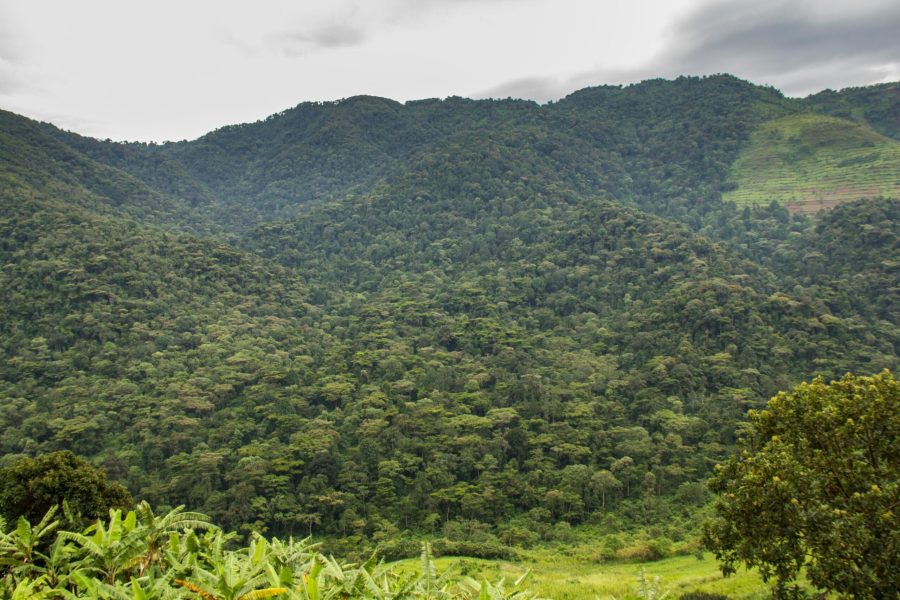
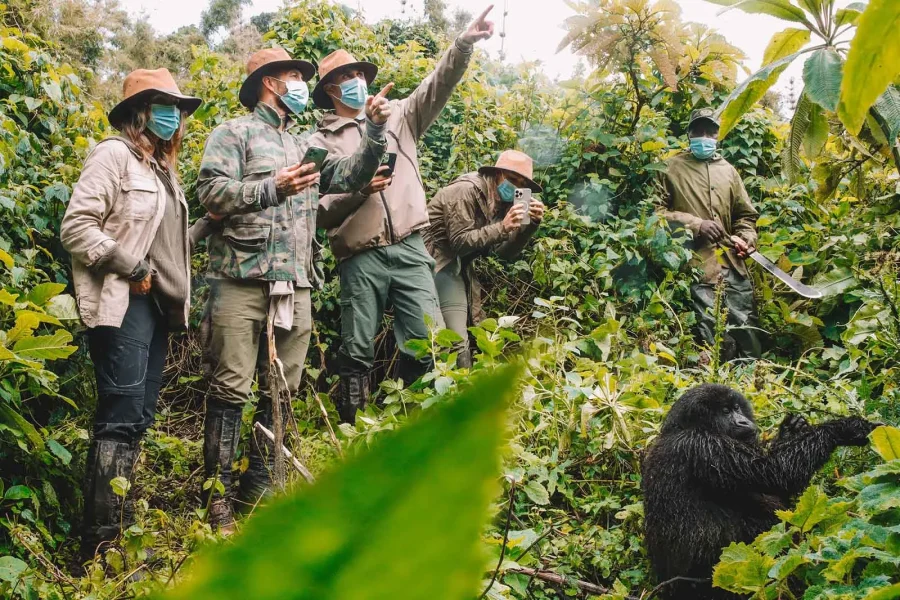
The best time of the year to visit and trek to see gorillas in Uganda is during the drier seasons, which run from June to early October and then from December to February. In Uganda, you can go on gorilla tracking adventures in Bwindi Impenetrable Forest and Mgahinga National Park. Primate safaris in the jungle are a large part of any Uganda safari. The rain forests are by and large wet, and one may not avoid rain entirely. Nevertheless, after dense rain, the skies regularly open up to sunny conditions. You are always advised to book a gorilla permit in time for any month of the year. Uganda permits run out so fast due to high demand.

Best time to go gorilla trekking in Uganda: dry season Bwindi Trail

Uganda has a cooler climate with balanced weather conditions. If you are planning a gorilla trekking safari, it is vital to know when it’s ideal to visit the country for the easiest hiking environments. Even though gorilla tracking is a continual activity, the best time is during the two dry seasons, which are from December up to February as well as June to September.

Wildlife game viewing in Uganda’s Savannah parks is best during the dry seasons, when animals concentrate near water sources. Birding is fanciful throughout the year, but it peaks from November to April when most migrant species are present.

🚊  Only ~128 Uganda gorilla permits issued daily

Your Gorilla Trek Starts With One Message

Tell us your dates and we’ll check live permit availability and send your quote within Minutes: free, no obligation.

Get My Free Quote   AUTO-registered operator · Budget to luxury · Uganda, Rwanda & Congo

Quick Facts: When to Go Gorilla Trekking in Uganda

FactDetail
Peak dry seasonsJune–September and December–February
Rainy seasonsMarch–May (long rains) and October–November (short rains)
Driest, most stable monthsJuly and January
Wettest month (typical)April
Bwindi altitude range1,160–2,607 meters (cooler, wetter at higher elevation)
Gorilla sighting success rateAbove 99% year-round, regardless of season
UWA gorilla permit priceUSD 800 per person, fixed year-round (does not change by season)
Recommended booking lead time (peak season)3–6 months ahead, especially for Buhoma sector
Recommended booking lead time (rainy season)4–8 weeks ahead in most sectors
Best sector for rainy-season permit availabilityRushaga (highest number of habituated families)
Best months for birding (bonus activity)November–April (migrant species present)
Temperature range in BwindiRoughly 11–23°C (52–73°F), cooler at night and at higher altitudes

Uganda’s Two Dry Seasons and Two Rainy Seasons, Explained

Uganda sits on the equator, which gives it a modified equatorial climate with two dry seasons and two rainy seasons each year rather than a single wet-dry split. The long dry season runs roughly June through September, followed by the short rains in October and November, a second dry season from December through February, and the long rains from March through May. This pattern holds broadly across the whole country, including the southwestern region where Bwindi Impenetrable Forest and Mgahinga Gorilla National Park sit.

Best Time to Go Gorilla Trekking in Uganda

The honest caveat we give every client: seasonal labels describe tendencies, not guarantees. Bwindi’s forest canopy and elevation mean rain falls somewhere in the region in every month of the year, dry season included, and a clear June morning can still deliver an afternoon downpour. What genuinely changes between seasons is trail saturation, not whether rain is possible at all.

This seasonal pattern applies most directly to Bwindi Impenetrable Forest and Mgahinga Gorilla National Park, Uganda’s two gorilla trekking parks. Rwanda’s Volcanoes National Park and DR Congo’s Virunga follow a broadly similar regional pattern, useful to know if you are weighing a Rwanda gorilla trekking add-on against your Uganda dates.

Month-by-Month Guide to Gorilla Trekking Conditions

Rather than repeating the generic “dry season is best” advice found on most gorilla trekking pages, here is what each month actually looks like on the ground in Bwindi, based on our team’s trekking calendar across a full season.

MonthSeasonTrail ConditionsBest For
JanuaryDry (peak)Firm, dusty in places, best visibilityPhotographers, families, first-timers
FebruaryDry (peak)Firm and stable, occasional light showersPeak-season trekkers, clear-sky photography
MarchLong rains beginTrails softening, increasingly muddy afternoonsBudget travelers wanting fewer crowds
AprilLong rains (wettest)Muddiest month of the year; slower treksBirders, deep-discount lodge rates
MayLong rains taperingStill wet but improving toward month-endValue-conscious travellers, quiet trails
JuneDry (peak) beginsTrails drying out, greenery still lushTrekkers wanting dry trails without August crowds
JulyDry (peak)Among the most stable, driest conditions of the yearFirst-time trekkers, comfort-focused travellers
AugustDry (peak)Firm trails, busiest month of the yearTrekkers who book 4–6 months ahead
SeptemberDry, transitioningStill largely dry, short rains approaching by month-endTrekkers wanting dry season pricing without August crowds
OctoberShort rainsIntermittent showers, trails softer but manageableBudget travelers, keen birders (migrants arriving)
NovemberShort rainsThe wettest of the short-rains months, quieter trailsPhotographers who enjoy dramatic, moody forest light
DecemberDry (peak) beginsTrails firming up again ahead of the festive peakFamilies and groups travelling over the holidays

Dry Season vs. Rainy Season Gorilla Trekking: A Direct Comparison

Neither season is objectively “better”; each trades off differently across cost, comfort, and crowd levels. The comparison below reflects what actually changes between the two, not marketing language about one being universally superior.

FactorDry Season (Jun–Sep, Dec–Feb)Rainy Season (Mar–May, Oct–Nov)
Trail conditionsFirm, less slippery, easier footingMuddy, slower going, more strenuous
Permit availabilityLimited; books out 3–6 months ahead in BuhomaBetter; often available 4–8 weeks ahead
Crowd levels on trailHigher; up to 8 trekkers per family, groups fillLower; smaller, quieter groups more common
Lodge pricingPeak rates, especially July–August and Dec–JanShoulder-season discounts common at many lodges
Photography conditionsClearer skies, more consistent lightLush, dramatic greenery; softer, moodier light
Gorilla sighting oddsAbove 99%, unaffected by seasonAbove 99%, unaffected by season
Best forFirst-time trekkers, families, photographers wanting comfortBudget travelers, repeat visitors, birders, those avoiding crowds

If firm trails and predictable weather matter most to you, pair this guide with our Bwindi trekking sectors comparison to choose a sector that also matches your fitness level, since terrain difficulty varies independently of the season.

Best Time to Go by Traveller Type

Photographers

Gorilla Trekking Uganda: Tours, Permits & Prices

July, August, and January offer the clearest, most consistent light for gorilla photography, with less canopy-blocking rain haze and firmer footing that makes it easier to hold a stable position during your hour with the family. Ruhija sector’s higher, more open ridgelines get particularly good morning light year-round, an advantage worth combining with dry-season timing.

Budget-conscious travelers

April, May, October, and November combine lower lodge rates with easier permit availability, since demand drops in the rainy season while the USD 800 permit price itself never changes. This is genuinely the best-value window on the calendar if muddy trails do not deter you.

Birders and nature photographers

November through April is prime birding season in Bwindi, when Palearctic migrant species arrive alongside the forest’s resident birdlife; over 350 species were recorded across the park. This window overlaps deliberately with parts of both the short and long rainy seasons, since bird activity and rainfall are not directly linked the way trail mud is.

Families and first-time trekkers

December through February and June through September offer the most forgiving combination of firm trails and predictable weather, reducing physical strain for less experienced hikers or older travelers. We generally steer first-timers toward these windows and toward the Buhoma sector’s more accessible terrain, covered in our sector guide.

🚊  Only ~128 Uganda gorilla permits issued daily

Your Gorilla Trek Starts With One Message

Tell us your dates and we’ll check live permit availability and send your quote within Minutes: free, no obligation.

Get My Free Quote   AUTO-registered operator · Budget to luxury · Uganda, Rwanda & Congo

Weather in Bwindi vs. Mgahinga: Altitude and Microclimate Differences

Bwindi and Mgahinga follow the same broad seasonal calendar but are not climatically identical, a distinction most gorilla trekking guides skip entirely. Bwindi spans 1,160 to 2,607 meters in elevation across its four sectors, meaning Ruhija’s higher trails run consistently cooler and often wetter underfoot than Buhoma’s lower-lying northern sector, even on the same calendar day.

Mgahinga sits against the slopes of the Virunga volcanoes and shares more climatic similarity with Rwanda’s Volcanoes National Park than with Bwindi itself; volcanic soil drains somewhat faster than Bwindi’s dense forest floor, so Mgahinga trails can firm up slightly quicker after a rain event.

How Season Affects Permit Availability, Pricing, and Booking Timing

Season does not change the UWA gorilla permit price itself, fixed at USD 800 per person regardless of month, but it changes everything around booking difficulty. Dry-season permits, especially for Buhoma and Ruhija’s smaller pool of families, can sell out 3 to 6 months in advance during July, August, and the December holiday period.

Travel WindowRecommended Booking Lead TimeNotes
June–September (peak dry)3–6 months aheadAugust and July book out fastest; Buhoma sells out first
December–February (peak dry)3–6 months aheadLate December/early January is the busiest holiday window
March–May (long rains)4–8 weeks aheadRushaga and Nkuringo typically retain availability the longest
October–November (short rains)4–8 weeks aheadGood window for last-minute or flexible-date travellers

Whatever window you choose, we recommend starting your gorilla permit booking process as early as your dates allow; permits are non-refundable once issued by UWA, so locking in early is lower-risk than waiting for a “better” weather forecast that is, realistically, unpredictable more than a few days out.

Practical Logistics: What to Book and Pack by Season

Regardless of when you travel, a few logistics decisions are worth locking in ahead of time, and a few shift meaningfully depending on the season you choose.

What to Pack for gorilla trekking

  • Book your gorilla permit first, then build transport and lodging around the confirmed date, not the other way around; permits are the true bottleneck, not flights or hotels.
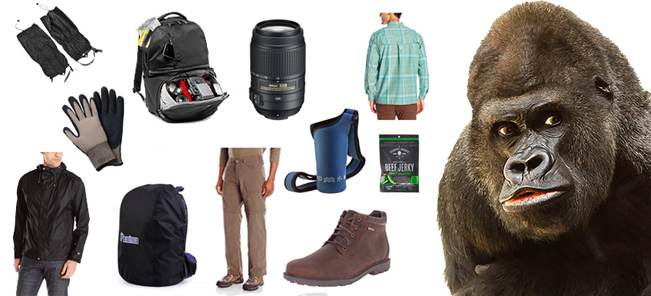
  • In the rainy season (March–May, October–November), pack a genuinely waterproof rain jacket, waterproof gaiters, and a dry bag for cameras and electronics; see our detailed breakdown in our best hiking boots and gear guide.
  • In the dry season (June–September, December–February), sun protection matters more: a wide-brimmed hat, sunscreen, and sunglasses become as important as rain gear, since the forest canopy still filters but does not eliminate equatorial UV.
  • Road transfers from Kigali (4–5 hours to Rushaga) or Entebbe (8–9 hours to Buhoma by road, roughly 1–1.5 hours by air) can run slower in the long rains due to softer rural roads; build in extra buffer time if you are travelling by road in March–May.
  • A porter (USD 15–20 per day, hired at the trailhead) is worth the cost in any season but especially valuable in wetter months, when carrying your pack over muddy, steep terrain is measurably harder.

What Gorilla Trekking Guides Won’t Always Tell You About Timing.

  • “Dry season” in Bwindi does not mean dry; it means less rain, on average. We have led treks in August that got soaked by an afternoon downpour and treks in April that stayed largely dry all day. Book for the odds, not a guarantee.
  • The rainy season is often the better trip for photographers who actually understand forest light: the muted, diffused light after rainfall reduces harsh shadow on a gorilla’s face far more reliably than the sometimes-harsh midday light of a clear, dry-season sky.
  • September is a genuinely underrated month: it sits at the tail end of the long dry season with trails still largely firm but with noticeably lower demand and pricing than July or August, before the short rains typically arrive later in the month.
  • Permit demand is driven more by school holiday calendars in trekkers’ home countries (northern hemisphere summer, Christmas) than by Uganda’s actual weather; this phenomenon is why August and December book out despite September or January sometimes offering comparable or better trail conditions.
  • If your dates are flexible, ask us for the current UWA seasonal advisory before booking; rainfall patterns shift year to year, and a guide written months in advance cannot capture this season’s specific conditions.
Free Quote · A few Minutes Reply

Ready to See the Gorillas Yourself?

Tell us your dates and we’ll check live permit availability today: budget to luxury, Uganda, Rwanda & Congo.

Plan My Trek →

Frequently Asked Questions about the Best Time to Go for Gorilla Trekking in Uganda.

When is the best time to go gorilla trekking in Uganda?

The best time to go gorilla trekking in Uganda is during the two dry seasons, June through September and December through February, when Bwindi’s trails are firmest and easiest to hike. These months see the least rainfall and the most stable underfoot conditions across all four Bwindi sectors and Mgahinga. They are also the busiest and most expensive months, so permits should be booked 3 to 6 months ahead.

What is the rainiest month for gorilla trekking in Uganda?

April is typically the wettest month in the Bwindi and Mgahinga region, falling within Uganda’s long rainy season that runs from March to May. Trails are at their muddiest, and treks can take longer to complete, though gorilla sightings are not affected since trackers locate the family’s position regardless of weather conditions.

Can you go gorilla trekking in the rainy season?

Yes, gorilla trekking runs year-round, and treks proceed in all weather, including heavy rain, since gorillas do not shelter from rainfall in a way that affects tracking, and permits are not refunded for wet conditions. The rainy season (March to May and October to November) brings muddier trails but also better permit availability, fewer trekkers, and often lower lodge rates.

What month has the best weather in Bwindi for gorilla trekking?

July and January are generally considered the driest, most stable months in Bwindi Impenetrable Forest, sitting in the middle of Uganda’s two dry seasons. Both months combine firm trails, clear morning visibility, and reliable weather, though they are also peak-demand months requiring permits booked well in advance, often 3 to 6 months ahead for popular sectors like Buhoma.

How far in advance should I book a gorilla trekking permit for peak season?

For travel in the June to September or December to February dry seasons, we recommend booking your Uganda gorilla permit 3 to 6 months ahead, especially for the Buhoma sector, which sells out fastest due to having only 5 habituated families. Rushaga typically retains availability longer thanks to its higher number, around 9 to 10 habituated families.

Is it cheaper to go gorilla trekking in the low season?

The USD 800 UWA gorilla permit price does not change by season and is fixed regardless of when you travel. However, accommodation is often meaningfully cheaper in the March to May and October to November rainy seasons, when many lodges offer shoulder-season rates, so your overall trip cost can be lower even though the permit price stays the same.

What is the difference between Uganda’s dry season and Rwanda’s dry season for gorilla trekking?

Uganda and Rwanda share broadly the same regional climate pattern, with dry seasons from June to September and December to February and rains from March to May and October to November. Because Bwindi sits at a somewhat lower average altitude than Rwanda’s Volcanoes National Park, Uganda’s trails generally dry out a little faster after a rain event, though the difference is modest.

Does gorilla trekking happen every day regardless of weather?

Yes, gorilla trekking permits are valid for a specific date regardless of weather, and the Uganda Wildlife Authority does not cancel or reschedule treks for rain. The only circumstances that typically stop a trek are a trekker’s own health, such as visible cold or flu symptoms, or, extremely rarely, a park-wide closure for security reasons.

What should I pack differently for a rainy season gorilla trek?

For rainy season treks in March to May or October to November, prioritize a genuinely waterproof rain jacket, waterproof gaiters, and a dry bag for your camera and electronics, since trails and vegetation stay wet for longer after rainfall. A walking stick, available free or for a small fee at most sector ranger stations, is especially useful on slippery sections during these months.

Is June or July better for gorilla trekking in Uganda?

Both are solidly within the dry season, but July is generally slightly drier and more stable than June, which sits at the very start of the dry-season transition and can still carry some lingering moisture from the May rains. Neither difference is dramatic; both months offer good trekking conditions, with July carrying marginally higher demand and pricing.

When is the best time to combine gorilla trekking with a wildlife safari in Uganda?

The June to September and December to February dry seasons work well for combining gorilla trekking with wildlife safaris in Queen Elizabeth National Park or chimpanzee tracking in Kibale, since drier conditions also improve game-drive visibility and road access between parks. Wildlife viewing in Uganda’s savannah parks is additionally strongest toward the end of each dry season, when animals concentrate around remaining water sources.

What is the coldest time of year to go gorilla trekking in Uganda?

Bwindi’s coolest mornings typically occur during the June to August dry season and again in December to January, when overnight temperatures at higher-altitude sectors like Ruhija can drop toward 11°C (52°F). Daytime temperatures remain comfortable across the year, generally 20–23°C (68–73°F), so cool mornings call for a warm layer at the start of the trek rather than a change in overall packing strategy.

Free Quote · A few Minutes Reply

Ready to See the Gorillas Yourself?

Tell us your dates and we’ll check live permit availability today: budget to luxury, Uganda, Rwanda & Congo.

Plan My Trek →

Get Your Free Gorilla Trekking Quote

Not sure which month fits your budget, crowd tolerance, and itinerary? Message us on WhatsApp or email info@trekgorillas.com. Tell us your dates, and we’ll check permit availability within a few minutes and flag whether your planned month calls for anything beyond the standard gear covered in this guide.