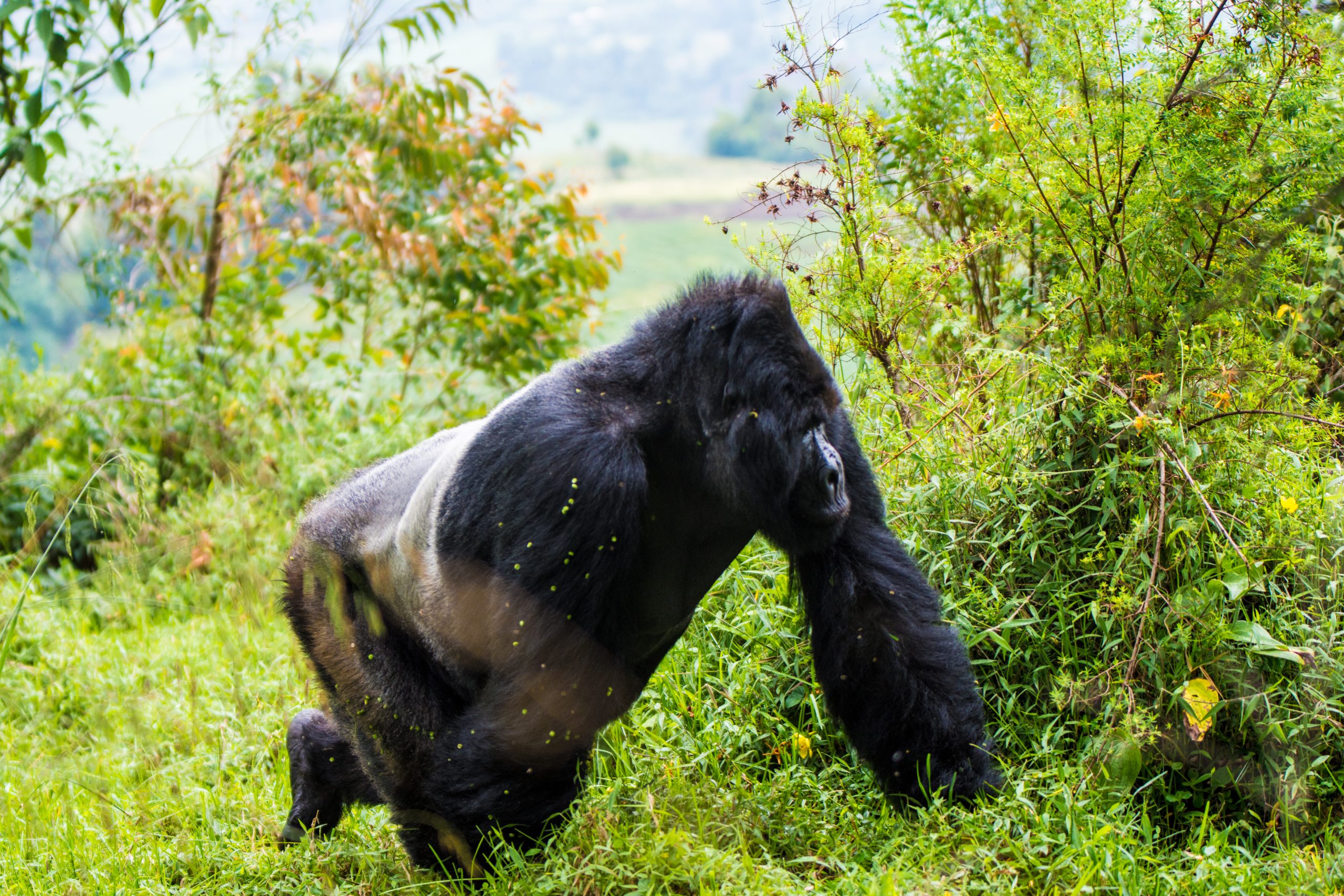
most powerful gentle giant.
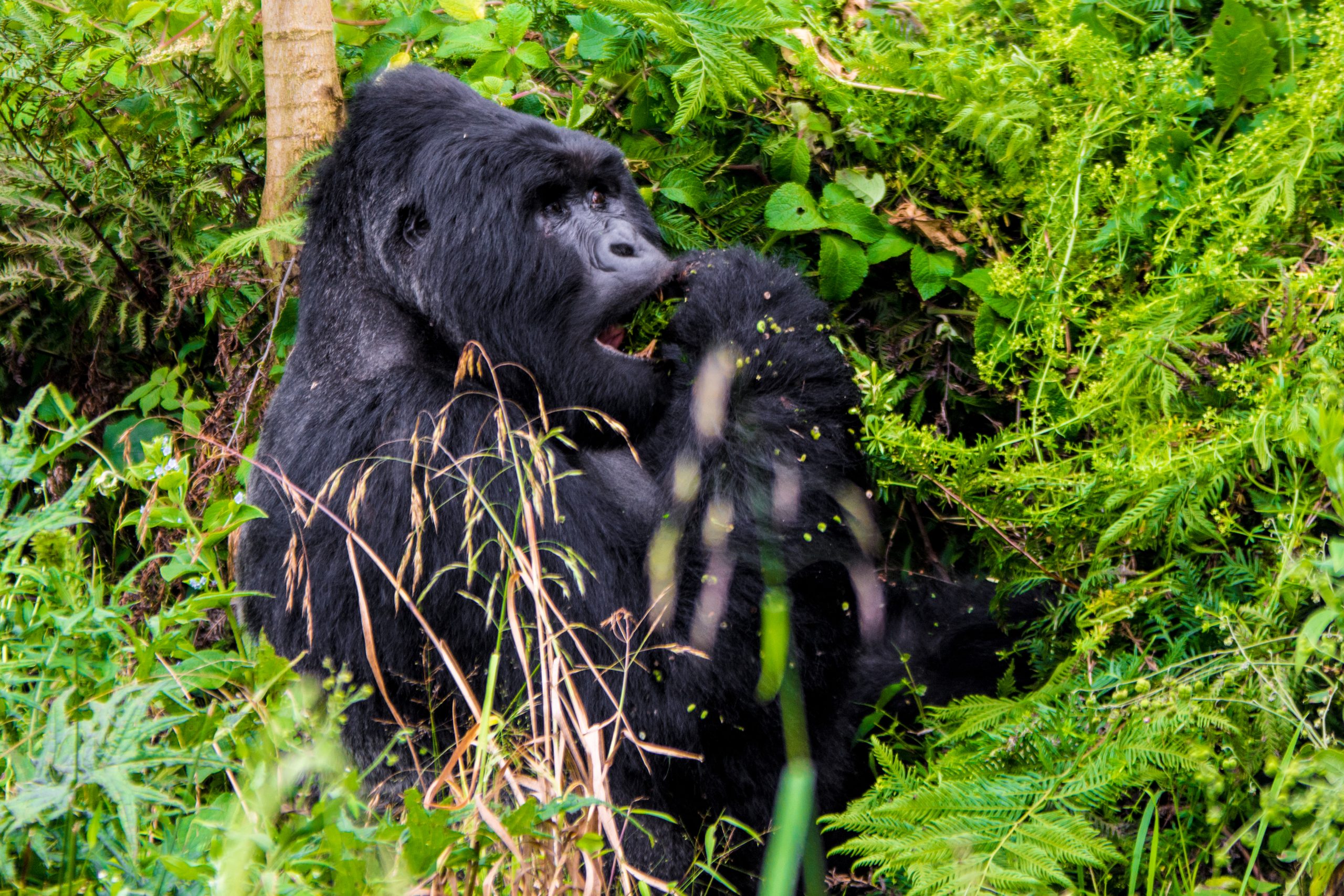
moments deep in
the rainforest.
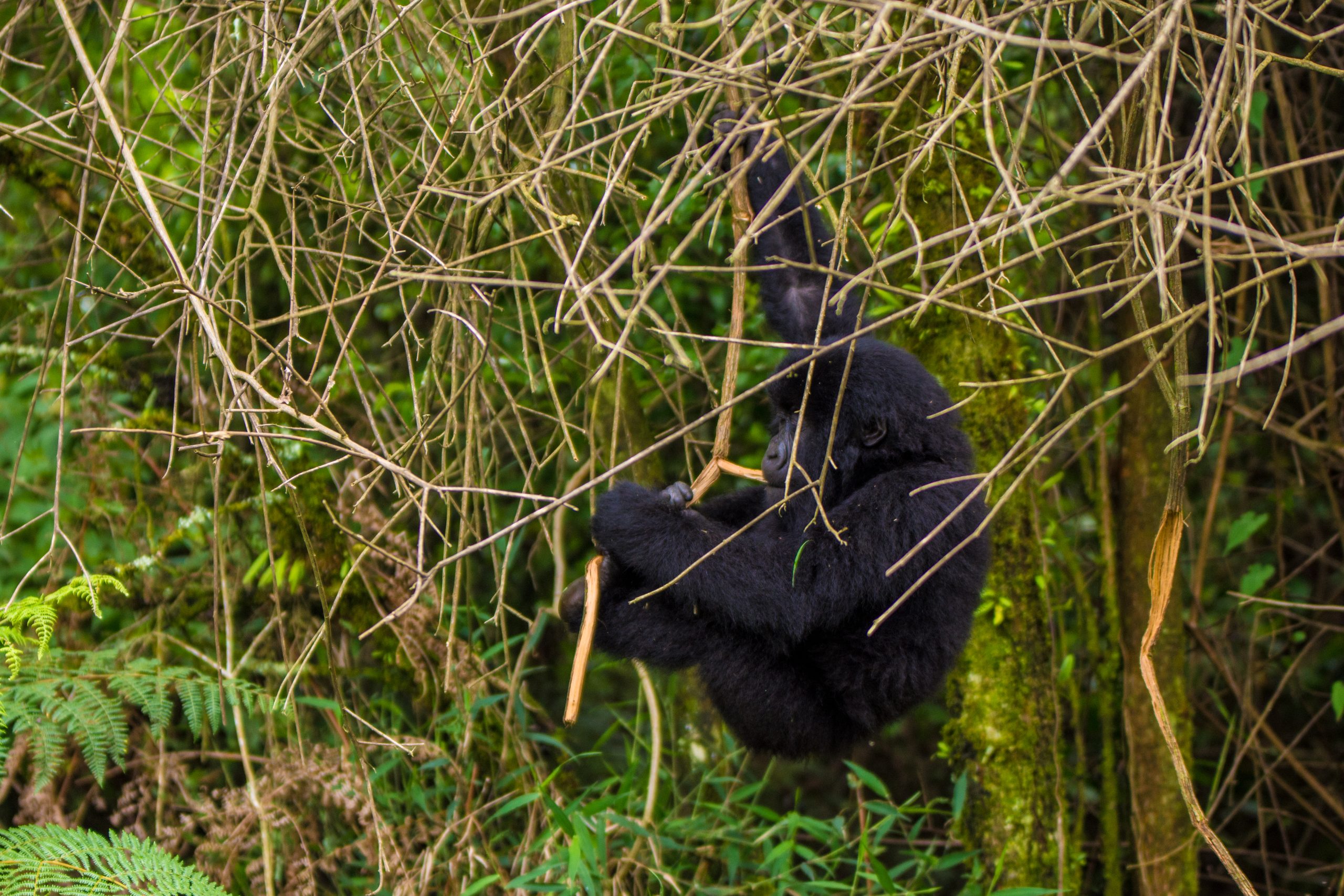
leap, climb,
& explore.
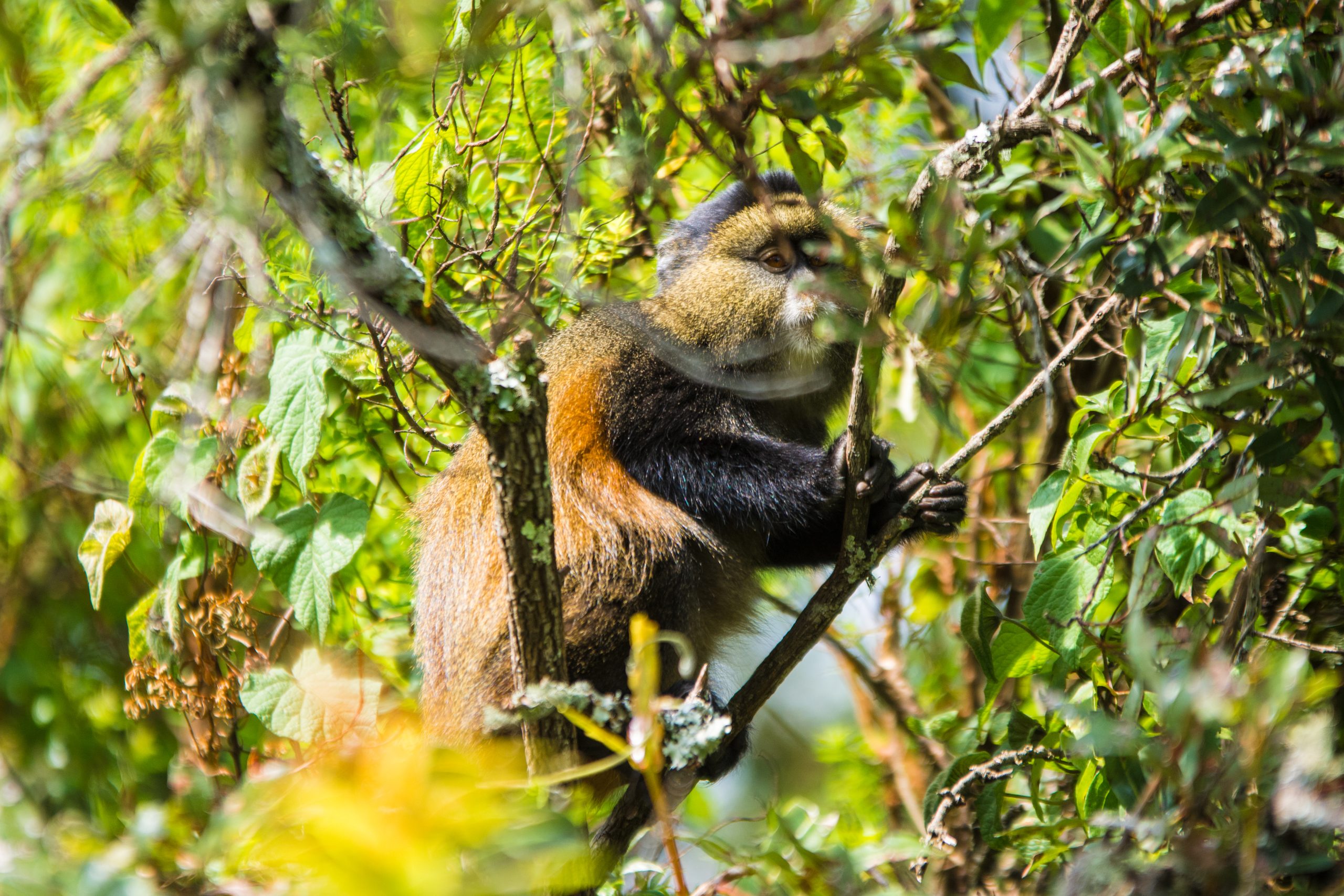
Uganda's most playful primate.
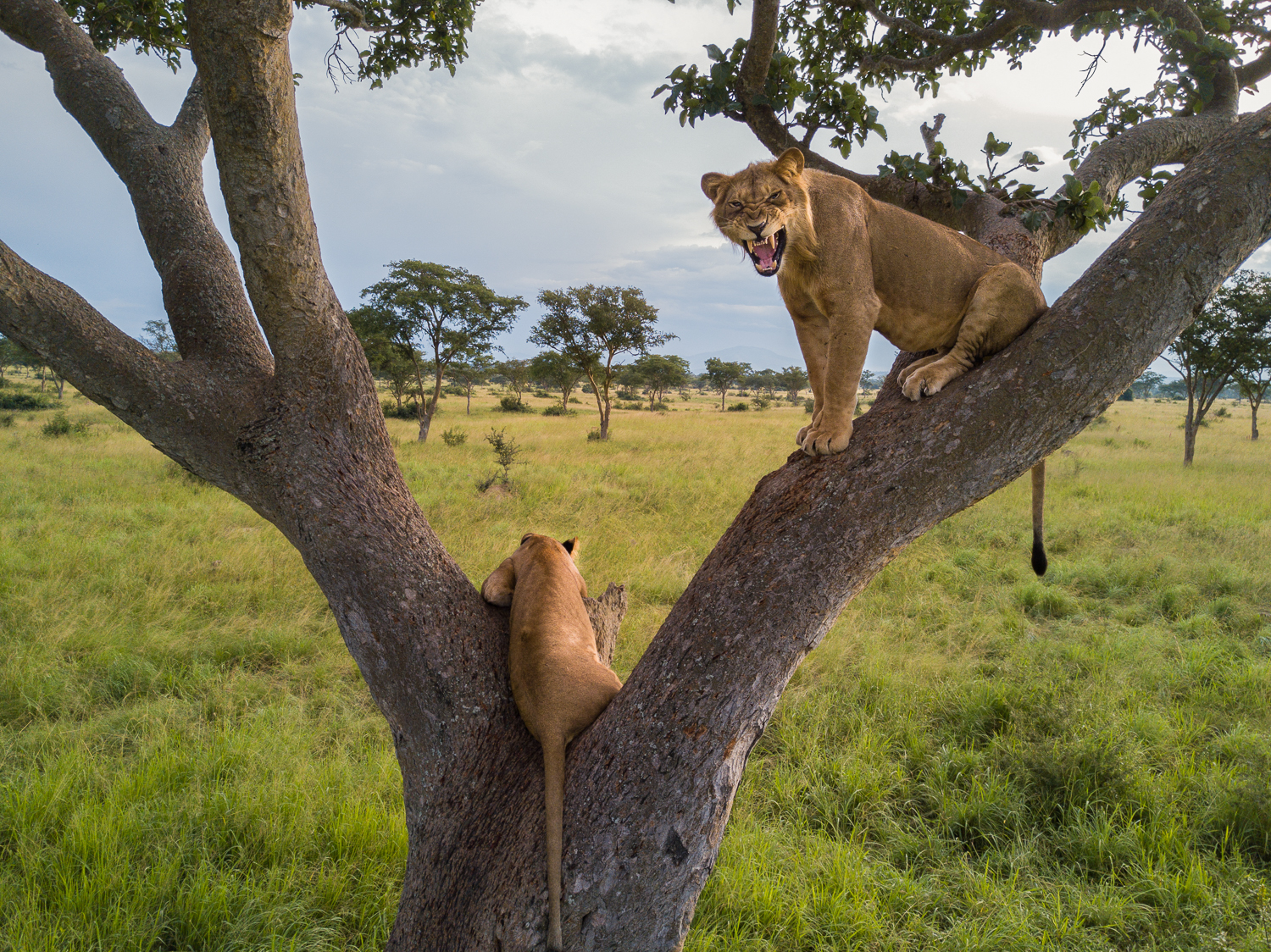
famous tree-climbing lions.
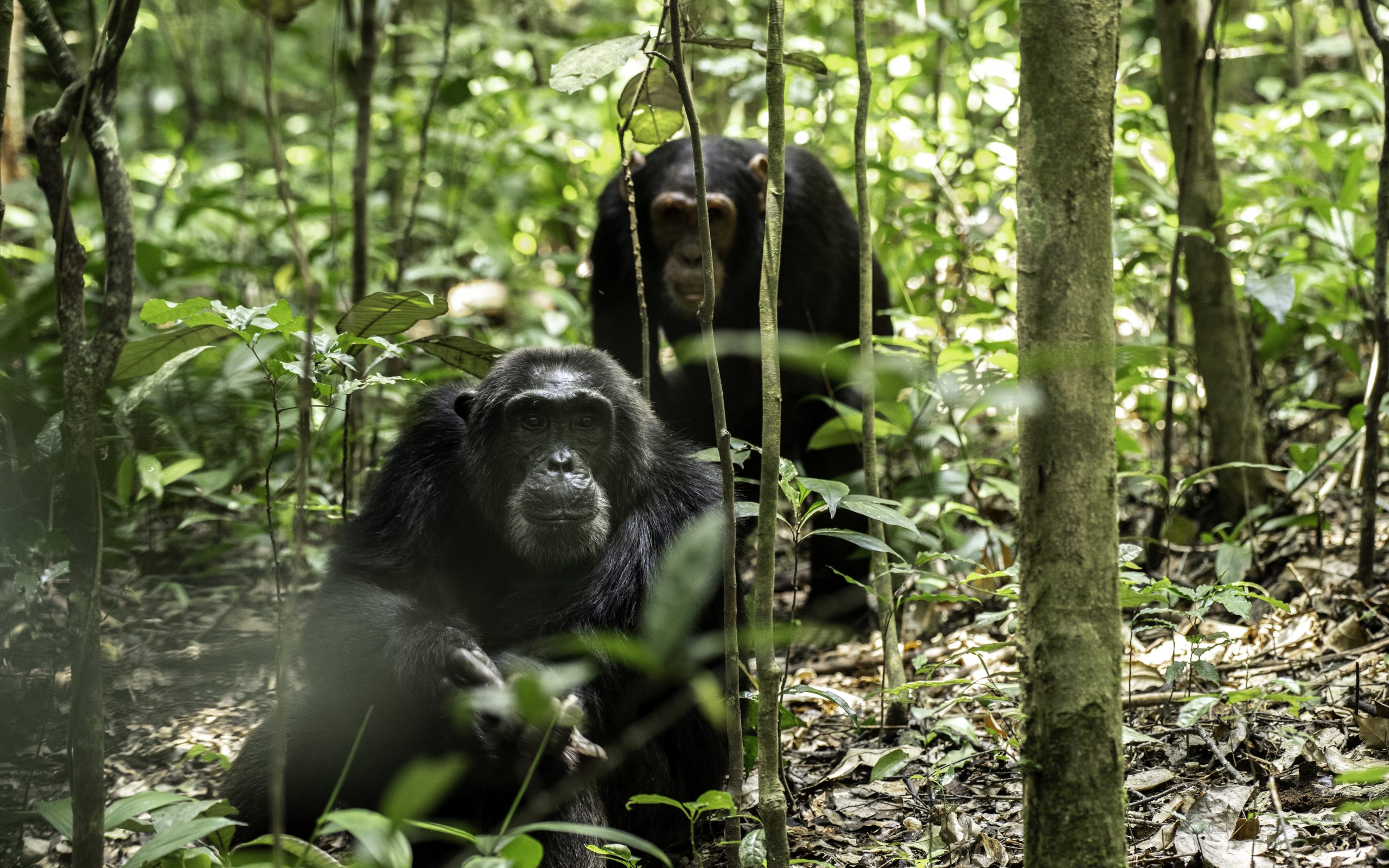
in the primate capital of the world.
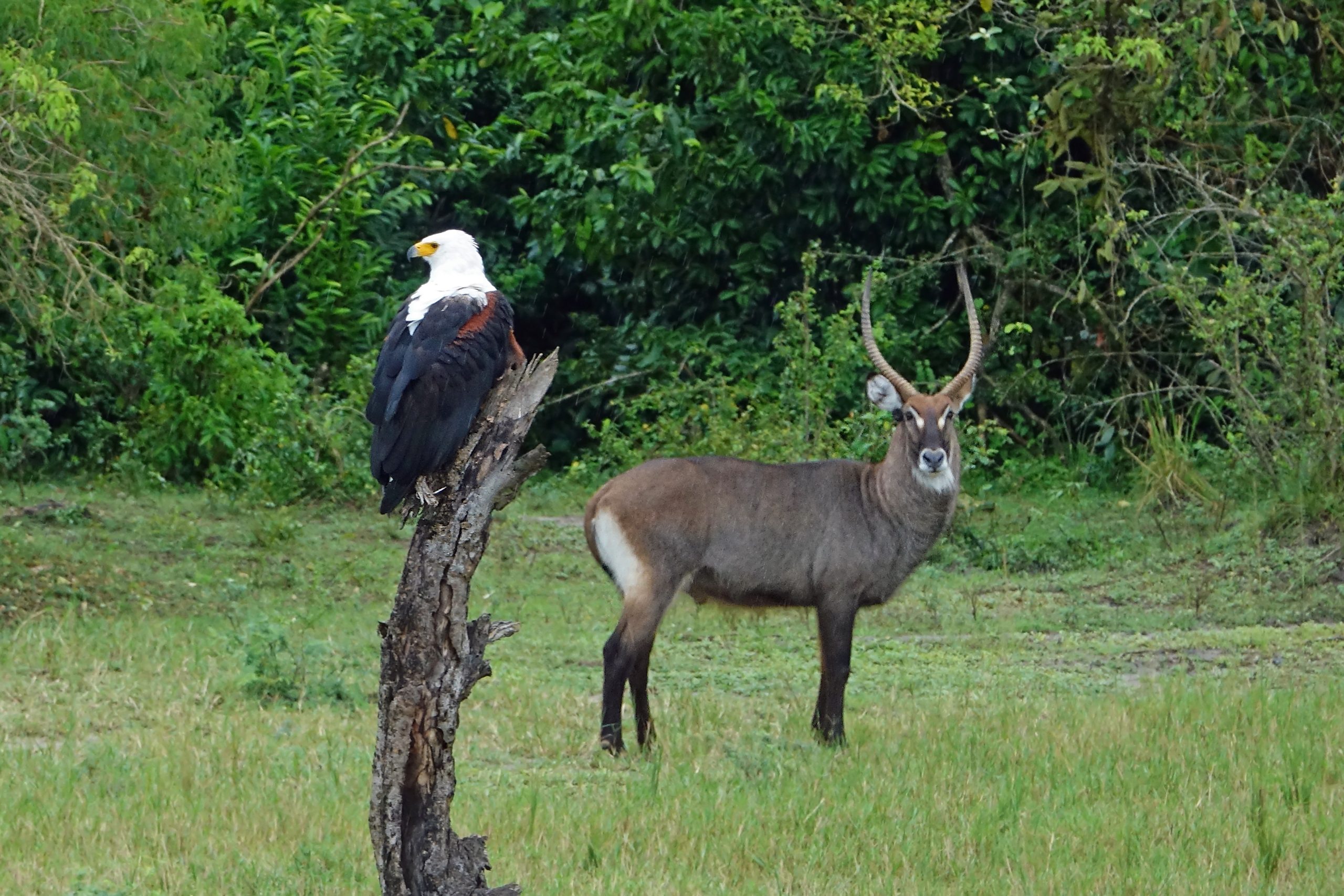
of Africa awaits.


Plan your Uganda gorilla trekking safari: permit prices, best trekking season, Bwindi & Mgahinga sectors, and easy booking from Kigali or Entebbe.
Gorilla trekking in Uganda means hiking through Bwindi Impenetrable Forest or Mgahinga Gorilla National Park with an armed ranger guide to spend a full hour with a wild, habituated mountain gorilla family. Uganda holds roughly half of the world’s remaining mountain gorillas and more habituated families, 20 in total, than any other country, at a permit price of USD 800 per person, well below Rwanda’s USD 1,500. Whether you’re flying into Entebbe, routing through Kigali, or building a longer East Africa itinerary, We put together the permit booking, transport, ranger-guided trek and lodging in one package from a fast one-day trip to multi-week safaris across Uganda, Rwanda and the Democratic Republic of Congo.
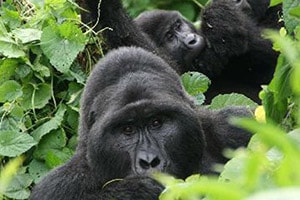
One endangered primate species that calls Uganda home is the mountain gorilla. You may find these primates in Mgahinga Gorilla National Park and the Bwindi Impenetrable Forest National Park. All year round, you have the opportunity to go gorilla trekking in one of Uganda’s two finest parks. There is no better place to go on a gorilla safari than on a trekking trip through Uganda’s Bwindi or Mgahinga Gorilla National Parks.
It is feasible to engage in the activity of trekking gorillas in their native environment by reserving a gorilla permit through us. You can commence your Uganda gorilla safari from either Kigali or Entebbe. The optimal gorilla trekking route commences in Kigali and concludes in Uganda since it offers the most efficient and expeditious transfer time for travelers while also being the most economical option. Visitors arrive in Rwanda and thereafter journey to Uganda for gorilla trekking before departing from Kigali. Gorilla safaris in Rwanda and Uganda can vary in duration, ranging from a minimum of one day to a maximum of three weeks, depending on individual preferences and financial resources.
Gorilla trekking in Uganda from Kigali is cheaper than a similar trip to Volcanoes National Park. Rwanda’s gorilla permit is at USD 1500, which makes the trip expensive compared to Uganda’s permit at USD 800. Therefore, you can book gorilla permits to visit gorillas with any of the available 20 gorilla families in Uganda, 19 of which are found in Bwindi and one in the Nyakagezi group in Mgahinga. From Kigali, Uganda’s gorilla parks are about a 4-hour drive.
We offer both high-end and low-cost gorilla trekking trips, so we can fit all kinds of guests, even those who have trouble moving around. We never skimp on the quality of our gorilla safaris, even though our gorilla tour prices might be low. We also make plans for gorilla trekking in Rwanda’s Volcanoes National Park or on any of our other wildlife Safaris. It’s also possible to go on safari in Tanzania, the Democratic Republic of the Congo, and Kenya.
Alternatively, a gorilla safari in Uganda may start from Entebbe or Kampala by either road or air transfer. The road trip is about 8 hours depending on the gorilla trekking sector of Bwindi one is visiting. By air, the tours start from Entebbe to Kihihi or Kisoro Airstrip. Tourists can fly from Entebbe to Bwindi to trek gorillas. There is also a possibility of a plane or helicopter charter to fly privately.
Here you can find more information regarding mountain gorillas in Uganda. This includes details such as gorilla permits, safari rates, the best gorilla safari hotels, when to visit, and travel tips. Important gorilla safari preparations include being up-to-date on trekking rules and regulations, knowing what to wear and bring on a trek, and knowing what to carry. Discover the Pearl of Africa and Rwanda with our comprehensive safari tour packages that include visits to all of its national parks and attractions. So that you may get the most of your holiday excursion, we generally provide gorilla trekking advice and safaris.
Uganda is home to more than half the world’s remaining mountain gorillas and more habituated families than any other country at a permit price well below Rwanda’s. This is the complete guide to planning your trek from a local, AUTO-registered operator.
Verified data for 2026. Updated each season by our field team.
| Fact | Detail |
|---|---|
| Primary trekking parks | Bwindi Impenetrable NP & Mgahinga Gorilla NP |
| Habituated gorilla families | ~20 total (19 in Bwindi, 1 in Mgahinga) |
| Standard permit price | USD 800 per person (Uganda Wildlife Authority) |
| Habituation Experience permit | USD 1,500 per person (Rushaga sector only) |
| Maximum visitors per family/day | 8 trekkers (standard); 4 (habituation experience) |
| Time with gorillas | 1 hour (standard); up to 4 hours (habituation) |
| Minimum age | 15 years, no exceptions |
| Trek duration (hiking) | 30 minutes to 8 hours depending on gorilla location |
| Fact | Detail |
|---|---|
| Bwindi's UNESCO status | World Heritage Site (natural) since 1994 |
| Bwindi forest area | 331 sq km of ancient montane rainforest |
| Best trekking seasons | June–September & December–February (dry) |
| Nearest airports | Entebbe (UGA) or Kigali (RWA) |
| Drive from Kigali to Rushaga | ~4–5 hours via Cyanika border crossing |
| Drive from Entebbe to Buhoma | ~8–9 hours by road |
| Fly from Entebbe to Bwindi | ~1.5 hours (Kihihi or Kisoro airstrip) |
| Uganda e-Visa required | Yes apply at visas.immigration.go.ug |
The case isn’t just about price; Uganda has structural advantages Rwanda and Congo can’t match.
Uganda has approximately 20 habituated gorilla families available for trekking more than Rwanda and Congo combined. More families means more permit availability and a better chance of securing your preferred dates, even at short notice.
Uganda’s standard permit is USD 800 per person, half of Rwanda’s USD 1,500. For a couple, that’s USD 1,400 saved before a single night of accommodation. The experience itself one hour with a habituated mountain gorilla family is identical.
No other gorilla trekking destination divides into four genuinely different experiences. Buhoma is established and accessible; Ruhija has the best birding. Rushaga has the most families; Nkuringo has the most dramatic landscape. You choose based on what matters to you.
The Gorilla Habituation Experience, 4 hours with a semi-habituated family alongside active researchers, is only available in Uganda’s Rushaga sector. Rwanda does not offer an equivalent. At USD 1,500 for four trekkers, it is the most intimate gorilla encounter in the world.
Wait; that’s Entebbe. From Kigali to Bwindi’s southern sectors, the drive is just 4 to 5 hours via the Cyanika border crossing. Uganda’s gorillas are more accessible from Rwanda’s capital than most people realize, and Kigali has better international connections than Entebbe.
Uganda holds over half the world’s remaining mountain gorilla population. Bwindi alone shelters over 459 individuals, the largest single concentration on earth. Trekking here puts you in the center of the species’ best chance at survival.
Most operators list a number. We name every family, where to find them, and what makes each one distinct so you can make an informed choice about which sector to request when booking your permit.
Uganda’s first habituated gorilla family has been trekked by tourists since 1993. Now one of Bwindi’s smallest groups after decades of natural change. Legendary for its historical significance.
Large and mobile, with complex social dynamics across two silverbacks. Moves widely across Bwindi’s northern ranges; treks vary significantly in length.
Calm and predictable, it often stays close to the Buhoma area lodges, making it the recommended family for first-time trekkers and those with limited fitness. Led by silverback Mwirima.
Formed in 2019 when a silverback broke away from Mubare with several females. A younger, smaller group still establishing its territory encounters feel particularly intimate.
The newest family in Buhoma was habituated in 2023 and opened to tourism in 2024. Still settling into full habituation, so behavior can be less predictable, a more exclusive, raw encounter.
Known for their exceptionally relaxed behavior, gorillas often continue feeding and playing while visitors watch. Led by young silverback Ndahura. A photographer’s favorite in Ruhija.
One of Bwindi’s largest families, with around 23 members. Habituated in 2011. Strong silverback leadership and a complex social hierarchy make for compelling viewing.
Formed after the death of the original Kyaguriro silverback Rukina, with Mukiza emerging as the new leader. Now around 22 members. Named after its dominant silverback.
Primarily a research group used by Makerere University primatologists. Limited tourism slots. Encounters here feel uniquely scientific; researchers may be present during your hour
They are named after the Nshongi River, where rangers first spotted them. Once Bwindi’s largest family at 35 members, now smaller after multiple splits, it is still one of the most impressive groups.
Split from Nshongi when silverback Mishaya broke away with 10 females. Known for its feisty silverback and energetic group dynamics. Treks can be demanding in terrain.
Split from the Nshongi family due to internal rivalry. Around 12 members. Independent and well-established in the Rushaga area, offering a quieter encounter than the larger groups.
A large, established family in Rushaga with dramatic interactions between multiple blackbacks vying for dominance within the group’s hierarchy.
One of the families used in the Gorilla Habituation Experience (4-hour extended visit, $1,500 permit). Semi-habituated, meaning behavior is less predictable and the encounter feels rawer.
A smaller, approachable group in Rushaga, named after a local word meaning ‘one who helps.’ Treks typically moderate in length and terrain within the sector.
One of the more recently confirmed habituated families in Rushaga. Giving this sector the highest concentration of gorilla families of any sector in Bwindi.
Split from Kahungye group. “Busingye” means “peace” in Rukiga. The family is known for a calm, settled temperament ideal for first-time trekkers visiting Rushaga.
An 8-member group that split from Kahungye. One of the smallest families in the sector, making for intimate encounters with a single silverback’s close-knit group.
Launched in 2004 after a 2-year habituation process. Named after the ‘round hill’ where it was first sighted ‘Nkuringo’ is Rukiga for a hill of that shape. Around 13 members.
An 8-member family in the Nkuringo sector. The sector’s challenging ridge-line terrain means treks here feel more adventurous, and encounters feel genuinely remote.
One of the most recently habituated groups in Bwindi. 8 members. Named after the period during which the habituation process was completed. Treks tend to be quieter and less crowded.
Nkuringo’s largest family is at around 17 members. More permit slots than the smaller groups in the sector, making Posho the most accessible choice when trekking Nkuringo.
Uganda’s only gorilla family outside Bwindi. Known for an unusually calm temperament and as one of the most photogenic families in the country. Set against Virunga volcano slopes, only 14km from Kisoro Airstrip.
Each sector offers the same one hour with a gorilla family. The difference is everything else: the journey, the landscape, the crowd level, and the lodges available.
Buhoma, Northern Bwindi · Most Accessible | |
Gorilla families | 5 (Mubare, Habinyanja, Rushegura, Muyambi, Katwe) |
Trek difficulty | Easy to Moderate |
From Entebbe | ~8–9 hrs by road |
Nearest airstrip | Kihihi (~1 hr drive) |
Lodges | Best selection in Bwindi (Mahogany Springs, Buhoma Lodge) |
Best for | First-time trekkers, those flying in, visitors with limited time |
Unique feature | Batwa Cultural Trail nearby; oldest sector in Bwindi |
Nkuringo, Southern Bwindi · Most Remote | |
Gorilla families | 4 (Nkuringo, Bushaho, Christmas, Posho). |
Trek difficulty | Strenuous (steep ridge descents and ascents) |
From Kigali | ~4–5 hrs via Cyanika |
Crowd level | Lowest of the four sectors |
Lodges | Clouds Mountain Gorilla Lodge (luxury), Nkuringo Budget Camp |
Best for | Adventurous trekkers; those wanting fewer people on the trail
|
Unique feature | Dramatic ridgeline views into Congo’s Virunga landscape |
Rushaga, Southern Bwindi · Most Families | |
Gorilla families | 9–10 (Nshongi, Mishaya, Bweza, Kahungye, Bikingi, and more) |
Trek difficulty | Moderate to Strenuous |
From Kigali | ~4–5 hrs via Cyanika |
Habituation Experience | Yes, only sector offering 4-hr visit ($1,500) |
Lodges | Ichumbi Gorilla Lodge, Rushaga Gorilla Haven |
Best for | Kigali-routed travellers, those wanting the habituation experience |
Unique feature | Highest permit availability due to number of families
|
Ruhija, Eastern Bwindi · Best Birding | |
Gorilla families | 4 (Bitukura, Oruzogo, Mukiza, Kyaguriro) |
Trek difficulty | Moderate |
From Kabale town | ~1.5–2 hrs |
Altitude | Highest sector; cooler temperatures |
Lodges | Smaller, fewer options (Gorilla Mist Camp, Bakiga Lodge) |
Best for | Birders (350+ bird species), photographers, repeat visitors |
Unique feature | Spectacular Virunga volcano views on clear mornings |
Tell us your dates and we’ll check live permit availability and send your quote within Minutes: free, no obligation.
Get My Free Quote → AUTO-registered operator · Budget to luxury · Uganda, Rwanda & CongoMost Operators say “you will spend one hour with the gorillas.” Here is what the other 10 hours of the gorilla trek look like.
UWA tracker teams leave before sunrise to locate the gorilla family from where it nested the previous evening. Gorillas build new nests every night; trackers follow trails of knuckle prints, feeding debris, and dung to find the morning location before your briefing begins.
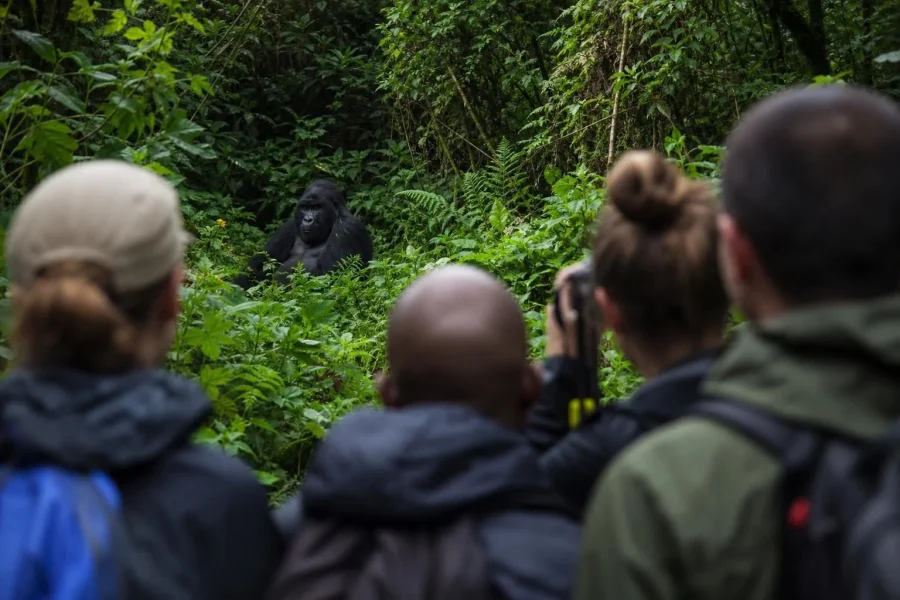
All trekkers report to the sector’s ranger station. Groups of up to 8 are formed (you may not know your group in advance). Rangers cover the 7-meter rule, how to crouch and avoid eye contact during a gorilla display, what to do if a gorilla approaches you, photography guidelines, and signs of illness (trekking is refused if you have cold symptoms).
Hike time depends entirely on where the trackers found the family. Some mornings it is 30 minutes on a maintained trail. For others, it is 5 to 8 hours of dense-forest scrambling, crossing streams and scaling ridges. This variability is the nature of the activity; there are no guarantees and no refunds for long treks. Bring water, snacks, and rain gear regardless of the forecast.
A timer starts when you make visual contact with the family. The full hour is yours whether the gorillas are 3 metres away or partially obscured. Gorillas may groom, feed, play, sleep, or move. Juveniles may approach curiously. The silverback may chest-beat or bluff-charge. Rangers position your group for the safest, closest experience possible within UWA’s protocols.
You retrace or take an alternative route back to the ranger station. UWA issues each trekker a personalized gorilla trekking certificate listing the family visited. Most operators, including us, arrange a packed lunch for the trailhead. The afternoon is typically free for lodge relaxation, a community visit, or a transfer to your next destination.
On porters:
Hiring a local porter (USD 15–20 per day) is one of the most direct economic contributions you can make to the communities surrounding Bwindi & Mgahinga. Porters carry your bag, help you on steep ground, and are almost universally former poachers or community members who chose conservation-economy employment. Tip well.
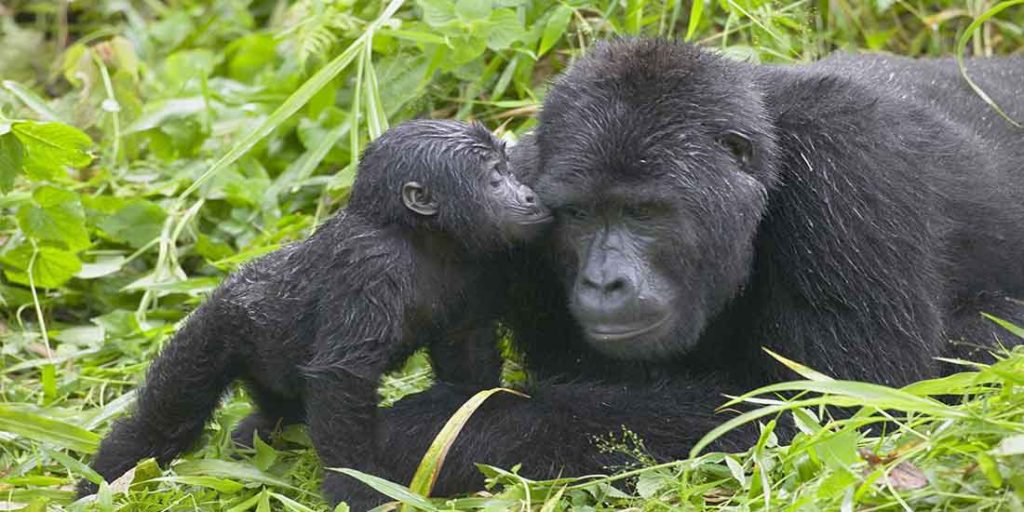
Visit Mountain gorillas in Uganda from Kigali to Bwindi Impenetrable Forest or Mgahinga Gorilla National Park in Uganda. Enjoy a gorilla trekking adventure in the forest and return to Kigali on the same day.
Enjoy gorilla trekking in Uganda from Kigali to Bwindi by flying into Rwanda and trek gorillas in Uganda. Book a gorilla permit in time and enjoy this kind of budget safari to Bwindi National Park.
This 3 days Uganda gorilla ttrekking from Kigali to Bwindi Impenetrable forest entails a Kigali city tour prior to transfer to Uganda for gorilla adventure experience on Day 2 and return to Rwanda on day 3.
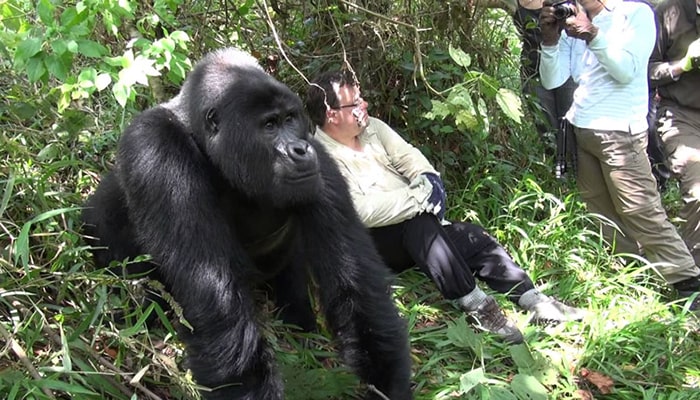
A 3-day gorilla adventure tour in Uganda takes you to Bwindi Impenetrable Forest or Mgahinga National Park, the two parks where gorillas in Uganda live. This road trip runs from Kampala or Entebbe.
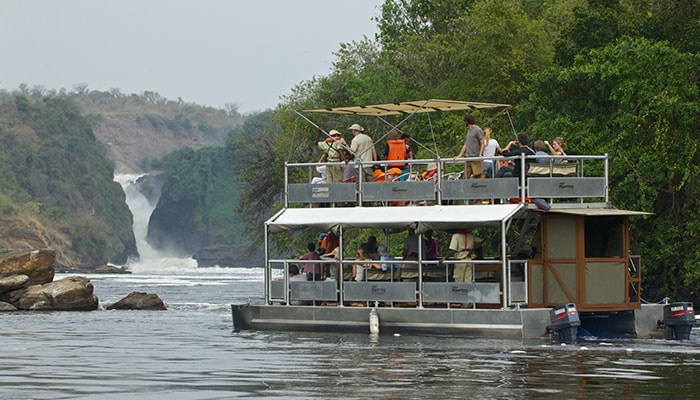
This Uganda gorilla Safari involves gorilla Trekking in Bwindi plus wildlife safaris in Queen Elizabeth National Park, which include game drive tours as well as a boat cruise on the magnificent Kazinga Channel.
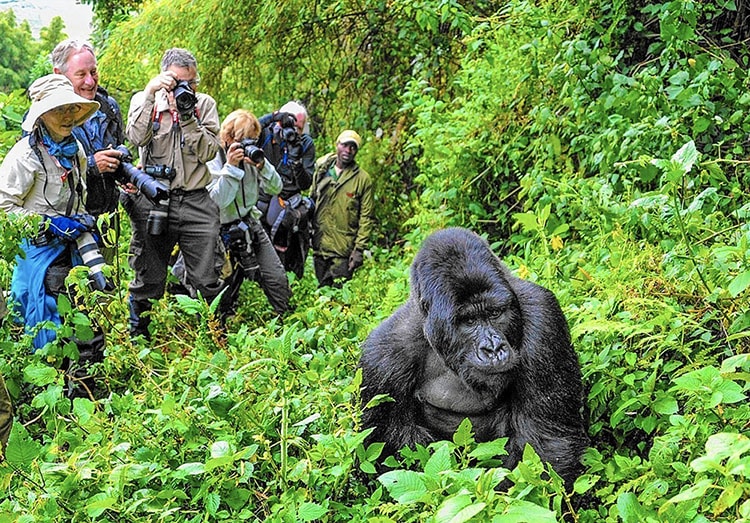
A gorilla habituation experience means staying for 4 hours closely with the mountain gorillas. This trip will give you a comprehensive physical closeness with the endangered primates in Bwindi Forest.
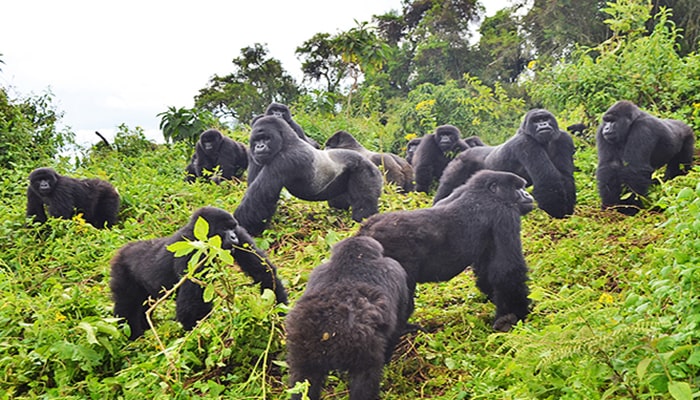
Do Double gorilla trekking in Uganda and enjoy the endangered primates to your satisfaction. Trek gorillas for two consecutive days with different gorilla families/groups in the thick jungles of Bwindi National Park.
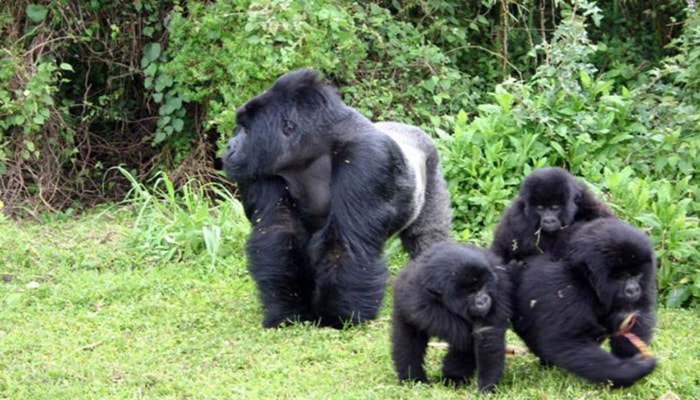
Have a chance to visit and trek the Nyakagezi Gorilla group, the only family in Mgahinga Gorilla National Park. This trip can begin from Kigali or Entebbe and back. One may also fly from Entebbe to Kisoro and move to the park.
Choose from a variety of selected 3-day gorilla safari packages, including those starting from Kampala /Entebbe by road and flying, as well as those trips from Kigali in Rwanda as well as gorilla habituation experience tours.
You can go on a Uganda gorilla trekking adventure in either Mgahinga Gorilla National Park or the Bwindi Impenetrable Forest. On fly-in Uganda Gorilla safaris, you can get there by plane from Entebbe. Airstrips of Kihihi or Kisoro When leaving Entebbe Airport, there are two Airstrips to land an aircraft.
As soon as you land, one of our professional guides will take you to the lodge to get some rest before your next day to go to the jungle. You will walk with the gentle giants for a day or days. Then you might fly back to Entebbe or continue with your Uganda safari. You can get to Bwindi by regular plane or hired helicopter.
Find out more about what we have to offer: gorilla safaris and wildlife tours.
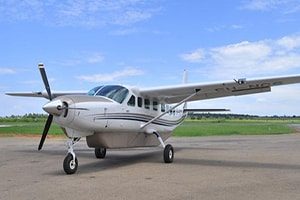
Take a scheduled flight from Entebbe International Airport to Bwindi Impenetrable National Park for gorilla trekking. Land at Kihihi Airport, transfer to the lodge, trek gorillas on day 2, and fly to Entebbe on day 3.
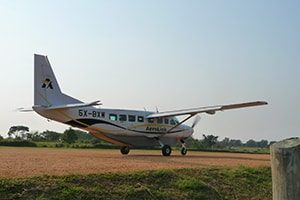
Fly to Kisoro and trek with any of the mountain gorilla groups of the eastern or southern sector of Bwindi Impenetrable National Park. This trip is among the luxury gorilla safaris in Uganda.
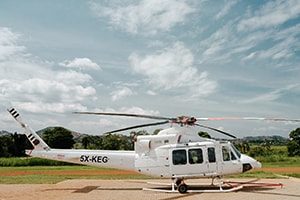
Take a flight from Entebbe to Bwindi National Park or Kisoro Airstrip near Mgahinga gorilla park for a thrilling gorilla adventure. Fly back on the third day to catch up with another international flight.
Besides visits to see gorillas, Uganda has a lot to offer in terms of wildlife safaris. This includes game drive safaris, adventure tours, community, nature, cultural, and recreational outdoor activities, among others. Birding, mountain climbing, sport fishing, historical tours, plus honeymoon holiday tours are some of the activities you may enjoy on tours in Uganda. With 10 national parks plus numerous wildlife reserves and sanctuaries, you can only exhaust the country when you take a longer holiday trip. These trips involve tours to other parts of Uganda with Mgahinga or Bwindi Gorilla safari encounters on the safari itineraries.
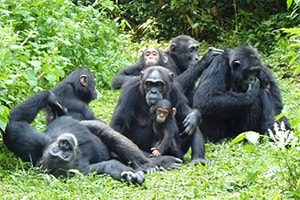
Visit Bwindi Impenetrable Forest for a gorilla trek, proceed to Queen Elizabeth National Park and do a Kazinga Channel boat cruise, a game drive plus chimpanzee tracking in Kyambura Gorge.
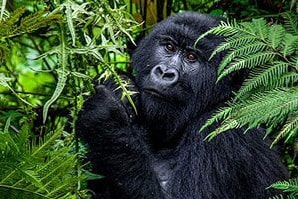
Tour Kibale National Park for chimp tracking and Bigodi swamp nature walk, enjoy game safari andd boat cruise in Queen Elizabeth National Park & visit Bwindi forest to see gorillas in the wild.
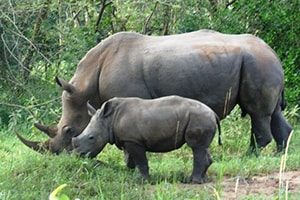
Visit Ziwa rhino sanctuary for rhino trekking, Murchison Falls for wildlife safaris, Kibale forest for chimpanzee tracking and nature, Queen Elizabeth Park for safaris and Bwindi for gorilla tour adventure.
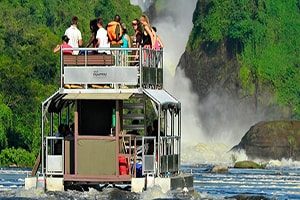
Do a Murchison Falls safari with a launch cruise and game safari, chimp tracking in Kibale, game and boat cruise in Queen Elizabeth National Park and conclude with a gorilla safari adventure in Bwindi.
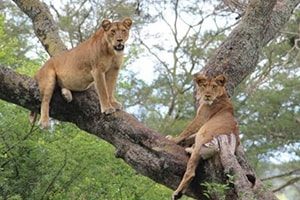
This Uganda safaris and tour package will lead you to all the major tourist attractions in Uganda including Bwindi forest for gorilla trekking, Queen Elizabeth, Kibale forest and Murchison Falls among others.
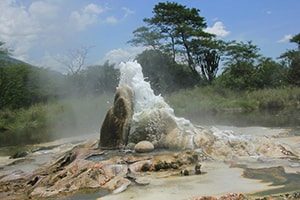
This Uganda adventure safari trip will take you to Semuliki for a hot springs tour, Queen Elizabeth park for safaris and boat voyage plus Bwindi and Lake Mburo for a gorilla trek and wildlife safari respectively.
The USD 800 you pay goes directly to the Uganda Wildlife Authority, not to us. Here is how UWA distributes that revenue.
Distributed to parishes in the park buffer zone. Has funded schools, health centers, clean water infrastructure, and micro-loans in communities surrounding Bwindi and Mgahinga.
Trail maintenance, ranger station upkeep, vehicle fleet, and sector infrastructure. Bwindi’s trail network across 331 sq km of dense montane forest requires year-round maintenance.
UWA employs hundreds of rangers across Bwindi and Mgahinga. Armed ranger patrols run 24 hours a day, protecting gorilla families from snare poaching and habitat encroachment.
The Gorilla Doctors program and Makerere University research teams receive park funding. Gorillas are monitored daily; sick or injured individuals receive field veterinary intervention.
What this means for you:
Your permit is not a wildlife park entrance fee; it is a conservation contribution that directly funds the rangers who protect these gorillas every night, the veterinary teams that keep them healthy, and the communities that chose conservation employment over poaching. The population recovery from ~620 individuals in 1989 to over 1,063 today was funded by revenue like this.
The honest answer: gorilla trekking runs 365 days a year, and the gorillas don’t leave for the rainy season. What changes is the trail condition, the permit demand, and the overall experience.

The $800 permit is the floor, not the ceiling. Here is a realistic budget breakdown for a 3-day gorilla trekking trip from Kigali.
| Cost Item | Budget Range | Notes |
|---|---|---|
| UWA Gorilla-Permit | $800 pp | Fixed: set by UWA |
| Accommodation (2 nights) | $60–$800 pp | Budget banda to luxury lodge |
| Road transfer (Kigali return) | $150–$250 pp | Shared or private vehicle |
| Park ranger fees (included in permit) | $0 | Covered by your $800 Permit Fees |
| Local porter (strongly recommended) | $15–$20 | Per day; tip separately |
| Meals | $30–$80 pp/day | Depending on lodge type |
| Rwanda/Uganda visa | $50 each | East Africa Tourist Visa covers both for $100 |
| Trekking certificate (UWA) | Included | Issued at end of trek |
The standard trek gives you one hour with a fully habituated family. The Habituation Experience (Rushaga only) gives you up to four hours with a semi-habituated family, alongside UWA researchers. Groups are capped at 4 people versus 8 for standard treks.
The gorillas are less predictable; they may move more, show stress responses, or ignore you entirely. That unpredictability is precisely the point. If you have the budget, it is the most honest gorilla encounter available anywhere.
Get a Personal Budget BreakdownEast Africa Tourist Visa tip:
If you’re combining Uganda and Rwanda in one trip, the East Africa Tourist Visa covers both countries for USD 100 total, a USD 50 saving over buying each visa separately.
All three countries offer genuine encounters with wild mountain gorillas. The difference is in the details.
| Factor | Uganda | Rwanda | DR Congo |
|---|---|---|---|
| Permit price | $800 | $1,500 | From ~$400 |
| Habituated families | ~20 (Bwindi + Mgahinga) | ~18 (Volcanoes NP) | ~8 (Virunga NP) |
| Trek from Kigali | 4–5 hrs to Rushaga | 2–3 hrs to Volcanoes | 4–5 hrs to Virunga |
| Trek difficulty | Easy to Strenuous (by sector) | Easy to Moderate | Moderate to Strenuous |
| Permit availability | Best (most families) | Moderate | Variable (security-dependent) |
| Habituation Experience | Yes ($1,500, Rushaga) | No | No |
| Security situation | Stable | Stable | Monitor advisories |
| Combine with wildlife safari | Yes; QENP, Kibale, Murchison close | Limited | Limited |
| Best for | Value, variety, longer itineraries | Short trips, luxury | Budget, adventurous travellers |
In 1981, wildlife biologist Dian Fossey estimated the total mountain gorilla population at around 242 individuals. By the time of the first systematic census in 1989, the count had risen slightly to approximately 620 but the species was still classified as Critically Endangered, with habitat loss, civil conflict, and poaching threatening what remained.
What changed was the recognition pioneered partly at Bwindi and in Rwanda’s Volcanoes National Park that local communities needed to benefit economically from gorilla conservation rather than be excluded from it. Habituation programs that created safe gorilla families for tourism gave park authorities revenue for rangers, communities a non-poaching income, and gorillas a generation of protection.
The 2018 IUCN census counted 1,063 mountain gorillas across the Bwindi–Sarambwe and Virunga massifs; the first time in recorded history the number had exceeded 1,000. A new census begun in 2025 is expected to show continued growth.
Mountain gorillas remain the only great ape whose global population is increasing. Your permit fee is part of why.
Batwa Cultural Experiences
The Batwa are the indigenous forest-dwelling people displaced when Bwindi became a national park. Cultural visits in the Buhoma and Nkuringo sectors offer guided experiences where Batwa community members share their forest knowledge, history, and traditions. We recommend adding this to any itinerary as both a meaningful human encounter and a direct contribution to Batwa livelihoods.
Tell us your dates and we’ll check live permit availability today: budget to luxury, Uganda, Rwanda & Congo.
The UWA gorilla permit is a fixed USD 800 per person regardless of which operator you book through. On top of that, budget for accommodation (USD 60–800 per night depending on lodge level), road transfers (approximately USD 150–250 return from Kigali), meals, a porter (USD 15–20 per day), and visas. A realistic budget for a 3-day trip starts at around USD 1,300 per person on the budget end, rising to USD 3,000+ for mid-range and significantly more for luxury lodges.
Yes. Uganda’s gorilla trekking parks have operated safely for over 30 years. UWA armed rangers accompany every group. The southwestern Uganda region where Bwindi and Mgahinga sit is stable, and gorilla trekking has continued without major security incidents throughout. Individual traveler common-sense precautions apply, as with any wilderness activity.
Absolutely. Solo travelers are common on gorilla treks and will be placed in a group of up to 8 on the day. For solo female travelers: Bwindi is generally safe, ranger-escorted throughout, and widely visited by solo women. We recommend the Rushegura family in Buhoma or any Rushaga family for more predictable trek lengths for solo first-timers. Let us know you’re traveling solo, and we’ll advise on logistics accordingly
During peak season (June–September and December–February), permits in popular sectors, especially Buhoma, can sell out 3 to 6 months in advance. Rushaga typically has the best availability due to its high number of families. In the rainy seasons, permits are often available with 4 to 8 weeks’ notice. We recommend booking as early as possible and will hold a permit on your behalf once dates are confirmed
A long-sleeved shirt and long trousers in dark, natural colors (green, khaki, or brown, not bright colors that can startle gorillas). Sturdy, waterproof hiking boots are essential; the terrain is frequently muddy. Gardening gloves protect your hands on steep sections. Pack: 2 liters of water minimum, snacks, a rain jacket, a small first-aid kit, sunscreen, insect repellent, and your camera. Leave perfumes and strongly scented products at the lodge.
The Gorilla Habituation Experience (GHE) is exclusive to Bwindi’s Rushaga sector. Unlike the standard one-hour visit with a fully habituated family, the GHE allows up to four visitors (versus 8 on a standard trek) to spend up to four hours with a semi-habituated gorilla family, alongside UWA researchers who are actively acclimating the family to human presence. Permits cost USD 1,500. The gorillas are less predictable and may react more strongly to human presence, making it a rawer and more intimate experience than the standard trek.
Yes, and Uganda is particularly well set up for this. Queen Elizabeth National Park (famous for tree-climbing lions and boat safaris on the Kazinga Channel), Kibale National Park (chimpanzee trekking and primate walks), and Lake Mburo National Park are all within a day’s drive of Bwindi and make natural combinations. We build combined itineraries regularly from 5-day gorilla-and-chimp combos to 10-day grand Uganda circuits.
Treks go ahead in all weather conditions, including heavy rain. Gorillas are active year-round and do not shelter in the same way humans do. A good rain jacket, waterproof gaiters, and a dry bag for your camera are essential in the wet season. Some trekkers find the forest even more atmospheric after rainfall. Permits are not refunded due to weather.
Yes, the Uganda Wildlife Authority sells gorilla permits directly through their online booking. However, most travellers book through a licensed tour operator like us because permits alone do not cover transport to Bwindi, accommodation, ranger briefing logistics, or the complex cross-border coordination required if you are coming from Kigali. Booking directly makes sense only if you are arranging all other logistics yourself and are already familiar with Uganda’s road network and border crossings.
Uganda gorilla permits are non-refundable once issued by UWA, but they can sometimes be transferred to a different date or a different person if the request is made sufficiently in advance. The transfer policy is managed by UWA directly and is subject to availability on the new date. If you fall ill on trek day and cannot proceed, we recommend purchasing comprehensive travel insurance that covers pre-booked safari activities; this is the most reliable way to protect your permit investment.
If you show symptoms of illness, particularly respiratory symptoms such as a cough, cold, fever, or COVID-19, UWA rangers will deny you entry to the park on health grounds to protect the gorillas. The permit is technically forfeited in this situation. Travel insurance with safari-activity coverage is strongly recommended for this reason. In some cases, if you notify us and UWA immediately, a date transfer may be possible depending on availability, but this is not guaranteed.
All legitimate Uganda gorilla permits are issued directly by the Uganda Wildlife Authority (UWA) and carry a unique permit number, your name, the assigned sector, and the trek date. When booking through a registered AUTO operator, you will receive a copy of the permit before travel. Check that your name, date, and sector match your booking. Be wary of permits sold at prices significantly below USD 800, as counterfeit or fraudulently transferred permits do circulate and will be rejected at the park gate.
It is technically possible to buy a permit on arrival at UWA offices in Kampala, but it is risky and increasingly difficult. During peak season (June–September and December–February), permits sell out weeks or months in advance. Even in quieter periods, permits for popular sectors like Buhoma are rarely available at short notice. We strongly recommend securing your permit at least 3 months before travel in peak season and 4–8 weeks ahead in the green season.
No. UWA charges a flat USD 800 per person regardless of group size, nationality, or booking channel. There are no group discounts, family rates, or promotional prices on standard gorilla trekking permits. The only variation is the Gorilla Habituation Experience permit at USD 1,500 per person, which is a different product entirely, four hours instead of one, in the Rushaga sector only.
A reasonable level of fitness is required, but you do not need to be an athlete. Most treks involve walking on uneven, often steep and muddy forest terrain for anywhere between 30 minutes and 8 hours. If you can comfortably walk uphill for 2 to 3 hours, you are likely fit enough for the majority of treks. The Buhoma sector, particularly the Rushegura family, has the most accessible terrain. Hiring a porter available for USD 15 to 20 per day at all sector trailheads significantly reduces the physical demand by carrying your pack and assisting on steep sections.
Yes. There is no upper age limit for gorilla trekking in Uganda, and people in their 70s and 80s complete treks regularly. The key variables are cardiovascular health, knee and joint condition, and overall stamina rather than age alone. We recommend the Rushegura family in Buhoma or the Busingye family in Rushaga for older trekkers, as these tend to stay in more accessible terrain. A porter is strongly recommended. If you have any specific health concerns, discuss them with your doctor before booking and inform us so we can advise on the most appropriate sector and family.
Children aged 15 and over are permitted to trek in both Bwindi and Mgahinga. This minimum age rule is strictly enforced by UWA and applies without exceptions. Children under 15 are not permitted inside the gorilla trekking areas, regardless of fitness level or parental consent. For families traveling with younger children, we can arrange alternative activities such as nature walks, boat safaris, or Kibale chimpanzee trekking while adults complete the gorilla trek.
UWA does not explicitly prohibit pregnant women from gorilla trekking, but the activity involves physically demanding hiking on uneven terrain, exposure to mountain altitude, and the potential stress of unexpected gorilla behavior. Most medical professionals and responsible operators advise against trekking during pregnancy, particularly in the second and third trimesters. We recommend consulting your obstetrician and disclosing your pregnancy when inquiring so we can give you informed advice specific to your situation.
Uganda requires proof of Yellow Fever vaccination on entry; this is a mandatory entry requirement, not a recommendation. Beyond Yellow Fever, standard travel health advisories for Uganda typically include Hepatitis A and B, Typhoid, Rabies (for extended trips), and up-to-date routine vaccinations, including Tetanus and MMR. Anti-malarial medication is recommended for most of Uganda, including the Bwindi region. Consult a travel health clinic at least 6 to 8 weeks before departure. COVID-19 entry requirements should be checked close to your travel date, as these are subject to change.
Yes, gorilla sightings are effectively guaranteed. The Uganda Wildlife Authority only permits trekking to fully habituated gorilla families whose locations are monitored daily by tracker teams. In over 30 years of operation, the success rate for finding gorillas on a permitted trek in Bwindi and Mgahinga is above 99%. The only realistic scenario where sightings fail is if the gorillas cross into the Democratic Republic of Congo temporarily, which is rare and which trackers typically anticipate in advance.
The official minimum distance is 7 meters, roughly 23 feet, between any trekker and any gorilla. In practice, habituated gorillas do not always observe this boundary. Curious juveniles frequently approach closer, and feeding adults may continue doing so at distances of 3 to 5 metres without acknowledging your group. Rangers manage positioning carefully to maintain the 7-meter rule from the trekkers’ side while the gorillas move freely. It is not uncommon to be within arm’s reach of a gorilla that has chosen to move through your group. Rangers will instruct you to crouch and hold still.
The two terms describe the same activity and are used interchangeably by operators and visitors. “Gorilla trekking” is the more widely used phrase internationally and the one used by the Uganda Wildlife Authority in official materials. “Gorilla tracking” is also correct and common in regional usage. There is no meaningful distinction between them; both refer to the permitted, ranger-guided visit to a habituated gorilla family in Bwindi or Mgahinga.
Mountain gorillas (Gorilla beringei beringei) live exclusively in the Virunga Massif and Bwindi Impenetrable Forest at altitudes of 1,500 to 4,000 metres. They are the gorillas you see on a Uganda, Rwanda, or Virunga Congo trek. Eastern lowland gorillas (Gorilla beringei graueri), also called Grauer’s gorillas, are a distinct subspecies found only in the lowland forests of eastern DRC, including Kahuzi-Biega National Park. They are the world’s largest gorilla subspecies by body size and are Critically Endangered with a far smaller habituated population. A trek to Kahuzi-Biega is one of the few ways to see eastern lowland gorillas, though DRC access depends on current security conditions.
A fully grown male silverback mountain gorilla typically weighs between 140 and 200 kilograms (310 to 440 pounds) and stands around 1.5 to 1.8 metres (5 to 6 feet) tall when upright. Their arm span can reach up to 2.7 metres (almost 9 feet). Despite this size, silverbacks are generally calm and non-aggressive toward habituated trekking groups; displays of chest-beating and vocalizing are usually directed at rival males or used as warning signals rather than as actual attacks. The largest silverbacks in Bwindi are routinely described by guides as the Nshongi and Oruzogo groups.
Technically yes, but it makes for an exhausting day and is not recommended. The drive from Kigali to Bwindi’s southern sectors (Rushaga or Nkuringo) takes approximately 4 to 5 hours each way via the Cyanika border crossing. Combined with the trek itself, which could add another 4 to 10 hours, a same-day return means 12 to 18 hours of travel and activity. Most travellers find that staying at least one night inside or near the park results in a significantly better experience. We recommend a minimum 2-night itinerary from Kigali for a comfortable gorilla trekking trip.
It depends on your sector, budget, and time. Flying is significantly faster; scheduled flights from Entebbe to Kihihi airstrip (serving Buhoma and Ruhija) or Kisoro airstrip (serving Rushaga, Nkuringo, and Mgahinga) take approximately 1 to 1.5 hours versus 8 to 9 hours by road. Charter flights and helicopter options are also available. The road journey is more affordable and passes through Uganda’s southwest, including Lake Mburo National Park, which some travelers enjoy as part of the experience. For luxury travelers or those with limited time, flying is almost always the better choice.
Yes. Most nationalities require a Ugandan e-Visa, which must be applied for online before travel at visas.immigration.go.ug. The standard single-entry visa costs USD 50. Citizens of East African Community member states (Kenya, Tanzania, Rwanda, Burundi, South Sudan, Somalia, and DRC) and a small number of other nationalities enter visa-free; check Uganda’s current visa exemption list before applying. If you are combining Uganda and Rwanda in one trip, the East Africa Tourist Visa (USD 100) covers both countries and is better value than two separate visas.
Gorilla trekking tourism is widely credited as the primary reason mountain gorillas are the only great ape whose population is currently increasing. Revenue from permits funds UWA ranger operations, anti-poaching patrols, veterinary care through programs like Gorilla Doctors, and the community revenue-sharing fund that distributes 20% of park gate fees to buffer-zone communities. This economic model gave local communities a direct financial incentive to protect gorillas rather than poach or encroach on forest habitat. The population grew from approximately 620 individuals in 1989 to over 1,063 in the 2018 census, a recovery attributable in large part to this conservation financing model.
Habituation is a multi-year process by which a wild gorilla family is gradually acclimated to the presence of humans so that trekking groups can safely visit them. UWA researchers and trained trackers make daily visits to the same gorilla group, maintaining a non-threatening presence over a period of 2 to 4 years until the gorillas no longer flee or show stress responses at human proximity. Only once a family is judged fully habituated, typically assessed by whether the silverback continues his normal behavior during a human visit, does UWA open it to tourism permits. The Gorilla Habituation Experience in Rushaga allows visitors to observe this process with a semi-habituated family.
Mountain gorillas are almost entirely herbivorous. Their diet in Bwindi consists primarily of leaves, stems, and shoots from plants like wild celery, thistles, and bedstraw, supplemented with bark, roots, and occasional fruit when available. Adult silverbacks can consume up to 34 kilograms (75 pounds) of vegetation per day. Gorillas do not drink water directly; they get sufficient moisture from the plants they eat and from morning dew on leaves. Watching a gorilla family feed during your one-hour visit is one of the more meditative parts of the experience; the pace is slow, deliberate, and surprisingly peaceful.
Tell us your dates and we’ll check live permit availability today: budget to luxury, Uganda, Rwanda & Congo.
