Uganda vs Rwanda vs DR Congo: Which Country Should You Choose?
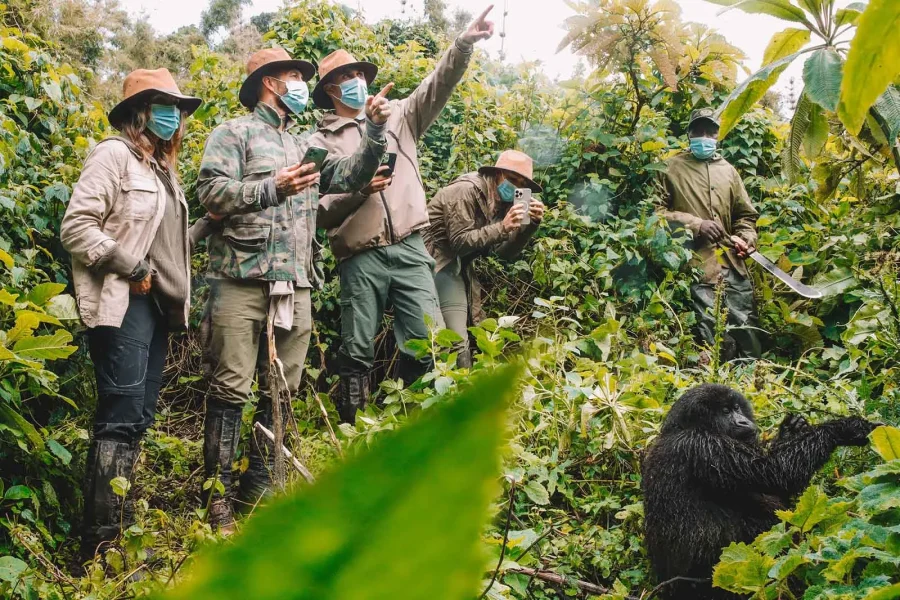
Every gorilla trekking country offers the identical core product: one hour with a wild, fully habituated mountain gorilla family, at a distance of roughly 7 meters, accompanied by an armed ranger. What separates Uganda, Rwanda, and DR Congo is price, access, terrain, and the number of families available for booking, and the right choice depends on your budget, your timeline, and how much adventure you want built into the trip.
Uganda: the best value and the widest choice of families
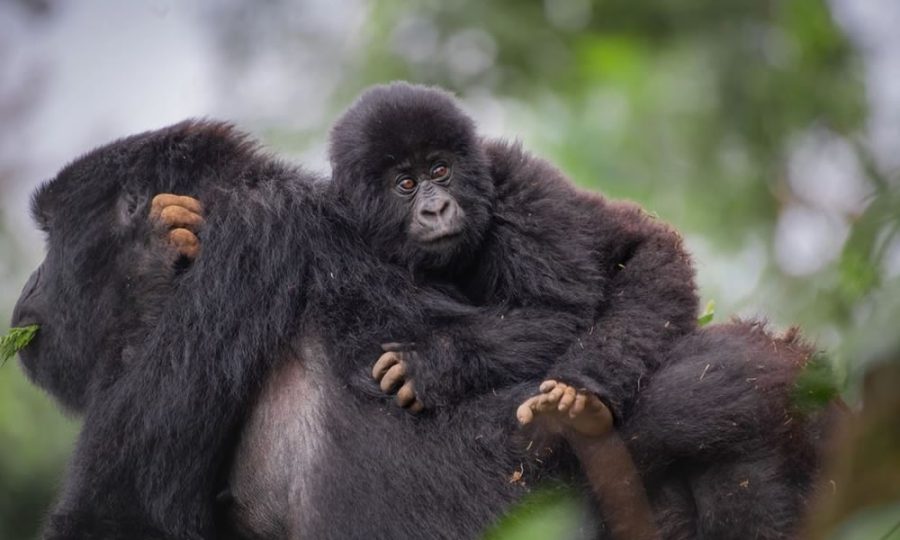
Uganda has about half the world’s remaining mountain gorillas, with around 20 habituated families in the four sectors of Bwindi Impenetrable National Park (Buhoma, Ruhija, Rushaga, and Nkuringo) and one family in Mgahinga Gorilla National Park (the Nyakagezi family), so it has more permits available than Rwanda and DR Congo combined. At USD 800 per person, a standard Uganda permit costs roughly half of Rwanda’s, and Uganda is the only country offering the Gorilla Habituation Experience, a four-hour visit with a semi-habituated family in Bwindi’s Rushaga sector. In our experience, most first-time trekkers underestimate how much the choice of sector matters more than the choice of country: Buhoma suits travellers who want easy access and established lodges, while Rushaga has the highest concentration of families and therefore the best last-minute availability.
Rwanda: the fastest and most polished experience
Rwanda’s Volcanoes National Park sits roughly 2 to 3 hours from Kigali International Airport, the shortest transfer of any gorilla trekking destination, and Rwanda has invested heavily in road infrastructure and high-end lodges around Kinigi. Volcanoes National Park has 12 gorilla families currently open to tourism, according to the Rwanda Development Board’s official Visit Rwanda platform, with several more reserved for scientific research only. The trade-off is price: at USD 1,500 per person, a Rwandan gorilla permit costs nearly double Uganda’s, though the terrain in the Virunga foothills is generally gentler than Bwindi’s dense, “impenetrable” forest.
DR Congo: the lowest price, with a serious caveat
Virunga National Park has historically offered the cheapest permits in the region, from around USD 400 per person, and around 8 habituated families, including the well-known Rugendo and Humba groups. However, Virunga sits in North Kivu, a part of eastern DR Congo that has experienced serious, recurring instability, and the park has suspended tourism access for extended periods over the past two years amid conflict involving the M23 rebel group. We do not currently include Virunga in itineraries until that status is confirmed sector by sector; travellers wanting a DR Congo primate encounter right now are better served by Kahuzi-Biega National Park, further south and unaffected by the North Kivu conflict, where Eastern lowland (Grauer’s) gorillas can be trekked.
Uganda, Rwanda, and DR Congo Compared
Most travellers building a longer East Africa itinerary combine Uganda with Rwanda rather than choosing one exclusively; our Uganda & Rwanda Toursroute a Kigali arrival straight into Bwindi, which is often the fastest and most affordable way to see gorillas from either capital.
Which country fits which kind of traveller
- Budget-conscious travellers with flexible dates: Uganda, especially booked in the April, May, or November low-season window when discounted permits are available.
- Travellers with only 3-4 days total: Rwanda, purely because Kigali’s 2-3 hour transfer to Volcanoes National Park leaves more of the short trip free for the trek itself rather than road time.
- Repeat trekkers wanting the deepest possible encounter: Uganda’s Gorilla Habituation Experience, the only four-hour, small-group format available anywhere in the region.
- Photographers and birders: Uganda’s Ruhija sector, for its open ridgeline morning light and over 350 recorded bird species, or Rwanda’s Bisoke-facing trails for dramatic volcano backdrops.
- Families with teenagers just past the age minimum: Uganda’s Buhoma sector or Rwanda generally, both of which offer gentler terrain options than Bwindi’s southern sectors.
- Adventurous, less crowded trails: Uganda’s Nkuringo sector, which sees the lowest trekker volume of Bwindi’s four sectors and rewards the effort with ridgeline views into DR Congo’s Virunga landscape.
Gorilla Permit Prices, Booking Rules, and Availability in 2027
A gorilla permit is the single line item every trekker asks about first, and it is also the part of trip planning most affected by policy changes, so we keep this section current every season.
What a permit actually costs
Uganda Wildlife Authority (UWA) sets Uganda’s tariffs, and the current structure charges USD 800 per person for foreign non-residents, USD 700 for foreign residents, and roughly USD 500 for other African-passport holders, with East African Community citizens paying a heavily discounted local rate. UWA also runs a low-season discount of around USD 600 for foreign non-residents during April, May and November, though these discounted permits are typically date-specific and cannot be rescheduled once booked, so only take one if you are certain of your travel dates. The Gorilla Habituation Experience permit currently costs USD 1,500 per person; several industry sources report an increase to USD 1,800 taking effect sometime in early 2027, but we have not been able to confirm the exact effective date directly with UWA. Rwanda’s Volcanoes National Park charges a flat USD 1,500 per person with no seasonal discount for international visitors, though the Rwanda Development Board periodically runs discounts for visitors who combine the trek with two nights in Akagera or Nyungwe National Park. DR Congo’s Virunga National Park lists permits from USD 400, the lowest headline price in the region, though this figure is only relevant once the park’s operational status is confirmed.
How booking actually works
All three countries issue permits through a single government body: UWA in Uganda, the Rwanda Development Board in Rwanda, and the Institut Congolais pour la Conservation de la Nature (ICCN) in DR Congo. In each case, it is technically possible to approach the authority directly, but in practice almost every foreign traveller books through a licensed tour operator, because permits alone do not include transport, ranger briefing logistics, lodging or the cross-border coordination required if you are routing through Kigali. As an AUTO-registered operator, we book permits directly with UWA on our clients’ behalf, which removes any risk of a duplicated or fraudulently resold permit. A change we have seen reported for the 2027 booking cycle is the removal of UWA’s old 7-day soft-hold window: previously, an operator could reserve a permit for a week without payment, but current reports suggest that permits must now be paid in full at the time of booking to secure them. Whatever the exact mechanics, the practical advice has not changed: Confirm your travel dates before you start the booking conversation, because gorilla permits, unlike hotel rooms, generally cannot be held speculatively.
How far in advance to book
During peak season (June to September and December to February), permits in the most popular sectors, particularly Buhoma and Volcanoes National Park, can generally sell out 3 to 6 months ahead. Rushaga tends to have the best last-minute availability of Uganda’s four sectors simply because it has the most families. In Uganda’s rainy season shoulder months, permits are often available with 4 to 8 weeks’ notice. Our rule of thumb: if your travel dates are fixed and fall in peak season, start the permit conversation the moment you know your dates, not after you have booked flights.
How Uganda’s Four Bwindi Sectors Compare
Because Uganda holds the majority of the region’s habituated families, the more useful decision for most of our clients is not “which country” but “which Bwindi sector,” since the four sectors genuinely differ in terrain, crowd levels and lodge style, even though every sector delivers the same one hour with a gorilla family.
- Buhoma (northern Bwindi): the most established sector, home to Uganda’s first habituated family (Mubare, trekked since 1993), with easy-to-moderate terrain and Bwindi’s best lodge selection. From Entebbe, expect roughly 8-9 hours by road or a 1-hour flight to the nearby Kihihi airstrip. Best for first-time trekkers and anyone flying in with limited time.
- Rushaga (southern Bwindi): the largest sector by family count, with 9 to 10 habituated groups and the only location offering the Gorilla Habituation Experience. Terrain runs moderately to strenuously. From Kigali, it’s roughly 4-5 hours via the Cyanika border crossing, making it the natural choice for Kigali-routed itineraries.
- Nkuringo (southern Bwindi): the most remote and least crowded sector, with steep ridge-line descents and ascents that make for a genuinely strenuous trek, rewarded with dramatic views toward Congo’s Virunga landscape. Best for trekkers who have already done one gorilla trek and want a quieter, more physically demanding second encounter.
- Ruhija (eastern Bwindi): the highest-altitude, coolest sector, with moderate terrain and the region’s best birding (350-plus recorded species), plus clear-morning views of the Virunga volcanoes. Best for photographers and repeat visitors who want a different landscape from their first trek.
We name the specific sector, rather than just “Bwindi,” on every quote we send, because in our experience this single detail affects trip satisfaction more than almost any other choice a client makes.
Where Your Permit Fee Actually Goes
Trekkers frequently assume the permit fee functions like a national park entrance ticket. It doesn’t. Uganda Wildlife Authority distributes gorilla permit revenue across several functions that directly shape the experience and the species’ survival odds: roughly 20 percent goes to a community revenue fund distributed to parishes bordering the park, which has funded schools, clean water infrastructure and micro-loans in communities around Bwindi and Mgahinga; around 40 percent covers park operations and trail infrastructure across Bwindi’s 331 square kilometres of dense montane forest; roughly 25 percent funds ranger salaries and the anti-poaching patrols that run 24 hours a day; and the remaining 15 percent supports veterinary and research work, including the Gorilla Doctors field programme that provides emergency care to sick or injured individuals. This financing model, replicated with local variation in Rwanda and historically in DR Congo, is widely credited by conservation bodies including the Dian Fossey Gorilla Fund and the International Gorilla Conservation Programme as the primary reason mountain gorillas are the only great ape species with a confirmed growing population. In practical terms, your permit fee is not simply a price for admission; it is one of the more direct conservation contributions an individual traveller can make anywhere in the world.
When to Go: Weather, Seasons, and the Trekking Calendar.
Gorilla trekking runs 365 days a year in every country that offers it; gorillas do not migrate for the rainy season, and habituated families are tracked and visited daily regardless of weather. What changes with the season are trail conditions, permit demand, and, to a lesser extent, visibility for photography.
The two dry windows
Uganda, Rwanda and DR Congo share broadly the same climate pattern in the Albertine Rift: the driest, most popular trekking months are June through September and December through February, when trails are firmer and the forest canopy sheds less rain onto your equipment. These are also the months when permits sell out fastest and lodge rates run highest.
The case for the “rainy” season
The two rainy windows, March to May and October to November, are quieter, cheaper, and often overlooked by first-time researchers who assume rain means a worse experience. In our experience, most travelers who trek during these months report that a lighter crowd on the trail and a better shot at last-minute permit availability outweigh the extra mud. Some lodges drop their rack rates by 20 to 30 percent in these shoulder months, and Uganda’s low-season permit discount (see above) falls specifically within this window. The forest is also visibly greener, and rainfall tends to arrive as a short afternoon downpour rather than an all-day soak. Read our full best time to go gorilla trekking guide for a month-by-month breakdown.
What Actually Happens on a Gorilla Trekking Day
Most first-time trekkers picture the one hour with the gorillas and underestimate everything around it. Here is the realistic shape of the day, based on how our clients’ treks actually run.
Before dawn: the tracker team moves first
UWA, RDB, and ICCN tracker teams leave their stations before sunrise to relocate the gorilla family from the nest site where it slept the previous night. Gorillas build a fresh nest every evening, so trackers follow a trail of feeding debris, knuckle prints and dung to re-establish the family’s morning position before your group’s briefing even begins.
The ranger briefing (typically 7:00-8:00 AM)
All trekkers report to the sector’s ranger station, where groups of up to 8 are formed. You will not usually know your group composition in advance. Rangers cover the 7-metre minimum-distance rule, what to do during a silverback mock charge, photography rules (no flash), and basic health screening, since anyone showing cold or flu symptoms will be turned away to protect the gorillas from human respiratory illness.
The trek itself
Hiking time depends entirely on where the trackers found the family that morning: sometimes 30 minutes on a maintained trail, sometimes 5 to 8 hours of dense-forest scrambling across streams and ridgelines. There is no guarantee either way, and there are no refunds for a long trek, which is precisely why fitness and footwear matter more than most people expect (see below).
Your hour with the gorillas
A timer starts the moment your group makes visual contact with the family. The full hour is yours regardless of how close or far the gorillas choose to be. Expect feeding, grooming, play between juveniles, and occasionally a silverback display; rangers position the group for the safest, closest legal viewing angle throughout.
What to pack for the trek
- Clothing: long-sleeved shirt and long trousers in dark, natural colors (khaki, green, or brown; bright colors can startle gorillas), plus a rain jacket regardless of season.
- Footwear: sturdy, waterproof hiking boots; the terrain is frequently muddy even in dry season.
- Hands: gardening-style gloves for gripping vegetation on steep sections.
- Essentials: at least 2 liters of water, energy snacks, sunscreen, insect repellent, a small first-aid kit and a dry bag for your camera.
- What to leave behind: strongly scented perfumes or lotions, and anything bright red or orange in color.
Full detail is in our dedicated gorilla trekking packing list.
Fitness, Age, Health, and Family Considerations
This is the section we spend the most time on with new clients, because unlike price or scenery, fitness and health requirements genuinely determine whether a trek is enjoyable or miserable.
Do I need to be fit?
A reasonable level of fitness is required, though you do not need to be an athlete. If you can comfortably walk uphill for 2 to 3 hours on uneven ground, you are fit enough for the majority of treks. Buhoma’s Rushegura family and Rwanda’s gentler Virunga-foothill trails are the most forgiving starting points for first-timers or anyone with joint concerns. Hiring a local porter, typically USD 15 to 20 per day at any sector trailhead, meaningfully reduces the physical demand: these porters carry your daypack and offer a steadying hand on steep or muddy sections, and hiring one is one of the most direct economic contributions a trekker can make to communities around the park, since many porters are former poachers who chose conservation-economy work instead.
Age limits
The minimum age for gorilla trekking is 15 in Uganda, Rwanda, and DR Congo, with no exceptions. There is no upper age limit; trekkers in their 70s and 80s complete gorilla treks regularly, and the determining factors are cardiovascular health and joint condition rather than age itself. For older trekkers or anyone with mobility concerns, request an easier sector (Buhoma in Uganda, or mention your fitness level when booking in Rwanda) and budget for a porter.
Pregnancy and health conditions
Neither UWA nor RDB explicitly bans pregnant trekkers, but the activity involves demanding hiking on uneven terrain at altitude, plus the unpredictability of gorilla behaviour at close range, and most responsible operators and medical professionals advise against trekking during the second or third trimester. If you are pregnant or managing a health condition, tell us when you enquire so we can recommend the most appropriate sector, or an alternative activity such as a Batwa cultural walk or a boat safari on the Kazinga Channel while the rest of your party treks.
If you fall ill on a trek day
Anyone showing cold, flu, or COVID-like symptoms will be denied entry at the ranger briefing, a rule that exists because mountain gorillas share roughly 98 percent of human DNA and are highly susceptible to our respiratory illnesses. The permit is generally forfeited in this scenario, which is the single strongest argument for buying travel insurance that explicitly covers pre-booked safari activities before you fly.
Getting to the Gorillas: Routes from Kigali, Entebbe, and Between Countries
Logistics genuinely change the economics of a gorilla trek, and Kigali is, counter-intuitively, often the smarter gateway even for a Uganda-only trip.
From Kigali to Uganda’s gorillas
The drive from Kigali to Bwindi’s southern sectors (Rushaga or Nkuringo) takes roughly 4 to 5 hours via the Cyanika border crossing, making Uganda’s gorillas more accessible from Rwanda’s capital than most travellers assume, and Kigali International Airport has considerably better long-haul connections than Entebbe for many international routes. A same-day Kigali-to-Bwindi-and-back trip is technically possible, but it adds up to 12 to 18 hours of combined travel and trekking in a single day; we generally recommend at least one night near the park, as reflected in our shortest 1-Day Gorilla Trek from Kigali itinerary, which is built for travellers with hard time constraints rather than as our default recommendation.
From Entebbe to Uganda’s gorillas
By road, the trip from Entebbe or Kampala to Bwindi takes approximately 8 to 9 hours depending on sector. By air, scheduled flights connect Entebbe to Kihihi airstrip (serving Buhoma and Ruhija) or Kisoro airstrip (serving Rushaga, Nkuringo and Mgahinga) in around 1 to 1.5 hours; charter and helicopter options also exist for travellers prioritising time over budget. See our fly-in gorilla safari guide for the full breakdown of scheduled versus charter options.
Visa requirements
Most nationalities need a Ugandan e-Visa, applied for online in advance at visas.immigration.go.ug, at a standard cost of USD 50 for a single entry. Citizens of East African Community member states and a small number of other nationalities enter Uganda visa-free; check the current exemption list before applying, since it is periodically revised. Rwanda offers visa-on-arrival for the large majority of nationalities at USD 50. If you are combining the two countries in one trip, the East Africa Tourist Visa, at USD 100, covers both Uganda and Rwanda and saves roughly USD 50 over buying two single-country visas separately, and it also covers Kenya if your itinerary extends there.
Combining countries
Uganda and Rwanda pair naturally on a single trip; DR Congo currently requires closer attention to the security situation before it can be recommended as a straightforward add-on. Travellers wanting to extend a Rwanda leg often add golden monkey trekking in the same Virunga foothills, a lighter, less strenuous primate encounter that pairs naturally with a gorilla permit on the same trip since both activities depart from the same Kinigi park headquarters.
What Gorilla Trekking Guides Won’t Always Tell You
- Booking the cheapest possible sector on paper is not the same as booking the easiest trek. Rushaga has the most permit availability in Uganda, but several of its families range across genuinely steep terrain; if easy walking matters more to you than flexibility, ask for Buhoma specifically.
- A “guaranteed sighting” claim is accurate in practice (Bwindi and Volcanoes National Park have found the assigned family on over 99 percent of permitted treks for decades) but it is not contractually guaranteed by any authority, and no operator, including us, can promise it in writing.
- The single hour with the gorillas is identical in every sector and every country; what actually varies from trek to trek is the hike to reach them, which can take 30 minutes or 8 hours on the very same permit type. Budget your itinerary’s following day accordingly rather than assuming a short, predictable morning.
- Porters are not a luxury add-on. At USD 15 to 20 per day, hiring one is inexpensive, meaningfully reduces injury risk on wet terrain, and is one of the most direct ways your trip supports the local economy around the park.
- Low-season discounted permits (see pricing section above) are non-reschedulable. If there is any chance your dates will move, the full-price permit is the safer choice even though it costs more upfront.
- “Guided by an armed ranger” does not mean the ranger is there because of the gorillas. The rifle is standard protocol against forest buffalo and elephant encounters and, historically, poachers; habituated gorillas themselves are almost never the reason for the escort.
- Trekking certificates, packed lunches, and porter arrangements are not automatically included in every quoted price. Ask specifically what is bundled into your permit-plus-logistics package before comparing quotes between operators, since headline prices are not always apples-to-apples.
Which Itinerary Fits Your Trip?
Ready to book? Here are the itineraries that match this guide, depending on how much time and how much adventure you want to build around your trek.
Tell us your dates, and we’ll check live permit availability within a few minutes, free and with no obligation.