Frequently Asked Questions About the Busingye Gorilla Family
Where is the Busingye gorilla family located?
The Busingye gorilla family lives in the Rushaga sector, in the southern part of Bwindi Impenetrable National Park in southwestern Uganda. Rushaga is roughly 4 to 5 hours by road from Kigali via the Cyanika border crossing, or about 8 to 9 hours from Entebbe by road, with a faster ~1.5-hour flight option into Kisoro airstrip.
How many gorillas are in the Busingye family?
Most sources put the Busingye family at around 9 members, typically described as 1 silverback, several blackbacks, and roughly 3 infants, though reported figures vary unusually widely across sources, from as few as 7 to as many as 17. Group size shifts constantly through births, deaths, and transfers between families, so confirm the current count with your operator close to your travel date rather than relying on any single published figure, including this one.
What does the name Busingye mean?
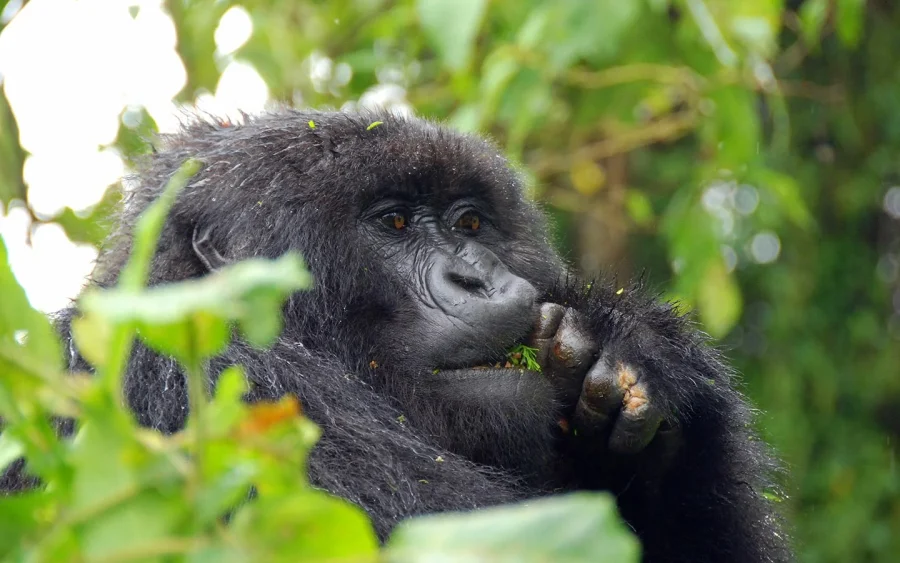
Busingye means “peace” in Rukiga, one of the local languages of southwestern Uganda, and the family is generally described as calm and settled, a reputation that makes it a frequently recommended choice for first-time trekkers. A small number of third-party accounts describe more assertive behavior from the family’s silverback, so treat the peaceful reputation as the dominant characterization rather than a guarantee.
How did the Busingye family form?
The Busingye family formed in 2012 when a group of individuals split from the Kahungye gorilla family, which had opened to trekking only the year before, in 2011, with a reported 27 members and three silverbacks. Internal conflict among Kahungye’s resident silverbacks led to the split, and the departing group was independently trekked as Busingye.
How much does it cost to see the Busingye gorilla family?
A standard gorilla trekking permit for Busingye in Uganda costs USD 800 per person, the same fixed price the Uganda Wildlife Authority charges for every habituated family across Bwindi and Mgahinga, regardless of sector or specific group.
Is Busingye a suitable family for first-time gorilla trekkers?
Yes, Busingye is commonly recommended for first-time trekkers thanks to its general reputation for calm, settled behavior, reflected in its name meaning ‘peace’ in Rukiga. Family assignment is made by UWA on the morning of your trek and cannot be guaranteed in advance, but Busingye’s profile makes it a sensible choice for travellers wanting a more predictable encounter.
Who leads the Busingye gorilla family?
Leadership is generally attributed to a silverback named Busingye, though reports on the family’s exact leadership structure are inconsistent across sources, with a small number describing shared or dual leadership.
How difficult is trekking to find the Busingye family?
The Rushaga sector overall rates as moderate to strenuous, and Busingye’s home range sits within the sector’s typical mix of forested hills and valleys. Hiking time to first contact can run from under an hour to several hours depending on where the family is foraging that day, and as with every Bwindi family, treks should be budgeted as a full day rather than a fixed-length activity.
How do I book a permit to trek with the Busingye family?
Permits are sold by the Uganda Wildlife Authority, but most travelers book through a registered tour operator, since a permit alone does not include transport, ranger-briefing logistics, or cross-border coordination from Kigali. You can request Busingye specifically, though UWA makes the final family assignment on the morning of the trek.
What is the relationship between Busingye and Kahungye gorilla families?
Busingye is a breakaway, or splinter, family from Kahungye, formed in 2012 after internal conflict among Kahungye’s resident silverbacks. Kahungye remains a separate, larger family in the same general Rushaga territory, and some sources also link the smaller Rwigi and Tindatine groups to splits from the same parent family around a similar period.
What is the best time of year to visit the Busingye family?
The dry-season windows of June to September and December to February offer firmer trails and typically better visibility, though gorilla trekking runs year-round and Rushaga generally has the best permit availability of any Bwindi sector thanks to its high number of families, including Busingye.
What should I pack for a trek to see the Busingye family?
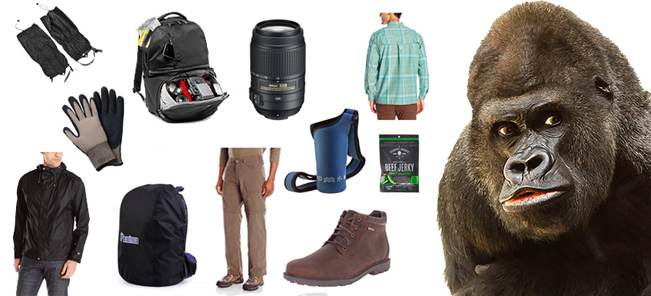
Pack a long-sleeved shirt and trousers in dark, natural colors, waterproof hiking boots, gardening gloves, a rain jacket, at least 2 liters of water, snacks, and a high-ISO-capable camera (no flash allowed), and consider hiring a porter for USD 15 to 20 per day to help on Rushaga’s often muddy, uneven trails.