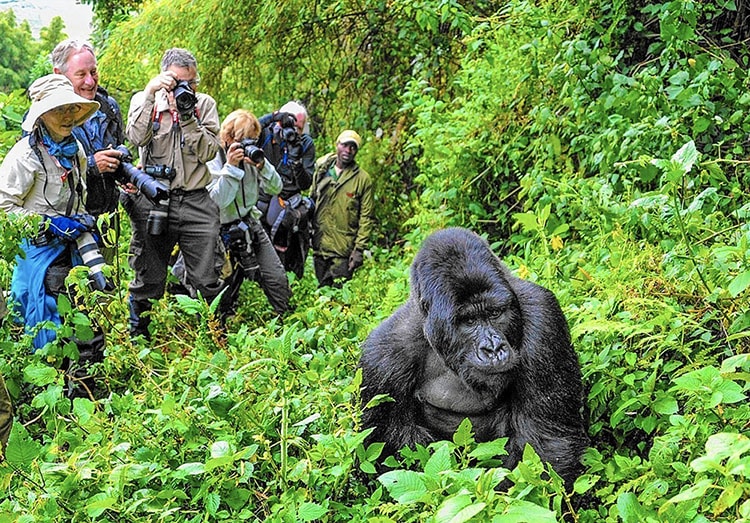
What Is Gorilla Trekking?
Gorilla trekking is the activity of hiking into montane forest, accompanied by an armed park ranger and trained trackers, to locate and spend a fixed hour with a specific habituated mountain gorilla family. “Habituated” is the operative word: every family open to tourism has been acclimated to human presence over 2 to 4 years of daily, non-threatening contact with researchers and trackers, to the point where the group tolerates a group of visitors at close range without changing their natural behavior. This is different from a zoo encounter in every respect that matters the gorillas are wild, free-ranging, and could move out of trekking range entirely; they simply no longer treat a quiet human presence as a threat.
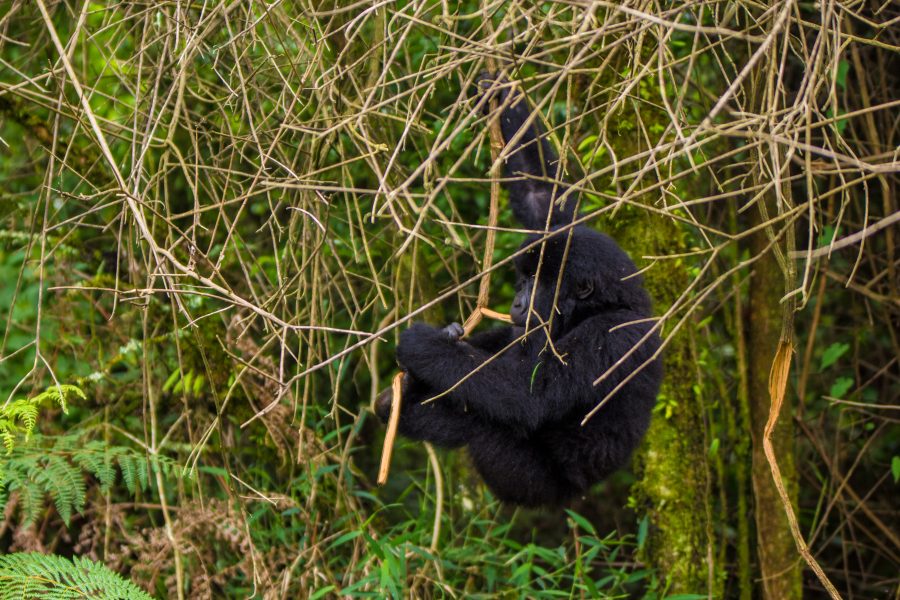
The terms “gorilla trekking,” “gorilla tracking,” “gorilla safari,” and “gorilla tour” are used interchangeably by national wildlife authorities and operators alike and mean the same thing regardless of which one a website uses. The activity is tightly regulated by three government bodies: the Uganda Wildlife Authority (UWA), the Rwanda Development Board (RDB), and DR Congo’s Institut Congolais pour la Conservation de la Nature (ICCN), which is why the core rules (8 visitors per family, 1 hour maximum, 15-year minimum age, and 7-meter distance) are near-identical across all three countries. Mountain gorillas share roughly 98% of human DNA, which is precisely why these limits exist: a common cold in a trekking group can be lethal to a gorilla family with no immunity to it.
It’s also worth understanding what the permit fee actually funds, since it changes how the price feels. In Uganda, UWA allocates roughly 20% of gorilla permit revenue directly to a community fund for parishes bordering the park, around 40% to trail and ranger-station infrastructure, about 25% to ranger salaries and anti-poaching patrols, and the remainder to veterinary care and research, including the Gorilla Doctors program that provides field intervention for sick or injured gorillas. This financing model is widely credited as the reason mountain gorillas are the only great ape subspecies with a growing wild population: from roughly 620 individuals in a 1989 census to 1,063 in the last fully published count in 2018, a recovery driven in large part by tourism revenue giving park-adjacent communities an economic reason to protect gorillas rather than poach them.
How Gorilla Trekking Works: From Permit to the Forest
Every gorilla trek, regardless of country, follows the same six-step sequence. Booking usually happens through an operator like us; see our gorilla permit booking guide, though independent booking is possible directly with UWA, RDB, or ICCN.
- Book your gorilla permit, ideally 3 to 6 months ahead of peak season (June–September, December–February), through a licensed operator or directly with the national wildlife authority.
- Travel to the park or sector the day before your trek. Nearly every itinerary includes an overnight stay near the trailhead since briefings start early.
- Attend the ranger briefing between 7:00 and 8:00 AM at the sector’s ranger station, where you’re grouped with up to 7 other trekkers and briefed on safety rules.
- Trek with rangers and trackers to reach the gorilla family’s location anywhere from 30 minutes to 8 hours, since trackers who left before dawn radio back the family’s approximate position as you walk.
- Spend your hour once you make visual contact: the timer starts the moment you see the gorillas, not when you reach the general area.
- Trek out and collect your personalized UWA, RDB, or ICCN gorilla trekking certificate at the ranger station, naming the family you visited.
The single biggest variable in this process is step 4, and no operator can promise how long it will take on a given day. Treat any itinerary that guarantees a “short, easy trek” with skepticism. For country-specific permit guides, see our Uganda gorilla permit guide and our Rwanda gorilla trekking guide.
Where Gorilla Trekking Happens
Mountain gorillas exist in the wild in exactly two ecosystems, spread across three countries: the Virunga Massif, straddling Uganda, Rwanda, and DR Congo, and the separate Bwindi-Sarambwe forest entirely inside Uganda. This section is a brief orientation; for a full country-by-country comparison of permit prices, family counts, and access routes, see our dedicated Mountain Gorilla Trekking Destinations guide.
Uganda holds the most habituated families (around 20, across Bwindi Impenetrable National Park and Mgahinga Gorilla National Park) at the lowest standard permit price, USD 800. See our Bwindi gorilla trekking guide and Bwindi sector breakdown guide.
Rwanda offers the fastest access, roughly 2 to 2.5 hours from Kigali International Airport to Volcanoes National Park, at the highest permit price, USD 1,500. See our Rwanda gorilla trekking guide.
DR Congo has the lowest permit price, USD 400, at Virunga National Park, and a genuinely different alternative species, the eastern lowland gorilla, at Kahuzi-Biega National Park. Virunga’s operational status is security-dependent and should be confirmed before booking; see our DR Congo gorilla trekking guide for current details.
Gorilla Trekking vs the Gorilla Habituation Experience
Standard gorilla trekking and gorilla habituation Experiences are both permitted encounters with mountain gorillas, but they are different products with different trade-offs, and confusing them is one of the most common planning mistakes we see.
In our experience, most travelers should do a standard trek first and consider the Habituation Experience on a return visit; the semi-habituated family’s less predictable behavior is genuinely more rewarding for someone who already knows what a “normal” trek looks like and genuinely more nerve-wracking as a first encounter. Book it through our 3-Day Uganda Gorilla Habituation itinerary.