Akagera National Park: Rwanda’s Only Big Five Safari Destination.

Akagera National Park is Rwanda’s only Big Five reserve, 2.5 hrs from Kigali. See lions, rhinos & elephants; plan your safari with a free quote today.

Akagera National Park is Rwanda’s sole savannah reserve and only Big Five destination, a 1,122 sq km wilderness of lakes, papyrus swamp, and rolling grassland along the Tanzania border, roughly 2.5 hours from Kigali. It holds lions, black and white rhinos, over 150 elephants, more than 2,500 buffalo, and a resident leopard population, alongside giraffes, zebras, hippos, crocodiles, and over 500 recorded bird species. Once devastated after the 1994 genocide, when lions and rhinos were wiped out entirely, Akagera has been rebuilt since 2010 under a joint management partnership between African Parks and the Rwanda Development Board into one of Africa’s clearest conservation recovery stories. This guide covers what lives in the park, what there is to do, how much a visit costs, and how Akagera fits into a broader itinerary for gorilla trekking in Rwanda.

Akagera National Park: Rwanda's Big Five Safari Guide

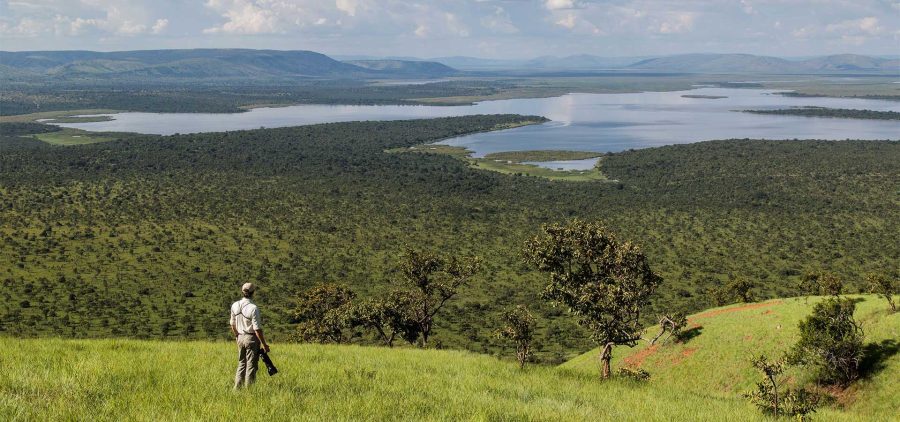
Akagera National Park, found in eastern Rwanda, covers an area of 1,200 km², along the Tanzanian border. Founded in 1934 to conserve plants and animals in the three eco-regions of Savannah, Mountain, and Swamp, the park is named after the Kagera River that flows along its eastern periphery into several lakes, the biggest being Lake Ihema. The multifaceted structure of lakes and connecting papyrus swamplands makes up about three-quarters of the park, qualifying it as the largest conserved swamp in central Africa.

Subjugated to the east by the warren of swamps and lakes that follow the meandering course of the Akagera River, the most distant source of the Nile, this is a diverse scenery of twisted acacia forest interspersed with open grassland, high rolling hills along the western boundary, and patches of thick forest. Akagera is the main park for game drive wildlife safaris in Rwanda, in addition to offering trekking opportunities for mountain gorillas in Volcanoes National Park and chimpanzees in Nyungwe Forest National Park.

🚊  Only ~128 Uganda gorilla permits issued daily

Your Gorilla Trek Starts With One Message

Tell us your dates and we’ll check live permit availability and send your quote within Minutes: free, no obligation.

Get My Free Quote   AUTO-registered operator · Budget to luxury · Uganda, Rwanda & Congo

Quick Facts About Akagera National Park

FactDetail
LocationEastern Rwanda, along the Tanzania border
Size1,122 sq km (433 sq mi)
Established1934 (Belgian colonial administration)
Managed byAfrican Parks & Rwanda Development Board (since 2010)
Distance from Kigali~110 km / 2 – 2.5 hours by road
Big Five statusRwanda's only Big Five park (lion, elephant, buffalo, leopard, and rhino)
Lion populationApprox. 58–70+ (reintroduced 2015 & 2017, from zero)
Rhino population100+ white rhino, ~20 black rhino (2025 translocations)
Elephant population~150 (descended from 26 relocated in 1975)
Bird speciesOver 500, including the shoebill stork
Main lakeLake Ihema (2nd largest lake in Rwanda, inside the park)
Entry fee (non-resident adult)USD 100 per day

What Is Akagera National Park? Location, History & Landscape

Akagera National Park sits in Rwanda’s Eastern Province, hugging the Tanzania border, and is named for the Kagera River, which forms its eastern boundary and is the most remote headwater stream feeding into the Nile system via Lake Victoria. The park was first gazetted in 1934 under Belgian colonial rule at roughly 2,500 sq km, more than double its current size, before losing nearly half its territory to post-genocide resettlement in 1997. Today’s 1,122 sq km protects a mix of savannah grassland, low montane hills, and one of the largest protected wetlands in East-Central Africa, a labyrinth of papyrus swamp and inter-linked lakes that makes Akagera ecologically distinct from any other Rwandan park.

A Genocide-Era Collapse and an African Parks Recovery

Akagera’s modern story is inseparable from Rwanda’s history. By the late 1990s the park had lost its entire lion population to retaliatory poisoning over livestock conflict, and its last black rhino was recorded in 2007. Returning refugees resettled inside former park boundaries, halving its protected area. In 2010, African Parks signed a joint management agreement with the Rwanda Development Board, built an electric boundary fence, set up a K9 anti-poaching unit, and started a systematic species reintroduction programme, using the same conservation-financing model that has helped mountain gorilla populations recover elsewhere in the region. Poaching incidents fell from around 180 in 2012 to just 5 by 2015, and paying visitor numbers grew from roughly 15,000 in 2010 to over 51,000 in 2025.

Landscape at a Glance

  • North: Kilala Plains and rolling hills; the most reliable area for lions and the open terrain favoured by white rhinos.
  • Centre: A chain of lakes, including Lake Ihema, Rwanda’s second-largest lake, fringed by papyrus swamp and acacia woodland.
  • South: Denser woodland closer to the main park entrance, ideal for leopard and general game on a shorter visit.

Animals in Akagera National Park: The Big Five and Beyond

Akagera is the only place in Rwanda where all Big Five species (lion, leopard, elephant, buffalo, and rhino) can be seen on a single safari, a status the park has held only since a major 2025 rhino translocation. Beyond the Big Five, the park protects roughly a dozen antelope species, hippos and Nile crocodiles concentrated around Lake Ihema, and a birdlist exceeding 500 species that draws dedicated birders on its merit.

The Big Five in Akagera

SpeciesCurrent Population (approx.)Where to LookReintroduction Note
Lion58 – 70+Kilala Plains, north, early morningReintroduced 2015 (7) & 2017; grew from zero
White rhino100+Open northern plains30 in 2021, plus 70 more in June 2025
Black rhino~20Thicker cover, north & centre18 reintroduced 2017; 5 more in 2019
Elephant~150Throughout, near water in the dry season26 relocated from Bugesera in 1975; naturally grown since
Buffalo2,500+Northern plains, large dry-season herdsNever extirpated; most numerous of the five
LeopardPresent, rarely seenWestern woodland edge, night drivesNever reintroduced; always resident, elusive

Other Wildlife Worth Watching For

  • Masai giraffe (over 160 individuals per the Giraffe Conservation Foundation) and Burchell’s zebra, both common on the northern plains.
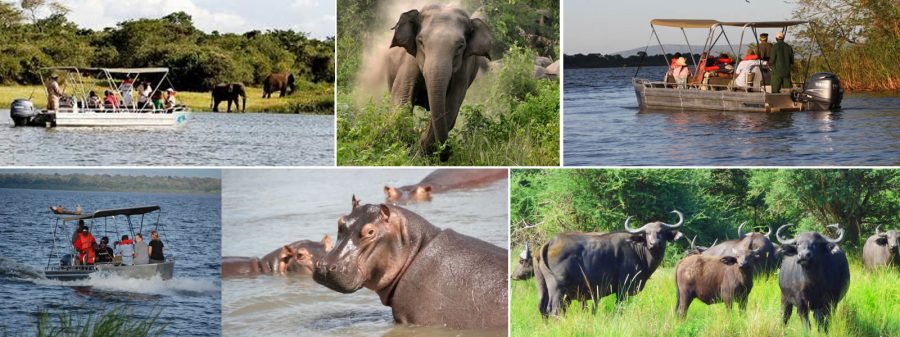
  • Hippos and Nile crocodiles concentrated around Lake Ihema, best seen on a boat safari rather than from a vehicle.
  • Antelope species, including topi, roan antelope, oribi, impala, bushbuck, and the shy sitatunga in the swamp margins.
  • Spotted hyena, side-striped jackal, and, after dark, bushbabies and civets on a guided night drive.

Birdlife: Over 500 Species

Akagera’s papyrus swamps and lakeshore habitat make it one of Rwanda’s premier birding destinations, with the rare and prehistoric-looking shoebill stork as the star sighting, alongside the papyrus gonolek, African fish eagle, and a wide range of migratory waterbirds. Serious birders typically pair a dawn walking or vehicle circuit with an afternoon Lake Ihema boat safari, since many wetland specialists are far easier to find from the water.

Things to Do in Akagera National Park

Akagera offers a wider range of activities than any other Rwandan park, a direct result of its open savannah terrain, which allows boat trips, night drives, and fishing that simply aren’t possible in Rwanda’s forest parks.

Things to Do in Akagera National Park

Core Activities

  • Day game drive: Self-drive or guided circuits through the north or south sector; a guided full-day drive runs roughly USD 40 per person and meaningfully improves sighting odds over self-driving.
  • Boat safari on Lake Ihema: A 1- to 2-hour cruise (around USD 45 pp) for close-range hippo, crocodile, and waterbird viewing, widely rated the single best-value activity in the park.
  • Night game drive: A spotlight-guided 2- to 3-hour drive (around USD 40 pp) for nocturnal species like leopard, hyena, and bushbaby, capped at roughly 7 people per vehicle.
  • Behind-the-scenes / rhino tracking: A rare opportunity to join park rangers on a rhino monitoring walk, offered on request and subject to ranger availability and the rhino’s location that day.
  • Sport fishing: Catch-and-release fishing on the lakes for roughly USD 25 per person per day; bring your equipment.
  • Community visits: Guided visits to villages bordering the park, showcasing the revenue-sharing model that funds schools and clinics from park entrance fees.

Because Akagera is at the opposite end of the country from the gorilla parks, most travellers combine it as a bookend to a Volcanoes National Park gorilla trek rather than visiting it on its own; see the itinerary section below for specific combined packages.

Akagera vs. Rwanda’s Other National Parks

Rwanda’s three flagship parks each deliver a completely different experience, and understanding the difference matters more than deciding which is “best,” since most well-planned Rwanda itineraries combine two or all three.

FactorAkagera National ParkVolcanoes National ParkNyungwe Forest National Park
EcosystemSavannah, lakes & swampHigh-altitude volcanic rainforestAncient montane rainforest
Signature wildlifeBig Five: lion, rhino, elephant, buffalo, leopardMountain gorillas & golden monkeysChimpanzees & Colobus monkeys
Distance from Kigali~2 – 2.5 hrs (110 km)~2 – 3 hrs (100 km)~5 – 6 hrs (225 km)
Main activityGame drives & boat safarisGorilla / golden monkey trekkingChimp trekking & canopy walk
Typical permit / entry cost$100/day entry + activity fees$1,500 gorilla permit$100 chimp permit (approx.)
Best forBig Five, birding, budget-friendly wildlifeThe primary Rwanda gorilla bucket-list itemForest hiking & primate diversity

For most first-time visitors, Rwanda gorilla trekking at Volcanoes National Park remains the trip’s centrepiece, with Akagera added as a savannah contrast and Nyungwe as an optional extension for travellers with more time. Our Rwanda safaris page shows how these three parks combine into full-country itineraries.

Practical Logistics: Getting There, Costs & What to Pack

Akagera is one of the more straightforward parks in East Africa to visit logistically: the road from Kigali is paved for most of the route, entry fees are fixed and published, and a single day is enough to get a genuine Big Five safari experience, though two days is strongly recommended for the full north-south circuit.

Getting There

  • By road from Kigali: approximately 110 km, 2 to 2.5 hours via a mostly paved route through Kayonza.
  • Self-drive is possible with a 4×4, but a guided vehicle materially improves sighting rates, particularly for lion and rhino, which carry tracking collars monitored by park guides.
  • There is no scheduled commercial flight into Akagera; all access is by road from Kigali.

What a 2-Day Akagera Safari Costs (Non-Resident)

Cost ItemPrice (USD)Notes
Park entrance fee$100 per person, per dayReduced rate for East African Community residents/citizens
Guided game drive (full day)~$40 per personSelf-drive guide hire from $25 – $40 half/full day
Lake Ihema boat safari~$45 per personMaximum 11 passengers per boat
Night game drive~$40 per personMaximum 7 people per vehicle
Accommodation (per night)$60 – $600+ ppCampsite to luxury tented camp
Sport fishing~$25 per person/dayBring your own equipment; catch-and-release

Where to Stay

  • Magashi Camp: Luxury tented camp in the remote north, run by Wilderness Safaris, prime for lion and rhino sightings.
  • Ruzizi Tented Lodge: Mid-range lakeside tented camp on Lake Ihema, the most popular pick for 2-day itineraries.
  • Akagera Game Lodge: Budget-to-mid-range hilltop lodge overlooking Lake Ihema, the park’s longest-established accommodation.
  • Muyumbu & Shakani campsites: Budget self-catering camping options for travelers with their own gear.

Best Time to Visit

Best Time to Go Gorilla Trekking in Uganda

The dry seasons, June to September and December to February, offer the easiest game viewing as animals concentrate around remaining water sources and grass cover thins. The green seasons, March to May and October to November, bring lush scenery and peak birding conditions, including migratory species, at the cost of a somewhat harder wildlife-spotting environment. Since Akagera’s entrance fee is flat year-round, there’s no cost penalty to visiting outside the dry season, only a trade-off in visibility versus scenery and birdlife.

What Tour Operators Won’t Always Tell You

  • A single day only covers one sector. Akagera’s south and north circuits are genuinely different experiences; a rushed day trip from Kigali usually means only the south, missing the Kilala Plains where lion and rhino sightings are most reliable.
  • “Big Five” is a very recent claim. Akagera has only held true Big Five status since the large 2025 white rhino translocation; older blog content and even some operator sites still understate current rhino and lion numbers, so ask for the year behind any population figure you’re quoted.
  • Entrance fees are charged per day, not per visit. Multi-night stays get a discount structure (fees drop on the 2nd and 3rd night and become free from the 4th night for stays up to a week), which changes the maths on longer visits significantly compared to a single day-trip fee.
  • Self-drive is cheaper but not necessarily better. Several of Akagera’s rhino and lion carry GPS collars monitored by park guides in real time; a guided vehicle has a real, not just marketing, advantage in sighting odds over independent self-driving.
  • Akagera is not a substitute for gorilla trekking, and vice versa. The two experiences don’t overlap at all, no primates live in Akagera, so budget for both if the Big Five and gorillas both matter to your trip rather than assuming one park covers the other.
🚊  Only ~128 Uganda gorilla permits issued daily

Your Gorilla Trek Starts With One Message

Tell us your dates and we’ll check live permit availability and send your quote within Minutes: free, no obligation.

Get My Free Quote   AUTO-registered operator · Budget to luxury · Uganda, Rwanda & Congo

Frequently Asked Questions About Akagera National Park

Where is Akagera National Park located?

Akagera National Park is in eastern Rwanda, along the border with Tanzania, roughly 110 km and 2 to 2.5 hours by road northeast of Kigali. The park spans 1,122 square kilometres and takes its name from the Kagera River, which forms the eastern park boundary and feeds Lake Ihema.

What animals can you see in Akagera National Park?

Akagera is Rwanda’s only Big Five park, home to an estimated 58 to 70-plus lions, over 100 white rhino and around 20 black rhino following a major 2025 translocation, roughly 150 elephants, more than 2,500 buffalo, and a resident but elusive leopard population. Beyond the Big Five, expect Masai giraffe, Burchell’s zebra, hippos, Nile crocodiles, a dozen antelope species, and over 500 recorded bird species including the shoebill stork.

What are the best things to do in Akagera National Park?

The core activities are guided day game drives across the north and south circuits, a boat safari on Lake Ihema for close-range hippo, crocodile, and birdlife viewing, and a night game drive for nocturnal species like leopard and hyena. Sport fishing, rhino tracking with park rangers, and community village visits are also available for travellers with more time in the park.

How much does it cost to visit Akagera National Park?

International visitors pay a USD 100 per-person, per-day park entrance fee, with activities priced separately: roughly USD 40 for a guided game drive, USD 45 for a Lake Ihema boat safari, and USD 40 for a night drive. A realistic two-day, non-resident safari budget starts around USD 300 to 500 per person before accommodation, which ranges from budget campsites to the luxury Magashi Camp.

How far is Akagera National Park from Kigali?

Akagera National Park is approximately 110 kilometres from Kigali, a drive of 2 to 2.5 hours on a mostly paved road via Kayonza. There is no scheduled commercial flight to Akagera, so all access is by road, making it a natural first or last stop on a broader Rwanda safari circuit.

Can you do a day trip to Akagera National Park from Kigali?

Yes, a day trip is possible and common, typically covering a half-day to full-day game drive in the southern sector before returning to Kigali. However, a single day only allows time for one part of the park’s north-south circuit, so travellers wanting the best lion and rhino odds on the Kilala Plains, plus a Lake Ihema boat safari, should budget at least one night inside the park.

Does Akagera National Park have the Big Five?

Yes, Akagera has held genuine Big Five status only since a major white rhino translocation in June 2025 added 70 individuals to the existing population, joining lions reintroduced in 2015 and 2017, roughly 150 elephants, over 2,500 buffalo, and a resident leopard population. It is currently the only Big Five destination in Rwanda.

When is the best time to visit Akagera National Park?

The dry seasons, June to September and December to February, offer the clearest game viewing as animals gather around limited water sources and vegetation thins. The green seasons, March to May and October to November, bring lush landscapes and stronger birding, including migratory species, though wildlife can be somewhat harder to spot in denser grass.

Can you combine Akagera National Park with gorilla trekking?

Yes, and it’s one of the most popular Rwanda itinerary combinations. A typical circuit starts or ends in Akagera for Big Five game drives, then continues to Volcanoes National Park for mountain gorilla or golden monkey trekking, all within a compact 4 to 8-day Rwanda safari since the two parks sit roughly 4 to 5 hours apart by road via Kigali.

Is Akagera National Park safe to visit?

Yes, Akagera is patrolled by African Parks and Rwanda Development Board rangers, protected by an electric boundary fence, and monitored with GPS-collared key species including lion and rhino. Rwanda is widely regarded as one of the safest countries in Africa for tourism, and Akagera has operated without major security incidents throughout its post-2010 recovery period.

What is the entrance fee for East African Community citizens at Akagera?

East African Community citizens and residents pay a reduced entrance fee of around USD 50 per adult per day, compared to USD 100 for international visitors, while Rwandan and EAC citizens pay approximately USD 16 (RWF 15,000) per day. Multi-night stays inside the park receive further discounts, with the daily fee dropping on the second and third nights and becoming free from the fourth night onward.

Ready to Book? Itineraries That Match This Guide

Akagera is best experienced as part of a wider Rwanda circuit. Here are the itineraries our travellers most often pair with this guide:

Mountain Gorilla Bwindi

Uganda & Rwanda Tour (8 Days)

A grand circuit that pairs Akagera’s Big Five with Bwindi gorilla trekking across both countries, ideal for travellers who want both savannah and rainforest in one trip.

3-Day Bwindi Gorilla Trekking Safari

Rwanda Gorilla Trekking Tours

Our core Rwanda packages, most of which can be extended with an Akagera game-drive add-on before or after your Volcanoes National Park gorilla trek.

Virunga Massif

Volcanoes National Park Gorilla Safaris

The natural bookend to an Akagera visit: most travellers fly into Kigali, do Akagera first, and then finish with gorillas in the northwest.

Plan Your Akagera Safari

Whether you want Akagera as a standalone Big Five weekend or as part of a longer Rwanda gorilla-and-wildlife circuit, message us on WhatsApp or email info@trekgorillas.com tell us your dates and we’ll check permit and lodge availability within a few minutes, free and with no obligation.