Best Hiking Boots for Gorilla Trekking: A Traveler’s Buying and Packing Guide.

Best hiking boots for gorilla trekking: waterproof, ankle-high, broken-in lugs. See our top picks, sizing tips & free permit quote today.

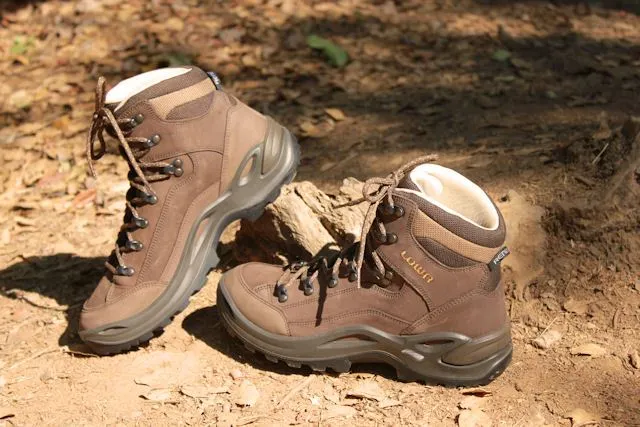
The best hiking boots for gorilla trekking are waterproof, ankle-high boots with an aggressive lug sole, broken in over at least 20 to 30 kilometers before you fly to Uganda. Bwindi Impenetrable Forest sits between 1,160 and 2,607 meters, and its trails are wet, root-covered, and frequently muddy in every month of the year, so ankle support and grip matter far more than weight, brand, or looks. A dependable pair costs USD 120 to 280, and, in our experience booking hundreds of Bwindi and Mgahinga permits each season, footwear failure is the single most preventable reason a client cuts a trek short. Below, we cover exactly what to look for, our current top picks by category, what to wear alongside your boots, and the sector-specific terrain differences that should influence your choice.
Best Hiking Boots for Gorilla Trekking

Quick Facts: Gorilla Trekking Boots at a Glance

FactDetail
Recommended boot heightAnkle-high or mid-height (not low-cut trail runners)
WaterproofingFully waterproof membrane (Gore-Tex, eVent, or equivalent) required
Sole typeDeep, multi-directional lugs (Vibram or equivalent); avoid smooth trail-shoe soles
Break-in distance20–30 km minimum over 4–8 weeks before travel
Typical price rangeUSD 120–280 (mid-range USD 150–200 covers most trekkers)
Bwindi altitude range1,160–2,607 metres
Trek duration on foot30 minutes to 8 hours, sector- and gorilla-location-dependent
Wettest sectorsNkuringo and Rushaga (steepest, muddiest ridgelines)
Most accessible sector terrainBuhoma (Rushegura family), best for first-time or less-fit trekkers
Sock recommendationTall merino-wool blend hiking socks, 2+ pairs, tucked over trouser cuffs
Porter cost (carries your pack)USD 15–20 per day, booked at the trailhead
Local boot rental/purchase availabilityUnreliable; bring your own boots from home

Why Boot Choice Matters More on a Gorilla Trek Than on a Normal Hike

Gorilla trekking is not a groomed-trail activity, and that single fact drives every recommendation in this guide. Once your ranger group leaves the briefing point at the sector headquarters, there is no vehicle support and no way to turn back for different footwear if yours fails. Trackers locate the gorilla family’s overnight nesting site before dawn, and your hike time to reach them, anywhere from 30 minutes to 8 hours, depends entirely on where the family has moved, not on your fitness or preference.

Underfoot conditions in Bwindi Impenetrable Forest change by the hour. Morning dew alone soaks trails before any rain falls, the canopy blocks enough sun that mud rarely dries fully even in the June–September and December–February dry seasons, and roots crisscross narrow trails cut through 331 square kilometers of montane rainforest. We have watched trekkers in running shoes complete a trek successfully, and we have watched others turn an ankle 40 minutes from the trailhead in the same shoes on the same morning. Boots do not just add comfort; they materially change your odds of finishing the hour with the gorillas rather than being carried out on an improvised stretcher, which does happen a handful of times each season across Bwindi’s four sectors.

This guide focuses specifically on footwear, but it sits inside a wider set of decisions about which Bwindi trekking sector suits your fitness level and which gorilla family you would like to request. We cover both in detail further down.
🚊  Only ~128 Uganda gorilla permits issued daily

Your Gorilla Trek Starts With One Message

Tell us your dates and we’ll check live permit availability and send your quote within Minutes: free, no obligation.

Get My Free Quote  → AUTO-registered operator · Budget to luxury · Uganda, Rwanda & Congo

The 5 Features Every Gorilla Trekking Boot Needs

Skip the marketing copy on the shoebox and check specifically for these five features. A boot missing more than one of these is unsuitable for Bwindi or Mgahinga, regardless of price.

  1. Full waterproofing, not water resistance. A genuine membrane (Gore-Tex, eVent, or a comparable proprietary layer) keeps your feet dry through stream crossings and hours of wet vegetation contact. “Water-resistant” treatments wear off within a season and will not survive a full trek day.
  2. Ankle-high or mid-height cut. Low-cut trail shoes are popular for weight savings on maintained trails, but Bwindi’s loose volcanic soil, hidden roots, and steep sector-specific descents (see the Nkuringo and Rushaga terrain notes below) put real torque on your ankle. We recommend a boot that comes at least to the ankle bone.
  3. Aggressive, multi-directional lug soles. Look for deep lugs (5 mm or more) spaced to shed mud rather than clog with it. Vibram soles are the industry benchmark and are found across nearly every serious hiking boot brand.
  4. A break-in track record is essential, not a first outing. The single most common footwear mistake we see is a brand-new boot worn for the first time on trek day. New boots create blisters at exactly the moment you cannot stop to treat them properly.
  5. A snug but not tight fit with room to swell. Feet swell on long hikes, especially at altitude and in heat. Fit boots with the hiking socks you intend to wear, and leave roughly a thumb’s width of space at the toe.

Best Hiking Boots for Gorilla Trekking: Top Picks by Category

We do not sell boots and have no commercial relationship with any brand below; these are the models our clients most consistently report success with across Bwindi’s four sectors and Mgahinga, cross-checked against the technical features in the section above.

BootBest ForWaterproofingWeight (approx.)Price (approx.)
Salomon Quest 4 GTXMost trekkers: all-round durabilityGore-Tex580g (per boot)$220–240
Merrell Moab 3 Mid WPBudget-conscious first-timersMerrell M-Select waterproof membrane500g (per boot)$130–150
Lowa Renegade GTX MidFrequent trekkers wanting a resoleable bootGore-Tex540g (per boot)$230–260
Keen Targhee IV Mid WPWide feet; roomier toe boxKeen. Dry waterproof membrane570g (per boot)$150–170
Scarpa Zodiac Plus GTXSteeper sectors (Nkuringo, Rushaga); serious ankle supportGore-Tex620g (per boot)$260–280

Best for: Choose the Merrell Moab 3 if this is your one gorilla trek and you want reliable performance without over-investing; choose the Scarpa Zodiac or Lowa Renegade if you trek regularly or have booked Nkuringo, Rushaga, or a multi-day double gorilla trek with back-to-back trail days.

If you have booked a double gorilla trek across two consecutive days, invest in the more durable, resoleable option; two full trek days back to back is a genuine stress test for cheaper boots, and there is no shoe shop at the trailhead.

Getting the Technical Details Right: Waterproofing, Ankle Support, and Grip

Waterproof membranes explained

Gore-Tex remains the most widely available and best-tested waterproof-breathable membrane, but it is not the only credible option; eVent and brand-proprietary membranes (such as Merrell’s M-Select and Keen’s proprietary membranes) are also good choices. Dry) perform comparably at a lower price point. What matters more than brand name is the seam construction: check that the tongue is gusseted (stitched to the upper on both sides) so water cannot seep in through the lace area during a stream crossing, which is common on Nkuringo and Rushaga trails in the wet seasons.

Ankle support: why it matters more in specific sectors

Ankle support is not equally important everywhere in Bwindi. Buhoma’s better-maintained, gentler trails around the Rushegura family put comparatively little strain on the ankle. Nkuringo’s ridge descents and Rushaga’s more strenuous terrain (see the sector comparison table further down) are a different proposition entirely, with loose volcanic soil on steep gradients where a low-cut shoe offers no lateral protection.

Sole grip and lug pattern

A common mistake is buying a boot with a shallow, close-set lug pattern designed for pavement-adjacent “hiking style” use rather than genuine off-trail grip. Look for lugs at least 5mm deep with visible channels between them; this is what sheds Bwindi’s clay-heavy mud rather than packing it into a smooth, slippery mass under your foot within the first hour.

What to Wear With Your Boots: The Rest of Your Gorilla Trekking Outfit

Boots do the most work, but the rest of your outfit either supports or undermines them. Trek Gorillas guides brief every client on these details before the trek day, and it is worth planning before you pack.

What to Pack for gorilla trekking

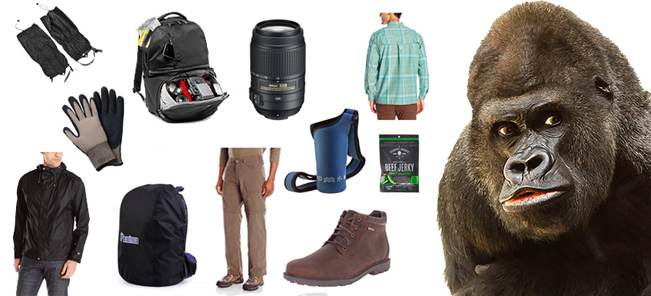
  • Tall, moisture-wicking hiking socks (merino wool blends perform best) worn over your trouser cuffs to seal out safari ants and stinging nettles; pack at least two pairs.
  • Long trousers in dark, natural colors: green, khaki, or brown. Bright colors and red in particular can unsettle gorillas and should be avoided.
  • A long-sleeved shirt for the same reason, plus protection from nettles and thorny undergrowth along narrower trails.
  • Gardening-style gloves: sections of the Bwindi trail are thick with stinging nettles that gloves handle far better than bare hands.
  • A lightweight, packable rain jacket. Bwindi receives rain in every month of the year, and treks proceed regardless of weather.
  • Optional but genuinely useful: lightweight gaiters, particularly in the March–May and September–November rainy seasons, to keep mud and ants out of boot tops.

Breaking In Your Boots and Avoiding Blisters on Trek Day.

Break-in failures are the most preventable cause of a cut-short trek. In our experience, most first-time trekkers underestimate how different a forest trail feels compared with the pavement or gym walking they used to test new boots at home.

  1. Buy your boots at least 6–8 weeks before travel, never in the week before your flight.
  2. Wear them on 5–8 shorter walks (30–60 minutes) in the first two weeks to identify obvious pressure points.
  3. Follow with 2–3 longer hikes of 90 minutes or more, ideally on hills or uneven ground, wearing the exact socks you plan to trek in.
  4. Treat any hot spot immediately with blister tape or moleskin before it becomes a blister, both at home and on trek day.
  5. Pack a small blister kit in your daypack regardless of how broken-in your boots are; forest debris and unexpected stream crossings can still cause friction.

Buy, Rent, or Borrow? Boot Logistics for International Travellers.

We are asked at least once a week whether boots can be rented or bought locally near Bwindi. The honest answer: not reliably. Kampala has some outdoor equipment retailers, but stock, sizing, and quality vary widely and cannot be guaranteed for an international shoe size on short notice. Kisoro and the towns nearest Bwindi and Mgahinga have essentially no dedicated hiking-gear retail. Bring your own boots, already broken in, in your checked or carry-on luggage.

What is reliably available locally: walking sticks (often provided free or for a small fee at the ranger briefing point) and porters, who can be hired for USD 15–20 per day at every sector trailhead to carry your pack and assist you physically on steep sections. Hiring a porter is also one of the most direct ways your trip supports the local community; many porters are former poachers who chose conservation-economy employment.

🚊  Only ~128 Uganda gorilla permits issued daily

Your Gorilla Trek Starts With One Message

Tell us your dates and we’ll check live permit availability and send your quote within Minutes: free, no obligation.

Get My Free Quote  → AUTO-registered operator · Budget to luxury · Uganda, Rwanda & Congo

Sector-by-Sector: Which Bwindi Sector Demands the Toughest Boots

Boot requirements shift depending on which of Bwindi’s four sectors, or Mgahinga, you are assigned. This is one of the least-discussed factors in most gorilla trekking gear guides, and it should influence both your boot choice and your sector request when booking.

SectorTerrain DifficultyBoot PriorityBest For
Buhoma (Northern Bwindi)Easy to ModerateComfort and break-in over aggressive gripFirst-time trekkers, limited fitness, families
Ruhija (Eastern Bwindi)ModerateBalanced grip and ankle support; higher altitude, cooler and often wetter underfootBirders, photographers, repeat visitors
Rushaga (Southern Bwindi)Moderate to StrenuousStrong ankle support and deep lugs; most families, so more varied terrain per groupKigali-routed travellers, Habituation Experience
Nkuringo (Southern Bwindi)Strenuous (steep ridge descents)Maximum ankle support; the sector where boot choice matters mostAdventurous trekkers wanting fewer people on the trail
Mgahinga (Nyakagezi family)Moderate; volcanic slope terrainGrip on looser volcanic soilCombined with Golden Monkey trekking

If Nkuringo’s ridge terrain or the Gorilla Habituation Experience in Rushaga (up to four hours on your feet rather than one) is part of your plan, we would steer you toward the Scarpa Zodiac Plus or Lowa Renegade from the comparison table above rather than the lighter Merrell option.

Practical Logistics: Costs, Packing Timeline, and What to Book in Advance.

Beyond boots themselves, here is the realistic logistics picture for gear and preparation ahead of a Uganda gorilla trek.

ItemCost / TimingNotes
Hiking boots (purchase)$120–280Buy 6–8 weeks ahead minimum to allow break-in
Gaiters (optional)$25–45Most useful March–May and September–November
Hiking socks (2+ pairs)$15–25 per pairMerino wool blend recommended
Porter (trailhead, per day)$15–20Booked on the morning of your trek at the ranger station
Walking stickOften free or small feeAvailable at most sector ranger stations
Gorilla permit (Uganda)$800 pp standard / $1,500 pp habituation experienceBook via UWA or through us
Recommended break-in period6–8 weeks before travel6–8 weeks before travel

For the full trip-cost picture beyond boots, our gorilla permit booking page and budget gorilla trekking guide both break down accommodation, transport, and permit costs alongside gear.

What Gorilla Trekking Guides Won’t Always Tell You

  • A brand-new “waterproof” boot straight out of the box can still leak on day one; the membrane needs a few wet outings to bed in properly, so test yours in genuinely wet grass at home before you fly, not just on a dry pavement walk.
  • Rangers will not wait for you to re-lace or adjust boots mid-trek beyond a brief pause; if your boots need frequent adjustment, that is a fit problem to solve before you travel, not on trek day.
  • The muddiest sections are often not on the way in; they’re on the way out once the group has been moving for hours and afternoon dampness has set in; save some grip and energy for the return leg.
  • Porters occasionally carry a spare pair of flip-flops or sandals for clients to change into at the end of a trek while their boots dry out at the lodge; ask your guide if this is available, but do not rely on it being this option automatically.
  • Boot squeeze at altitude is real: feet swell on long treks, so buying boots a half-size larger than your everyday size, tested with the socks you will actually wear, prevents painful toe-jamming on steep descents.
Free Quote · A few Minutes Reply

Ready to See the Gorillas Yourself?

Tell us your dates and we’ll check live permit availability today: budget to luxury, Uganda, Rwanda & Congo.

Plan My Trek →

Frequently Asked Questions about the Best Hiking Boots for Gorilla Trekking

What kind of boots do you need for gorilla trekking?

You need a waterproof, ankle-high hiking boot with an aggressive lug sole, broken in over at least 20 to 30 kilometers before your trek. Bwindi’s trails run from 1,160 to 2,607 meters through wet, root-covered, often muddy montane forest, so ankle support and grip matter more than weight or style. A mid-range boot in the USD 150–200 range from a brand like Merrell, Salomon, or Keen covers the needs of most first-time trekkers.

Can I wear regular sneakers for gorilla trekking?

You can physically complete a trek in sneakers, and we have seen it done, but we do not recommend it. Bwindi’s forest floor is frequently muddy and root-covered even in the dry season, and sneakers offer no ankle support on the steep, uneven sections found in sectors like Nkuringo and parts of Rushaga. A rolled ankle 3 hours into an 8-hour trek is a genuinely difficult situation to manage.

Do I need waterproof or water-resistant boots?

Fully waterproof boots with a genuine membrane such as Gore-Tex are strongly preferred over water-resistant boots. Bwindi receives rain in every month of the year, and morning dew alone soaks trails before you ever encounter a downpour. Water-resistant treatments wear off within a season and typically fail within the first hour of a real Bwindi trek.

Should hiking boots be ankle-high or low-cut for gorilla trekking?

Ankle-high boots are strongly recommended over low-cut trail shoes. The terrain includes loose volcanic soil, hidden roots, and steep descents, particularly in Nkuringo and parts of Rushaga, where a rolled ankle can end your trek and potentially the rest of your trip.

How much do good gorilla trekking boots cost?

A reliable waterproof hiking boot suitable for gorilla trekking typically costs between USD 120 and USD 280 depending on brand and membrane technology. Mid-range options from Salomon, Merrell, and Keen in the USD 150 to 200 range perform well for a single trip; frequent trekkers may prefer a resoleable leather boot from Lowa or Scarpa above USD 220.

Can I rent or buy hiking boots in Uganda before my trek?

Rental boots are not reliably available in Bwindi or Mgahinga, and buying suitable technical hiking boots locally in Kampala or Kisoro is difficult due to limited stock and sizing for international shoe sizes. We strongly recommend arriving with your own broken-in boots; walking sticks and porters, by contrast, are reliably available at every sector trailhead.

How do I break in new hiking boots before a gorilla trek?

Wear your new boots on at least 5 to 8 shorter walks and 2 to 3 longer hikes of 90 minutes or more in the 6 to 8 weeks before travel, ideally on varied terrain including hills. This breaks in the sole flex points and reveals any pressure spots before you are hours deep into Bwindi Forest with no way to swap footwear.

What socks should I wear with gorilla trekking boots?

Wear tall, moisture-wicking hiking socks, ideally merino wool blends, tucked over your trouser cuffs to seal out safari ants and stinging nettles. Pack at least two pairs so you can change into dry socks if your first pair gets soaked crossing a stream.

Are gaiters necessary for gorilla trekking?

Gaiters are not mandatory but are genuinely useful, particularly in the rainy season (March to May and September to November). They keep mud and safari ants out of your boots on the muddiest sections and are a small, lightweight addition to your pack for a meaningful comfort gain.

How much does a gorilla trekking permit cost, and does gear affect the price?

The Uganda Wildlife Authority gorilla permit is a fixed USD 800 per person, or USD 1,500 for the Rushaga-only Gorilla Habituation Experience, regardless of the gear you bring. Your footwear and clothing choices affect your comfort and safety on the trek, not the permit price itself.

Do you sell or provide hiking boots when I book a trek with Trek Gorillas?

We do not sell hiking boots, and we recommend against relying on rental gear given limited local availability. What we do provide as part of every booking is a full pre-trip briefing covering exactly what to pack, your assigned sector’s terrain profile, and a porter recommendation on trek day if you would like one arranged in advance.

What is the single biggest footwear mistake first-time trekkers make?

Wearing boots for the first time on trek day itself. New, unbroken-in boots are the most common preventable cause of blisters severe enough to slow a group down or, in a handful of cases each season, to require a client to stop early. Buying boots at least 6 to 8 weeks ahead of travel and genuinely breaking them in solves this.

Free Quote · A few Minutes Reply

Ready to See the Gorillas Yourself?

Tell us your dates and we’ll check live permit availability today: budget to luxury, Uganda, Rwanda & Congo.

Plan My Trek →

Ready to Book? Itineraries That Match This Guide

Mountain Gorilla Bwindi

3-Day Bwindi Gorilla Trekking Safari

The standard entry point for first-time trekkers from Kampala or Entebbe; ideal if you’re outfitting yourself with the Merrell Moab 3 pick above and want a straightforward Buhoma or Rushaga trek.

3-Day Bwindi Gorilla Trekking Safari

3-Day Uganda Gorilla Habituation Experience

Four hours on your feet with a semi-habituated Rushaga family; this is the itinerary where we most strongly recommend the higher-support Scarpa or Lowa boot option

8-Day Uganda & Rwanda Gorilla Safari

4-Day Double Gorilla Trekking in Uganda

Two consecutive trek days with different families; a genuine durability test for footwear, and where a resoleable boot earns its higher price.

Get Your Free Gorilla Trekking Quote

Boots sorted, still deciding on dates or sector? Message us on WhatsApp or email info@trekgorillas.com. Tell us your dates, and we’ll check permit availability within a few minutes and flag whether your planned sector calls for anything beyond the standard gear covered in this guide.