Frequently Asked Questions About Mountain Gorillas
How many mountain gorillas are left in the world?
As of the most recent full census in 2018, there were 1,063 mountain gorillas confirmed in the wild, split between Bwindi Impenetrable Forest in Uganda and the Virunga Massif spanning Uganda, Rwanda, and DR Congo. That figure is up from around 620 in 1989 and roughly 242 in 1981, making mountain gorillas the only great ape subspecies with a documented growing population. A new census begun in 2025 is expected to confirm continued growth.
Where do mountain gorillas live?
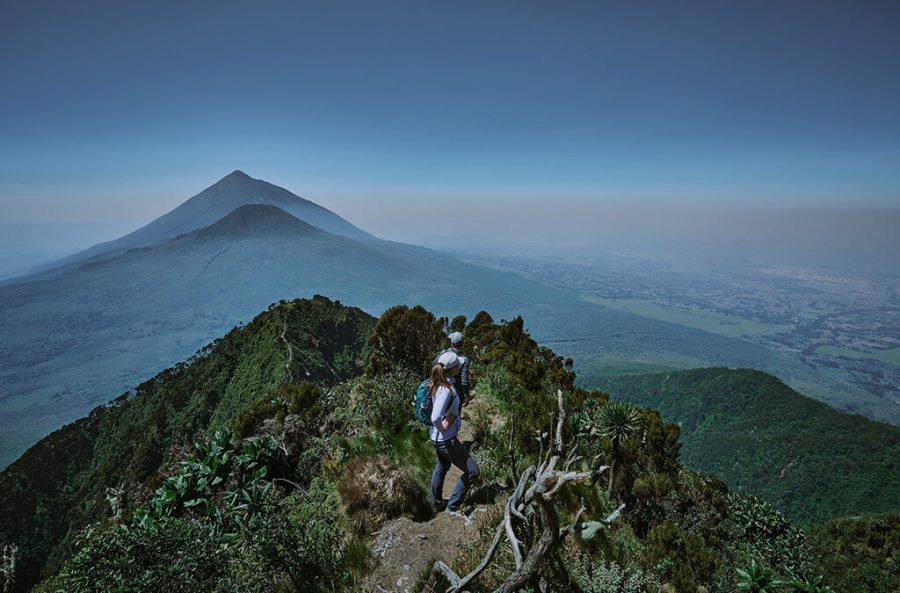
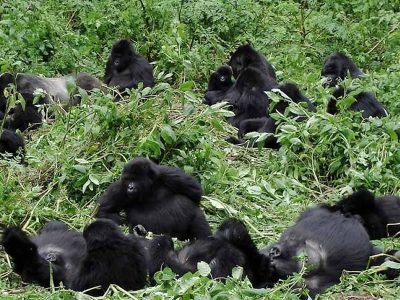
Mountain gorillas live in only two places on Earth: Bwindi Impenetrable National Park in southwestern Uganda, and the Virunga Massif, a chain of volcanoes shared by Uganda’s Mgahinga Gorilla National Park, Rwanda’s Volcanoes National Park, and DR Congo’s Virunga National Park. They occupy altitudes between roughly 1,500 and 4,000 meters and have never survived long-term outside these wild habitats.
What is the difference between a mountain gorilla and a lowland gorilla?
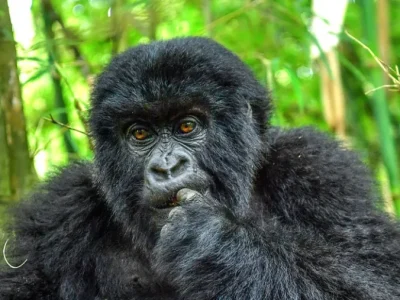
Mountain gorillas (Gorilla beringei beringei) live at high altitude in Uganda, Rwanda, and DR Congo, have thicker coats for cold conditions, and cannot be kept in captivity. Eastern lowland gorillas, or Grauer’s gorillas (Gorilla beringei graueri), are the largest gorilla subspecies by body size, live in lower-altitude DRC forests including Kahuzi-Biega National Park, and are Critically Endangered with a much smaller habituated population available to trekkers.
How much does it cost to see mountain gorillas?
A standard trekking permit costs USD 800 per person in Uganda, USD 1,500 in Rwanda, and from roughly USD 400 in DR Congo. Including two nights’ accommodation, road transfers, meals, and a porter, a realistic 3-day Uganda trip budget starts around USD 1,300 per person at the budget end and rises significantly for mid-range and luxury lodges.
How big is a silverback mountain gorilla?
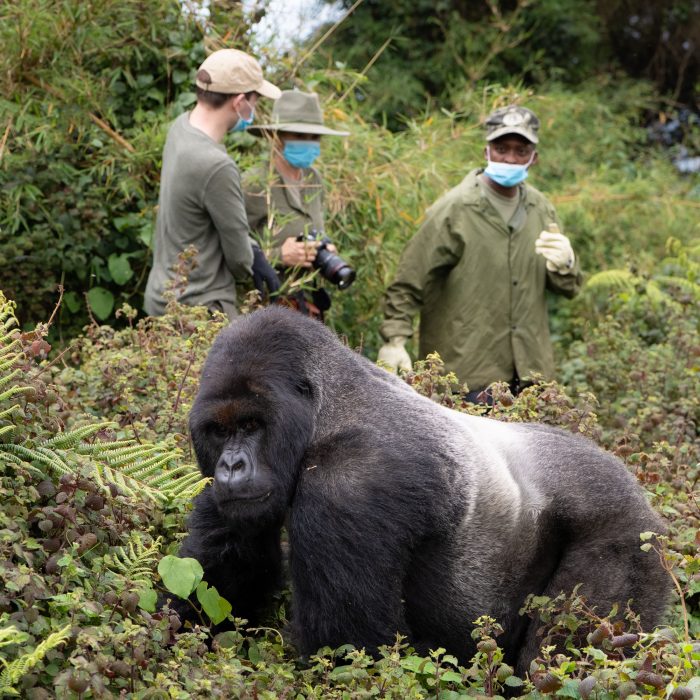
An adult male silverback typically weighs 140 to 200 kilograms (310-440 lbs) and stands 1.5 to 1.8 metres tall when upright, with an arm span reaching up to 2.7 metres. Despite the size, silverbacks are generally calm around habituated trekking groups; chest-beating displays are almost always a bluff directed at rivals rather than genuine aggression toward visitors.
What do mountain gorillas eat?
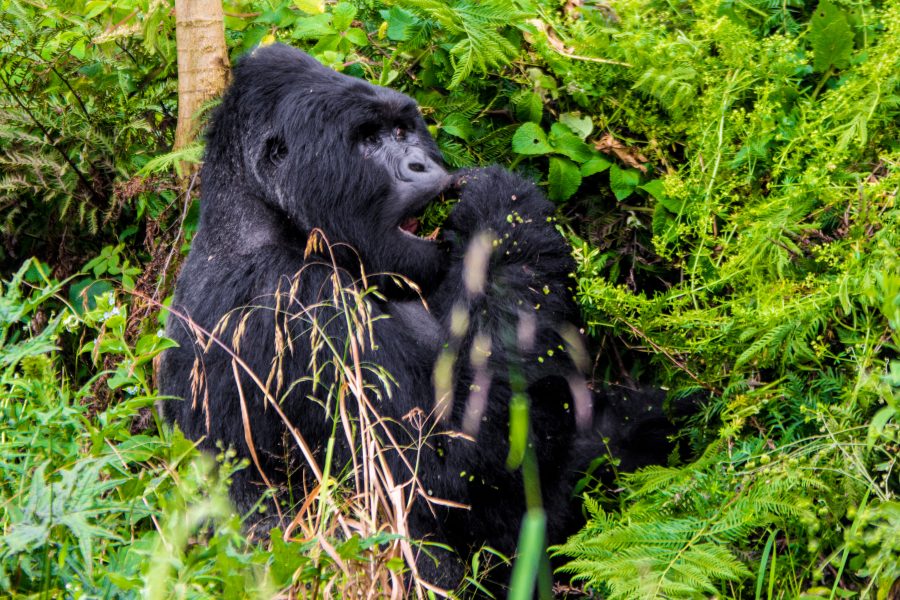
Mountain gorillas are almost entirely herbivorous, eating leaves, stems, shoots, bark, and roots from over 100 plant species, with wild celery and bedstraw among their favorites. An adult silverback can eat up to 34 kilograms (75 lbs) of vegetation daily, and gorillas obtain most of their water from this diet and morning dew rather than drinking directly.
How long do mountain gorillas live?
Mountain gorillas live an average of 35 to 40 years in the wild, with some well-monitored silverbacks documented living past 45. Longevity is closely linked to whether a gorilla belongs to a habituated family under regular ranger patrol and veterinary care, such as the programs operating across Bwindi and the Virunga parks.
Can mountain gorillas survive in zoos?
No. Unlike lowland gorillas, mountain gorillas have never survived long-term in captivity anywhere in the world, largely because of their specialised high-altitude diet and heightened stress sensitivity. Seeing one requires a permitted trek into Bwindi Impenetrable Forest or the Virunga Massif in Uganda, Rwanda, or DR Congo.
Which country is best for seeing mountain gorillas?
Uganda offers the most habituated families (around 20) at the lowest permit price (USD 800) and combines easily with wildlife safaris in Queen Elizabeth or Kibale National Parks. Rwanda offers the shortest transfer time from Kigali International Airport and more luxury lodge options at USD 1,500 per permit. DR Congo is the most budget-friendly at around USD 400 but requires closer attention to regional security advisories before booking.
How do mountain gorillas differ from chimpanzees?
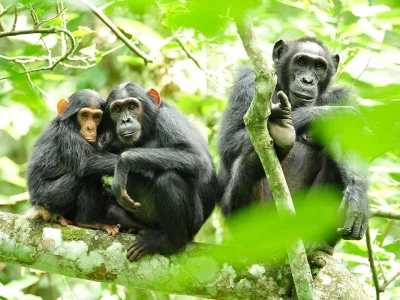
Mountain gorillas and chimpanzees are both great apes but are only distantly related within that family. Gorillas are considerably larger, primarily ground-dwelling herbivores living in stable family groups led by a silverback, while chimpanzees are smaller, more arboreal, omnivorous (they eat meat, including small monkeys), and live in larger, more fluid communities. In Uganda, both can be seen on the same trip: gorilla trekking in Bwindi pairs naturally with chimpanzee trekking in Kibale National Park.
What is a blackback gorilla?
A blackback is a male mountain gorilla between roughly 8 and 12 years old who has reached sexual maturity but has not yet developed the distinctive silver-saddle-of-hair that defines a silverback. Blackbacks often act as sentries and helpers within the family group and will eventually either challenge the dominant silverback for leadership or leave to start a new group of their own.
Do mountain gorillas attack humans?
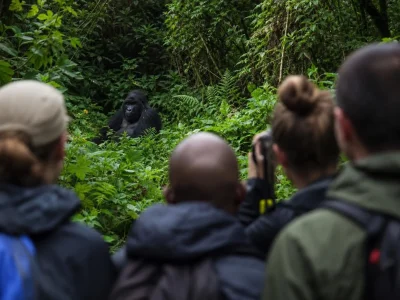
Unprovoked attacks on trekkers by habituated mountain gorilla families are extremely rare. Silverbacks may perform mock charges, chest-beating, or vocal displays if startled or if a visitor breaks protocol (running, sudden movement, direct prolonged eye contact), but rangers train every trekking group to crouch, avoid eye contact, and never run, which nearly always resolves the display without incident.
Ready to Book? Itineraries That Match This Guide
Now that you know the facts, here are the itineraries our travellers most often choose after reading this guide: